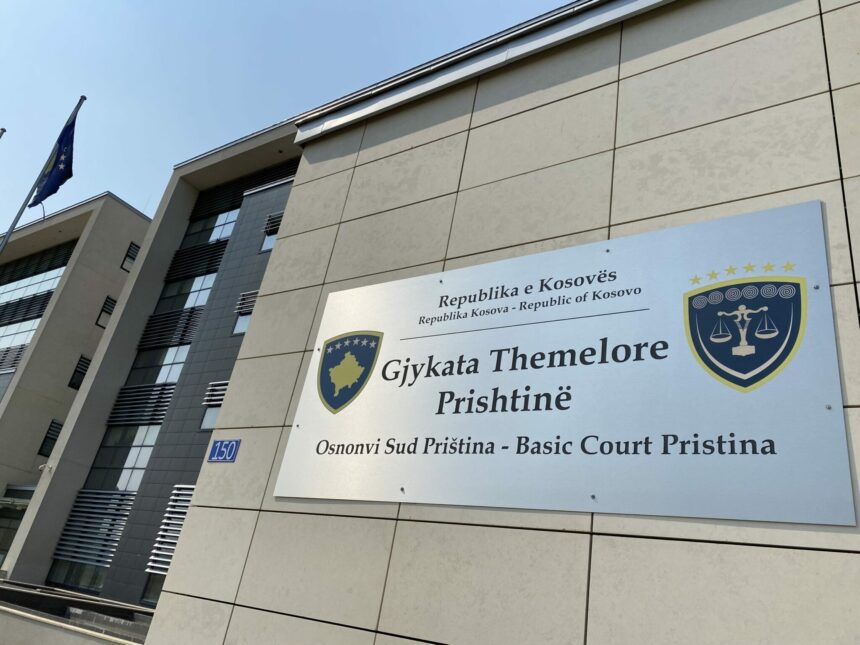
The Basic Court of Prishtina has postponed the opening session in the high-profile war crimes retrial of Čedomir Aksić. The delay was triggered by the sudden illness of Aksić’s court-appointed defense attorney, Ymer Berisha.
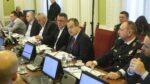
Attorney Berisha formally notified the judiciary on May 29, 2026, providing an official medical report that mandated strict bed rest. While the presiding prosecutor, Habibe Salihu, and the victims’ legal representative, Ibrahim Terstena, were fully present in the courtroom, the absence of the defense counsel left the court without the statutory legal requirements to proceed, forcing the panel to defer the session to a later date.
Judicial Backstory: The Path to the Retrial
The current proceedings follow a major intervention by the Court of Appeals, which overturned a previous conviction and remanded the case back to the first-instance court.
[Procedural History of the Aksić Case]
  May 4, 2023   ──► Special Prosecution Office (PSRK) files formal indictment.
  Nov 20, 2023  ──► In absentia trial officially begins under Kosovo's new criminal code.
  Dec 26, 2024  ──► Basic Court of Prishtina finds Aksić guilty; sentences him to 15 years.
  Appeals Phase ──► Court of Appeals overturns verdict; orders retrial to satisfy strict in absentia criteria.
  May 29, 2026  ──► Opening retrial session collapses due to defense attorney's medical emergency.
The Court of Appeals ordered the retrial specifically to ensure that all stringent legal preconditions for an in absentia trial—as outlined under Kosovo’s modernized Criminal Procedure Code—are flawlessly documented, verified, and met before a binding final judgment can be passed.
Indictment Parameters: The Charge Sheet of Atrocities
The Special Prosecution Office of the Republic of Kosovo (PSRK) originally indicted Aksić for “War Crimes Against the Civilian Population.” The state’s case focuses on a series of brutal operations executed between January and May 1999 across the Shtime municipality, targeting the villages of Reçak, Mullapolc, and Petrovë.
According to the prosecution’s brief, Aksić operated in coordination with an organized, uniformed paramilitary cell to inflict systemic terror, severe physical trauma, and forced displacement on ethnic Albanian civilians.
| Location / Zone | Specific Alleged Criminal Actions |
| “Kodra e Gështenjave” | Coordinated the tactical encirclement and forced expulsion of local neighborhoods, followed by the systematic burning of civilian homes, causing up to €300,000 in material damages. |
| “Lugu i Neshës” (Petrovë) | Intercepted a fleeing family and summarily executed a civilian, Halil Hysenaj, utilizing a semi-automatic rifle. |
| Reçak Village | Directly participated in the targeted execution of eight civilian non-combatants: Hajriz Brahimi, Hakin Murati, Sabri Murati, Arif Murati, Ahmet Mustafa, Sadik Mujota, Skënder Haliti, and Hanumshahe Mujota. |
The indictment describes harrowing battlefield details, alleging that Aksić personally gunned down Hajriz Brahimi as he attempted to flee his home toward the forest, before turning his weapon on nearby family groups. He is further accused of executing Ahmet Mustafa directly in the presence of the victim’s wife, before opening fire on fleeing women and men, including Hanumshahe Mujota.
The Legal Basis of the Prosecution
Because Aksić has fled the country to avoid prosecution and cannot be reached by local law enforcement, the state is relying on a robust list of 11 eyewitnesses—including Ruzhdi Jashari, Sadri Jashari, Bashkim Rizau, and Shukrije Hysenaj—to anchor the retrial.
The criminal acts are being prosecuted under a multi-layered legal framework to ensure complete compliance with domestic and international humanitarian standards:
- Article 142 of the Criminal Law of the former Socialist Federal Republic of Yugoslavia (SFRY) (the law in effect at the time the crimes were committed).
- Common Article 3 of the Geneva Conventions and Protocol II (1977), governing the protection of victims of non-international armed conflicts.
- Articles 146 and 147 of the current Criminal Code of the Republic of Kosovo.
The court will issue a new scheduling order once the defense attorney is medically cleared to return to active litigation.