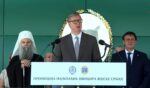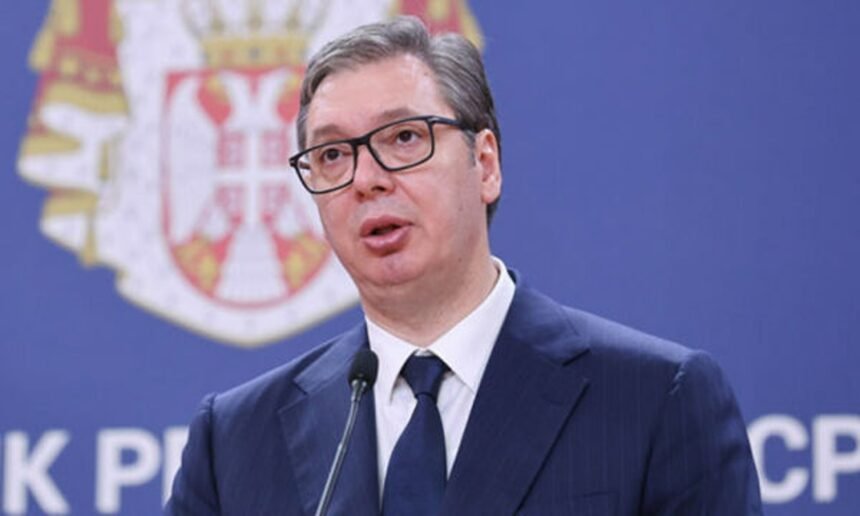
Following high-profile diplomatic engagements with China and the European Union, Serbian President Aleksandar Vučić has announced that a formal strategic dialogue between Serbia and the United States could launch as early as this summer.
Speaking on Monday, Vučić emphasized that establishing this dialogue is crucial for Serbia amid a climate of intense global and regional friction, predicting that international geopolitical confrontations will only continue to escalate.
Diplomatic Posturing vs. Institutional Reality
The announcement has sparked intense debate among foreign policy experts regarding the substance of Belgrade’s relationship with Washington, especially following a cooling period after high-profile real estate disputes involving the former Yugoslav Ministry of Defence building (the “Generalštab” case).
Former Serbian Ambassador to the OSCE, Branka Latinović, expressed skepticism about the sudden push, characterizing it as an attempt by the Serbian presidency to publicly impose itself on the Trump administration.
- Lack of High-Level Continuity: Latinović pointed out that despite recent visits by Serbian Foreign Minister Marko Đurić to the U.S., no meeting was secured with U.S. Secretary of State Marco Rubio.
- The NIS Dilemma: Institutional progress remains stalled by major unresolved issues, specifically the complex negotiations surrounding the potential sale of NIS (Petroleum Industry of Serbia), which is currently under majority Russian control.
- The Ambassador Factor: Experts believe a genuine strategic dialogue cannot functionally begin until the newly proposed U.S. Ambassador to Serbia clears all confirmation procedures and takes office in Belgrade.
“Vučić is attempting to build a new international anchor after a freeze in relations with Russia, a prolonged standstill in EU negotiations, and firm messaging from European partners. However, public praise for Trump cannot substitute for steady, structured diplomatic channels,” Latinović stated.
The EU Perspective: Economic Realities and Energy Intersects
The prospective Washington-Belgrade alignment raises questions in Brussels, which is already wary of Serbia’s close ties to Moscow and Beijing. However, analysts suggest the EU’s reaction may depend entirely on the economic sectors involved.
Dimitrije Milić, Program Director of the “New Third Way” organization, noted that Brussels will remain Serbia’s irreplaceable partner, given that the EU’s trade volume with Serbia is roughly 20 times larger than that of the United States. Furthermore, following a 90% drop in Chinese investments compared to 2024, European capital remains dominant.
- The Energy Greenlight: Milić argued that a U.S.-Serbia strategic dialogue could actually align with Brussels’ interests if it accelerates energy diversification away from Russia, particularly through natural gas infrastructure projects.
- Strategic Foundation: The groundwork for this was laid in September 2024, when Serbia and the U.S. signed their first-ever agreement on strategic cooperation in the field of energy.