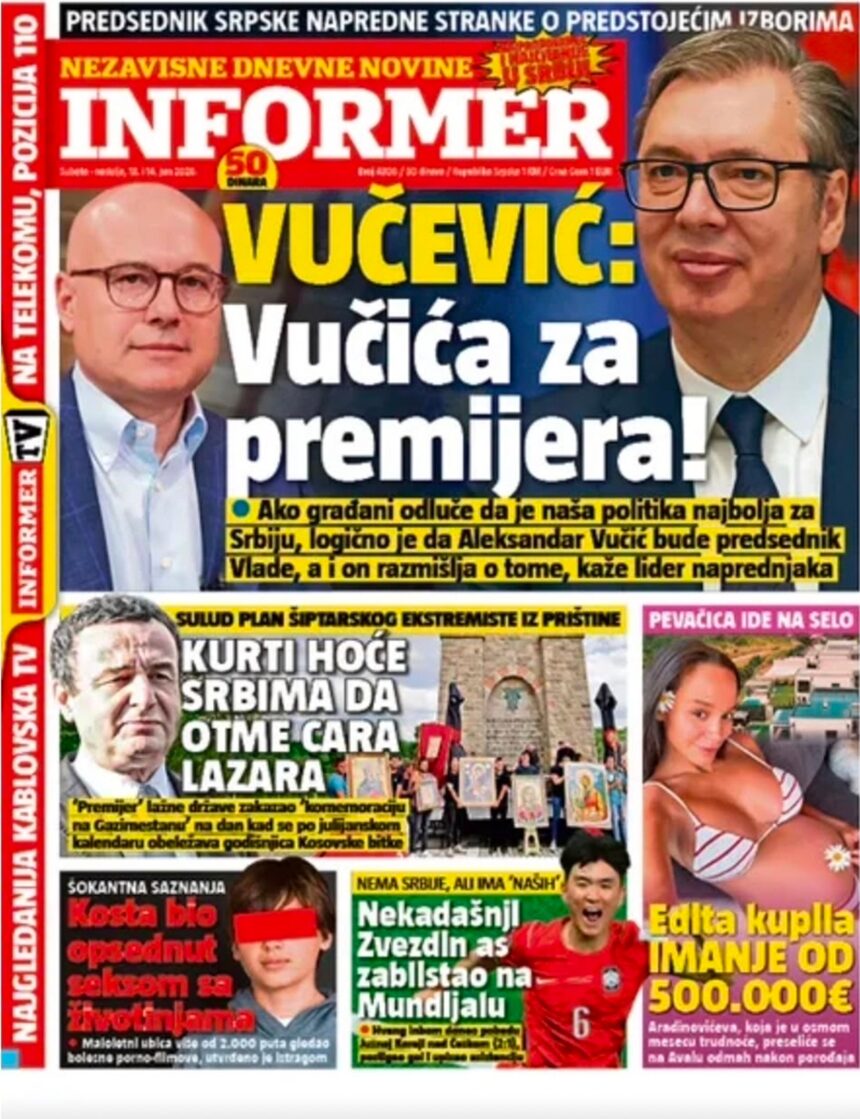
In a series of articles published in recent days by RT Balkan (a media outlet under the direct control of the Kremlin), Informer, and Večernje novosti, technical and commemorative initiatives undertaken by the Municipality of Obiliq have been maliciously interpreted as an “attack on Serbian identity” and an attempt to “steal history,” deliberately fueling tensions ahead of the commemoration of Vidovdan.
A politically and emotionally charged narrative is present in pro-Serbian and pro-Russian media, portraying Kosovo as a “fake state,” while Albanians are described with terms such as “terrorists” and “extremists.”
Through an article titled “Albanian Terrorists Against the Heroes of Kosovo: Why the Fake State Wants to Steal the Battle of Kosovo,” RT Balkan uses inflammatory language to present the commemoration of the battle’s anniversary as a violent and terrorist act aimed at erasing Serbian historical identity.
In its coverage, RT Balkan employs strongly political characterizations, while Informer, through headlines such as “Kurti Wants to Steal Lazar from the Serbs,” engages in direct emotional manipulation and the use of historical symbols to politically mobilize public opinion.
RT Balkan, in its reporting on Gazimestan, has used a distinctly propagandistic framework, including terms such as “fake state” and “Albanian extremists,” thereby simplifying the political and historical context and transforming it into a narrative of conflict and hostility.
Events related to Vidovdan and Gazimestan have been portrayed as alleged attempts by Kosovo’s institutions to “steal memory” and “erase Serbian heritage,” although in reality these are local commemorative and administrative initiatives that do not contain elements of prohibition or denial of history.
Novosti further reinforces this narrative by insisting on the need to “defend Vidovdan,” thereby strengthening the perception that Serbian cultural and religious identity in Kosovo is under continuous threat.
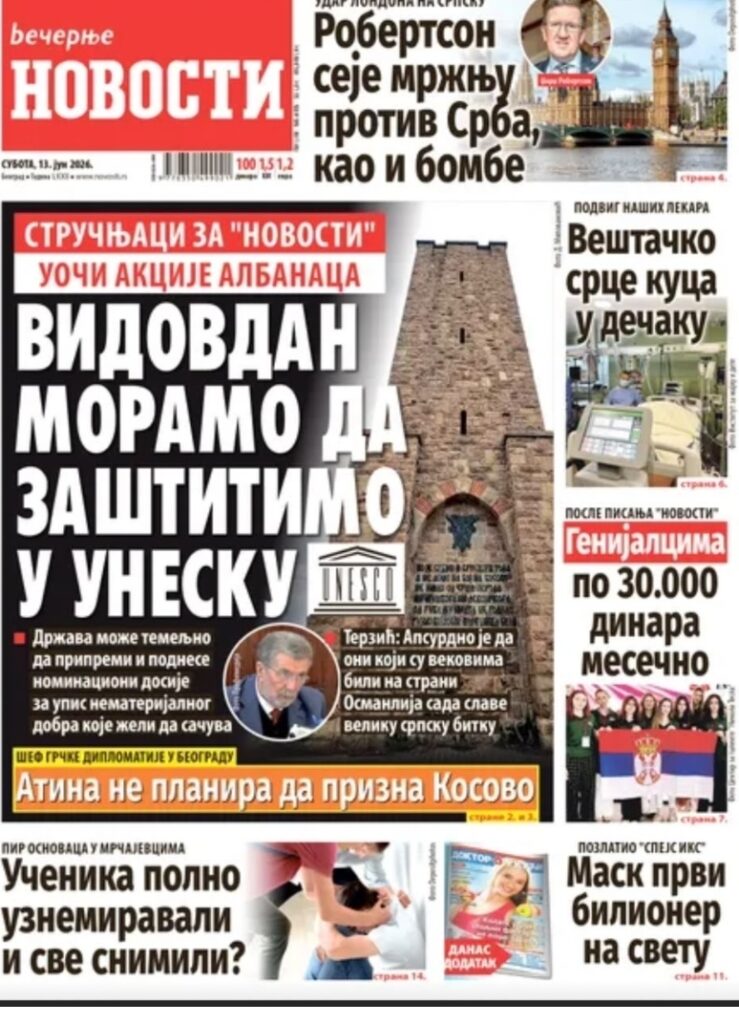
RT Balkan, in its reporting on Gazimestan, has used a distinctly propagandistic framework, including terms such as “fake state” and “Albanian extremists,” thereby simplifying the political and historical context and transforming it into a narrative of conflict and hostility.
Events related to Vidovdan and Gazimestan have been portrayed as alleged attempts by Kosovo’s institutions to “steal memory” and “erase Serbian heritage,” although in reality these are local commemorative and administrative initiatives that do not contain elements of prohibition or denial of history.
Novosti further reinforces this narrative by insisting on the need to “defend Vidovdan,” thereby strengthening the perception that Serbian cultural and religious identity in Kosovo is under continuous threat.
An analysis of this content reveals a recurring propaganda pattern in which every political or local initiative by Kosovo’s institutions is interpreted as an attack on Serbs, while historical events are used as tools for contemporary political mobilization.
The emotionally charged language, the lack of verified sources, and the dominance of narratives centered on “threats” indicate a departure from professional journalistic standards.
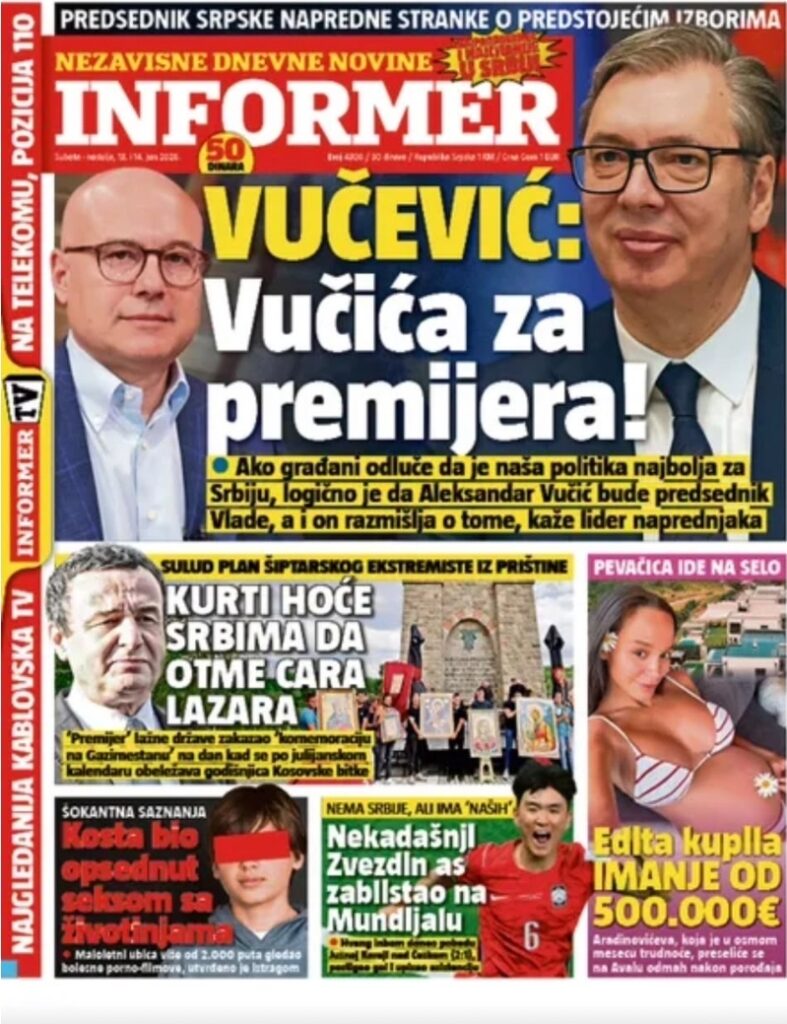
Instead of providing balanced information, such reporting contributes to creating an atmosphere of ongoing political and ethnic conflict, in which complex events are reduced to simplistic narratives of “friends” and “enemies.”
In this way, the media space becomes a tool for the dissemination of propaganda messages rather than a platform for objective and responsible public information.