As the ruling majority and opposition in Albania remain divided over a possible new territorial reform, the Council of Europe has called for any decision to be made carefully, without haste, and only after meaningful consultation with citizens.
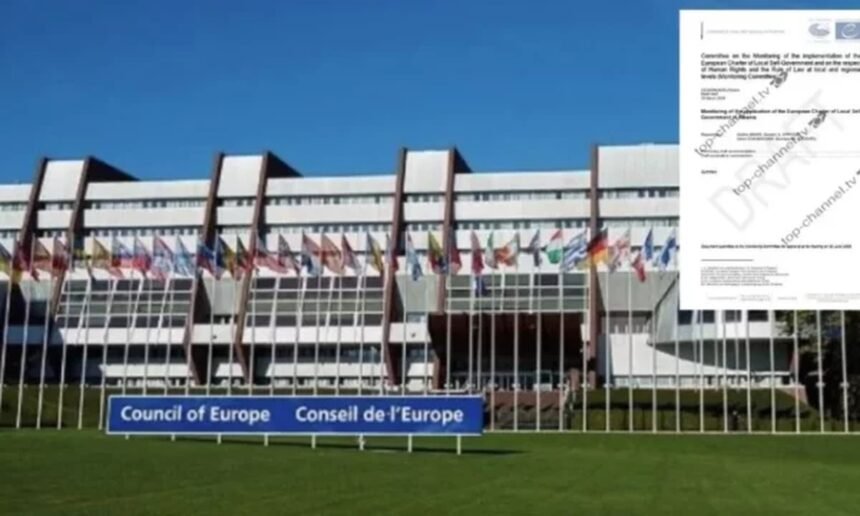
In a nine-page draft report on Albania obtained by Top Channel, the European institution stated that any changes to the country’s administrative map should first be based on a comprehensive assessment of the 2015 territorial reform and genuine consultations with affected communities.
“There is a risk that, during the preparation of the territorial reform planned for 2026, only formal consultations rather than meaningful ones may take place, if the government aims to respect the announced timeline for its implementation,” the report states.
According to the document, local authorities have so far played only a limited role in the process, while there is a risk that consultations could become merely procedural if the reform is rushed to meet the government’s announced deadlines.
“Given the timeline set for the implementation of the reform, there may be concerns if local government units are consulted only during the final stage of decision-making. In such a case, they may have limited time to prepare for the implementation of the reform and may not have a meaningful opportunity to contribute with their proposals and initiatives,” the report notes.
The Council of Europe report also raises concerns that, despite discussions about creating larger municipalities, many important public services remain under the control of central government. Waste management, water supply, and education are mentioned as areas where municipalities still lack full authority, limiting their ability to independently implement decisions.
The rapporteurs emphasize that weaknesses within certain municipalities should not be used as a justification for reducing local government powers further.
The document also argues that the reform should not focus only on the number of municipalities or administrative borders. According to the report, the role of regional councils should also be reconsidered, as their current structure does not meet the criteria to be considered genuine units of local self-government.