When the Bulgarian Minister of Defense recently announced a full halt to the country’s military shipments to Kyiv, the declaration sparked an immediate wave of déjà vu across the nation.
Ever since the onset of the Russian invasion in 2022, Bulgarian authorities have maintained a complex, dual-track foreign policy. Officially, politicians consistently echoed the strict line that “not a single bullet manufactured in Bulgaria” would be sent to the front lines. In reality, the country’s private defense industrial base experienced a historic boom, routing massive shipments through intermediary states like Poland and the Czech Republic to keep the Ukrainian Armed Forces supplied.
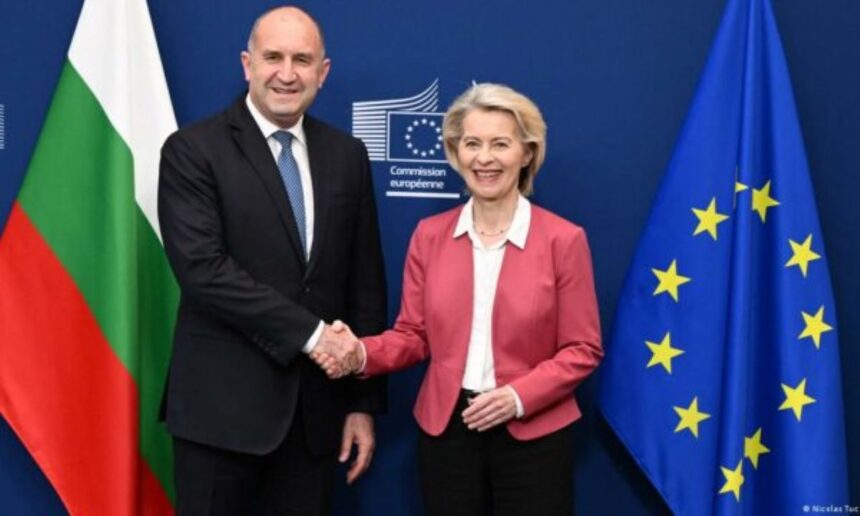
The latest policy shift enacted by the newly elected government of Prime Minister Rumen Radev and his Progressive Bulgaria party brings this strategic contradiction back into the international spotlight. However, military analysts and former officials emphasize that the ban is heavily driven by domestic political maneuvering and structural stockpiling pressures rather than a total shutdown of weapons logistics.
1. The Scope of the Ban: State Reserves vs. Private Industry
The newly enacted ban does not represent a complete freeze on Bulgarian-made munitions reaching Ukraine. Instead, it alters the specific institutional channel of delivery.
The Bulgarian Arms Supply Architecture

 [ STATE RESERVES ] ──► TOTAL BAN ENACTED
 • The Defense Ministry has halted direct transfers from state-owned military stockpiles.
   Official justification: Reserves dropped below the mandatory minimum national security threshold.

 [ PRIVATE DEFENSE SECTOR ] ──► UNHINDERED OPERATIONS
 • Commercial manufacturers remain completely free to export heavy munitions and weaponry
   via trusted third-party nations (Poland/Czechia) directly to Kyiv.

 [ FINANCIAL SCALE ] ──► 4% OF TOTAL GDP
 • Driven by indirect export routes, Bulgaria's private defense manufacturing network
   surpassed a massive 4 percent of the nation's entire Gross Domestic Product (GDP).
2. The Economic Paradox: Forgoing NATO Modernization
Prime Minister Radev defended the shift by citing severe socio-economic damages inflicted on Bulgaria by the ongoing conflict. However, former defense officials point out that the decision carries heavy financial and structural costs for Bulgaria’s own armed forces.
Through the European Peace Facility (EPF), the European Union largely reimbursed Bulgaria for the equipment it supplied from state reserves.
- Direct Funding: Bulgaria extracted over €3 million ($3.47 million) directly from the EPF.
- Budgetary Relief: Tripartite international agreements generated over €200 million for the Defense Ministry’s balance sheet, with more than half diverted to close the state’s broader budget deficit.
“Through this mechanism, the Bulgarian Army and the Ministry of Defense received additional funds that could be reinvested in military modernization projects.”
— Todor Tagarev, Former Bulgarian Minister of Defense
Under Tagarev’s prior ministerial tenure, Bulgaria utilized a “circular exchange” strategy—offering its obsolete, Soviet-era stockpiles to Ukraine in exchange for modern, state-of-the-art NATO-standard equipment. Experts warn that by blocking the export of these aging weapons systems, Sofia is actively shutting down its most efficient pathway toward total Western military integration.
3. Domestic Consumption: Appeasing the Russophile Electorate
Political observers stress that the ban is fundamentally designed for internal political consumption rather than an organic shift in geopolitical alignment. Radev secured an absolute parliamentary majority by running on a platform of anti-corruption, price stabilization, and a highly “pragmatic” foreign policy.
While Radev has pledged not to veto collective European Union aid packages for Ukraine, his cautious posturing mirrors deep, underlying societal anxieties unique to the Bulgarian electorate.
| Metric | Bulgaria Survey Data | Wider European Union Average |
| Oppose Funding / Buying Weapons for Ukraine | 66% | 39% |
| General Institutional Support for the EU | High / Stable | Stable |
“I think these statements are primarily for internal use — for the Russophile electorate of ‘Progressive Bulgaria,’ to maintain the stance that we do not want to harm Russia’s interests.”
— Todor Tagarev, Former Bulgarian Minister of Defense
4. Strategic Reversals and Diplomatic Fallout
The direct supply ban effectively undercuts the momentum established in March 2026, when then-interim Prime Minister Andrey Gyurov and former Foreign Minister Nadezhda Neynski signed a comprehensive security cooperation agreement with Kyiv.
Neynski fiercely criticized Radev’s sudden policy reversal, noting that the bilateral pact was an unprecedented opportunity for the Bulgarian military to gain direct operational access to cutting-edge defense technologies being battle-tested and co-developed in Ukraine.
Long-Term Diplomatic Hazards for Sofia
┌────────────────────────────────────────────────────────────────────────┐
│                                                                        │
│  [ FRAGILE ALLIANCE REPUTATION ] ──────────────────────────────────┐   │
│  • Abrupt policy pivots send an unstable, unreliable signal to NATO│   │
│    and EU partners, indicating that Sofia cannot be counted on.        │
│                                                                        │   │
│  [ POST-WAR EXCLUSION RISK ] ──────────────────────────────────────┤   │
│  • European allies warn that multi-billion-dollar post-war reconstruc- │   │
│    tion contracts will be exclusively reserved for trusted partners.   │
│                                                                        │   │
│  [ THE CREDIBILITY GAP ] ──────────────────────────────────────────┘   │
│  • Breaking step with the European security core isolates Bulgaria,   │
│    weakening its long-term leverage within Western command structures. │
│                                                                        │
└────────────────────────────────────────────────────────────────────────┘
While the European Commission and the European Council have chosen to remain silent on Bulgaria’s direct halt, the decision exposes the deep ideological balancing act playing out in Sofia. The administration is attempting to project a pro-peace, isolationist stance to its domestic base, all while relying on its booming private arms industry to quietly maintain its financial obligations to the Western alliance.