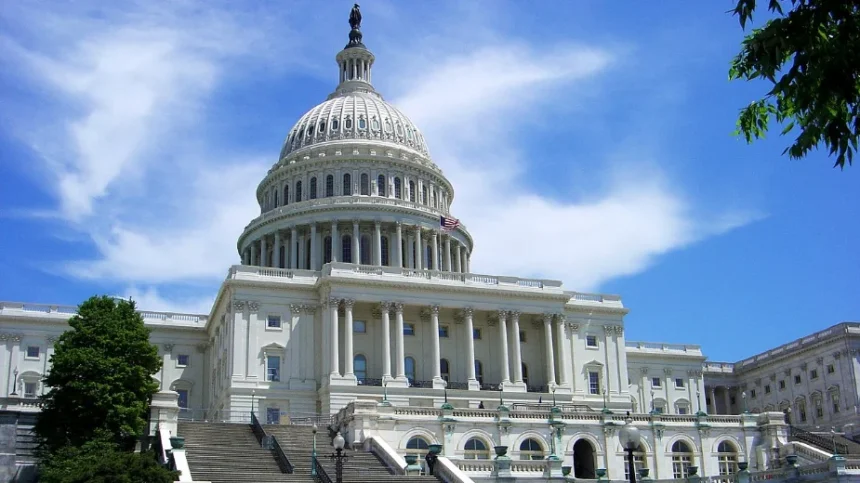
In a high-stakes, razor-thin vote, the United States Senate has blocked the latest legislative attempt on Capitol Hill to force an end to ongoing hostilities with Iran without explicit congressional authorization.
The vote marked the ninth such attempt by lawmakers to curb executive military authority since Israel and the United States launched coordinated airstrikes against Iran in February.
The Senate voted 48–47 to table the resolution, which was brought forward under the War Powers Act. The structural deadlock occurred just days after the White House and Tehran announced a breakthrough framework agreement, envisioning a new ceasefire and a roadmap for diplomatic talks to conclude the active conflict.
1. The Voting Realities: Party Lines and Surprising Defections
The vote highlighted deep fragmentation within both major American political parties regarding the scope of executive war powers during active military engagements.
How the Senate Divided on the War Powers Resolution

 [ THE DEFIANT REPUBLICANS ] ──► VOTED "YES" WITH THE DEMOCRATS
 • Four Republicans broke ranks to strip executive war authority: Bill Cassidy (LA),
   Susan Collins (ME), Lisa Murkowski (AK), and anti-interventionist Rand Paul (KY).

 [ THE DEMOCRATIC DEFECTOR ] ──► VOTED "NO" WITH THE REPUBLICANS
 • In a decisive move that secured the White House victory, Democratic Senator
   John Fetterman of Pennsylvania voted with the Republican majority to kill the bill.

 [ THE STRATEGIC ABSTENTIONS ] ──► FIVE SENATORS SAT OUT THE VOTE
 • Five lawmakers abstained: Republicans Mitch McConnell and Josh Hawley;
   Democrats Michael Bennett and Cory Booker; and Independent Bernie Sanders.
2. Waiting on the Trump Administration’s Peace Memorandum
The congressional showdown took place against a backdrop of intense domestic and international skepticism regarding a tentative peace pact announced by the executive branch.
The Geopolitical Stakes Behind the Congressional Standoff
┌────────────────────────────────────────────────────────────────────────┐
│                                                                        │
│  [ THE SUNDAY MEMORANDUM ] ────────────────────────────────────────┐   │
│  • Lawmakers were intensely awaiting granular details regarding a      │   │
│    Memorandum of Understanding (MoU) announced by President Donald     │   │
│    Trump to bring a formal end to the war.                             │   │
│                                                                        │   │
│  [ DEMANDS FOR TRANSPARENCY ] ─────────────────────────────────────┤   │
│  • Congressional Democrats, alongside several close populist Republican  │   │
│    allies of Trump, demanded the White House immediately articulate    │   │
│    the specific concessions made to Tehran.                            │   │
│                                                                        │   │
│  [ BICAMERAL LEGISLATIVE FRICTION ] ───────────────────────────────┘   │
│  • Despite narrow Republican majorities in both chambers, the House   │
│    of Representatives recently successfully passed a parallel measure   │
│    demanding an end to the unsanctioned military campaign.             │
└────────────────────────────────────────────────────────────────────────┘
“The slim margin of defeat reveals a growing, deep-seated congressional exhaustion with ongoing unilateral military strikes, balancing fear of a wider regional war against a desire to give diplomatic talks a chance.”
— Capitol Hill Legislative Analysis
3. The Trajectory of Congressional Resistance
The razor-thin 48–47 defeat comes after months of mounting legislative frustration with the scale of the Middle Eastern theater.
| Milestone Date | Legislative Action / Event | Structural Outcome |
| February 2026 | Joint US-Israeli airstrikes against Iran commence. | Sparks immediate constitutional debates over unilateral executive military actions. |
| May 19, 2026 | Senate votes to advance the 8th War Powers Resolution. | Signaled a major, bipartisan warning shot from lawmakers to the White House. |
| Mid-June 2026 | Trump announces framework MoU; 9th resolution fails in Senate. | Executive branch retains total tactical control over the conflict’s termination terms. |
Before any future binding War Powers measure can achieve a final, veto-proof vote in the Senate, proponents must clear additional, grueling procedural hurdles. Congressional aides confirmed that anti-war advocates are actively trying to whip the necessary votes behind the scenes, holding their breath until the Trump administration delivers concrete evidence that the announced peace negotiations with Tehran are genuine and verifiable.