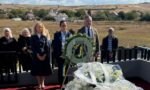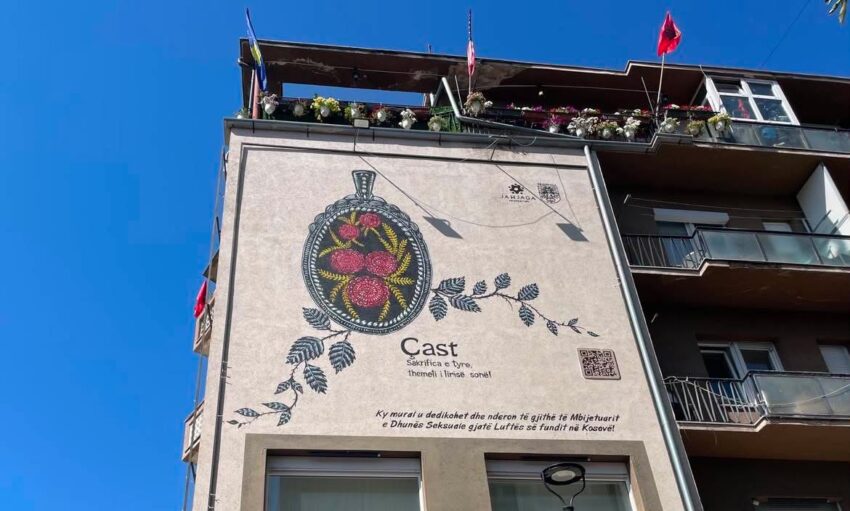
In a profoundly moving cultural and historical ceremony in the heart of the capital, the Municipality of Prishtina has officially unveiled the “Çast” (Moment) mural.
The public artwork is entirely dedicated to honoring, remembering, and restoring dignity to the survivors of sexual violence weaponized during the 1998–1999 Kosovo War. Organized by the Jahjaga Foundation and aggressively championed by municipal leadership, the monument aims to shatter decades of societal silence, transforming public space into a canvas of collective memory and institutional accountability.
1. The Foundation of Peace, Freedom, and Democracy
During the official ribbon-cutting ceremony, the Mayor of Prishtina, Përparim Rama, emphasized that the permanent installation is not merely decorative, but a vital institutional acknowledgment of structural historical trauma.
The Societal Anchors of the "Çast" Permanent Monument

 [ COLLECTIVE MEMORY ]   ──► SHATTERING THE STIGMA
 • Transforming a high-traffic urban zone in the heart of Prishtina into a
   permanent space for shared public reflection and historical awareness.

 [ HISTORICAL FOUNDATION ]──► UNDERPINNING DEMOCRACY
 • Formally recognizing that the raw sacrifice and survival of these victims
   serves as the foundational bedrock of Kosovo's modern peace and freedom.

 [ INSTITUTIONAL BACKING ]──► MUNICIPAL SUPPORT
 • Ensuring local government actively provides prominent urban spaces to give
   visibility to previously marginalized chapters of wartime history.
“This mural will remain here forever. For every citizen, visitor, or passerby, it will serve as a piece of collective social memory… It proves that the sacrifice of these survivors is the very foundation of the peace, freedom, and democracy we enjoy today.”
— Përparim Rama, Mayor of Prishtina
2. Transforming the Human Body Into a Battlefield
The core architect behind the initiative, former Kosovo President Atifete Jahjaga, delivered a stark, uncompromising speech detailing the historical weight behind the artwork. Timed alongside national liberation and liberation-month commemorations, Jahjaga emphasized that art must serve as undeniable public evidence.
The Legacy of Wartime Trauma in Kosovo (1998–1999)
┌────────────────────────────────────────────────────────────────────────┐
│                                                                        │
│  [ THE STATISTICAL TRUTH ] ────────────────────────────────────────┐   │
│  • More than 20,000 women and men suffered systemic sexual violence    │   │
│    during the war, a calculated strategy deployed by forces.          │   │
│                                                                        │   │
│  [ THE BODILY BATTLEFIELD ] ───────────────────────────────────────┤   │
│  • Jahjaga stressed that victims' bodies were deliberately transformed │   │
│    into geostrategic combat zones, utilizing rape as a systematic weapon│   │
│    of war to break the spirit of innocent civilian populations.        │   │
│                                                                        │   │
│  [ THE CITIZEN'S OBLIGATION ] ─────────────────────────────────────┘   │
│  • The installation demands a "one-minute pause" from every tourist,   │
│    local, and passerby to mentally step into the reality of survivors. │
└────────────────────────────────────────────────────────────────────────┘
3. Structural Alignment: Art as a Tool for Public Justice
The Jahjaga Foundation has indicated that the Prishtina launch is part of a broader, decentralized campaign. Similar initiatives are being coordinated across multiple municipalities throughout Kosovo to ensure the narrative of the survivors is permanently woven into national public spaces.
| Component Metric | The Status Quo of Historical Silence | The Post-Mural Structural Impact |
| Public Visibility | Wartime sexual violence largely kept within private, domestic spaces due to deep-seated cultural stigma. | Elevated into a prominent, undeniable public testimony directly visible to domestic and international tourists. |
| Narrative Framing | Survivors treated purely as passive victims of historical tragedy. | Re-framed institutionally as foundational figures whose survival actively built the state’s democratic framework. |
| Civic Engagement | Casual navigation of urban spaces without engaging with lingering, intergenerational war trauma. | Imposes an intentional, visual checkpoint forcing the public to stop, reflect, and practice collective empathy. |
By permanently establishing “Çast” in a high-density zone, the city of Prishtina and the Jahjaga Foundation are issuing a fierce, visual mandate: the history of Kosovo’s survivors will no longer be minimized, sanitized, or silenced. The monument stands as a living testament to resilience, guaranteeing that future generations will directly confront the true, unvarnished cost of the country’s hard-won independence.