Who in Serbia obtains citizenship through an expedited procedure, and who waits for years to receive it?
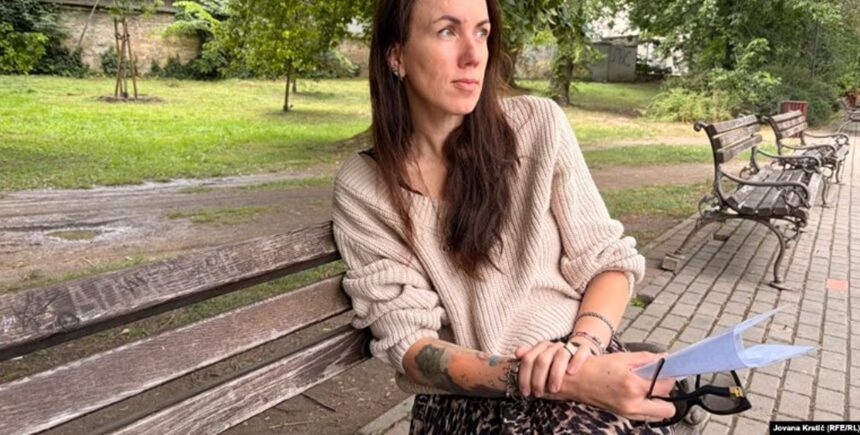
This is the question raised by Russian citizen Olga Suslova, who has been waiting for Serbian citizenship for more than two years.
She has lived in Novi Sad with her husband and three children since 2013. While the rest of her family already holds Serbian passports, Olga is still waiting for a decision.
Serbian citizenship can be acquired in two ways—through the regular application process or through a government decision under an accelerated procedure.
An analysis by Radio Free Europe/Radio Liberty (RFE/RL) shows that in the first five months of 2026 alone, 44 Russian citizens received Serbian citizenship through government decisions. Since the start of Russia’s full-scale invasion of Ukraine in 2022, more than 300 Russians have obtained citizenship through this route.
According to RFE/RL’s review of government decisions, some recipients have even been individuals subject to international sanctions.
“I feel very uncomfortable, especially when I read how many Russians are receiving Serbian citizenship,” Olga Suslova told RFE/RL.
Serbia’s Ministry of Interior did not respond to questions regarding how many pending citizenship applications from Russian nationals are currently awaiting processing.
“Our Life Is in Serbia”
“Our entire life is here. We own an apartment, a car, and have permanent jobs. I do everything according to the law. I consider Serbia my home,” Suslova said.
Together with her husband, Stanislav, she runs the humanitarian organization Dove of Peace, which assists refugees from Ukraine who have fled their country due to Russia’s invasion.
Olga applied for Serbian citizenship through the standard legal procedure by submitting her application to the Serbian Ministry of Interior.
The ministry did not respond to RFE/RL’s questions regarding her case.
“Some people receive citizenship as a gift, while those of us who live here, pay taxes and contributions here, and truly consider Serbia our home cannot even get an answer. What else do I need to do to deserve citizenship?” she asked.
“I Don’t Think This Is a Reasonable Waiting Period Anymore”
Olga’s husband and children applied for citizenship in 2021 and received it within a few months.
Under Serbian law, a foreign national married to a Serbian citizen for at least three years may acquire Serbian citizenship by submitting a written declaration stating that they consider Serbia their country.
Based on this provision, Olga submitted her application in April 2024.
She has been waiting for a response ever since.
“I regularly visit the Ministry of Interior and ask what is happening,” she said.
The law does not specify a clear deadline within which authorities must decide on citizenship applications.
“I have no information about how much longer I must wait. The law refers to a ‘reasonable period.’ I don’t know, but I believe this is no longer a reasonable amount of time,” she added.
Her husband, Stanislav Suslov, says he cannot feel completely secure until Olga receives citizenship.
“Even though Olga has permanent residency in Serbia, you never know what could happen tomorrow. What if a law changes? We, as Serbian citizens, are protected, but my wife is not,” he said.
Beyond the uncertainty, Olga says the lack of citizenship also affects her professional opportunities.
“It means I cannot even apply for certain jobs. There are licenses I would like to obtain, but I cannot.”
As a Russian citizen, she also cannot travel freely with her family to European Union countries because she requires a visa.
“My child cannot travel anywhere because she does not want to go without her mother. She is only ten years old,” Olga explained.
“I Will Not Return to Russia”
Olga and her husband left Russia in 2012.
“We packed our entire life into a car and left with our children,” she recalled.
“At the time, hardly anyone was leaving Russia, and people thought it was very strange because we had our own home and business. But my husband already felt that something bad was going to happen there and that we needed to leave.”
Since then, Olga has returned to Russia only twice, most recently in 2017.
“I will not return to Russia. That is out of the question. I have no reason to go there. I have nothing left there,” she said.
Some Are Considered ‘In the National Interest,’ Others a ‘Security Risk’
While some Russians receive Serbian citizenship because authorities determine that granting it is “in the national interest,” others have been denied residency on the grounds that they pose a “security risk.”
Many of these cases involve anti-war activists who arrived in Serbia after the outbreak of the war in Ukraine.
One such individual is Vladimir Volokhonski, a Russian dissident and anti-war activist who moved to Belgrade in May 2022 after facing pressure and persecution in Russia.
Together with other anti-war activists, he helped establish the NGO Russian Democratic Society and participated in protests against Russia’s invasion of Ukraine.
He remained in Serbia until September 2023, when authorities revoked his temporary residence permit.
At the time, Volokhonski told RFE/RL that Serbian police relied on assessments by the Security Information Agency (BIA), which concluded that his presence represented an “unacceptable security risk.”
He rejected the accusations, describing the decision as politically motivated.
At the time, the BIA was headed by Aleksandar Vulin, whose political party is part of Serbia’s governing coalition.
Serbia began taking measures against Russian anti-war activists after the United States imposed sanctions on Vulin in July 2023, citing, among other reasons, his ties to Russia.
Today, Volokhonski lives in Germany and says he still remembers his time in Serbia fondly.
However, he is troubled by seeing people linked to Russian President Vladimir Putin’s regime receiving Serbian citizenship.
Asked whether he would ever return to Serbia, he said he would like to spend his retirement there.
“For now, however, I am banned from entering the country,” he said.
Closing the Door to Putin’s Opponents
Around the same time, Serbia also denied residency to Yevgeny Irzhansky, citing similar security concerns.
Irzhansky had moved to Serbia in April 2022 and was involved in organizing concerts featuring anti-war bands from Russia, Belarus, and Ukraine.
A similar experience was faced by anti-war activist Ilya Zernov, who was denied entry into Serbia while traveling from Germany to attend court proceedings related to an earlier attack against him in Belgrade.
In July 2024, Irina Tereh, her husband, and their son were also forced to leave Serbia after authorities rejected their application for temporary residency, again citing national security concerns.
RFE/RL recently reported on the case of Russian citizen Dmitrij Lagovski, whom Russia seeks to extradite on allegations of economic crimes.
Lagovski, who has lived in Serbia since 2022, denies any wrongdoing and claims the real reason is Russia’s desire to send him to the front lines in Ukraine.
Serbian courts have approved his extradition, but the final decision remains pending before the Minister of Justice. There is no legal deadline requiring the minister to approve or reject the extradition order.
Serbia remains one of the few European countries that has not imposed sanctions on Russia over its aggression against Ukraine. As a candidate for European Union membership, Serbia is expected to align its foreign policy with that of the EU before joining the bloc.