The first high-level round of emergency peace negotiations between the United States and Iran has concluded with “encouraging progress,” according to a joint statement released early Monday by co-mediators Qatar and Pakistan.
The high-stakes summit, convened at the Bürgenstock luxury resort overlooking Lake Lucerne, aimed to hammer out the technical frameworks of a preliminary 14-point Memorandum of Understanding (MoU) electronically signed last week. The primary objective is to forge a permanent treaty to end the devastating regional war within a strict 60-day deadline.
The 60-Day Roadmap and Strategic Breakthroughs
Despite extreme diplomatic friction on Sunday that initially threatened to derail the summit, the two delegations successfully formulated a political roadmap. Under the oversight of a newly formed “High-Level Committee,” lower-level diplomatic teams will continue technical negotiations in Switzerland for the remainder of the week.
The early Monday accord established several crucial regional security mechanisms:
- The Lebanon De-Confliction Cell: A dedicated monitoring cell involving Washington, Tehran, and the Lebanese government to ensure a comprehensive cessation of hostilities between Israeli forces and the Iran-backed Hezbollah militia.
- The Strait of Hormuz Hot Line: A direct, real-time communication line between U.S. and Iranian naval authorities to prevent tactical miscalculations and guarantee the safe passage of commercial vessels through the vital energy corridor.
- Sanctions Relief Actions: Iranian Foreign Minister Seyed Abbas Araghchi confirmed that under the initial phase, the U.S. has waived specific oil and petrochemical export restrictions, lifted port blockades, and initiated the release of selected frozen Iranian foreign assets.
                  THE BÜRGENSTOCK DE-ESCALATION ROADMAP

   SECURITY MECHANISMS CHANNELS                  ECONOMIC & DIPLOMATIC FREQUENCIES
 ──────────────────────────────────           ───────────────────────────────────────
 • Direct naval hot line to secure            • Partial waivers implemented on
   the strategic Strait of Hormuz.              Iranian oil & petrochem exports.
 • Joint "De-Confliction Cell" to             • Incremental release of frozen
   enforce the ceasefire in Lebanon.            overseas Iranian sovereign assets.
 • Framework for future IAEA nuclear          • High-Level Committee political
   inspections post-sanctions dispute.          oversight over 60-day treaty target.
A Shaky Start Under the Shadow of Social Media Threats
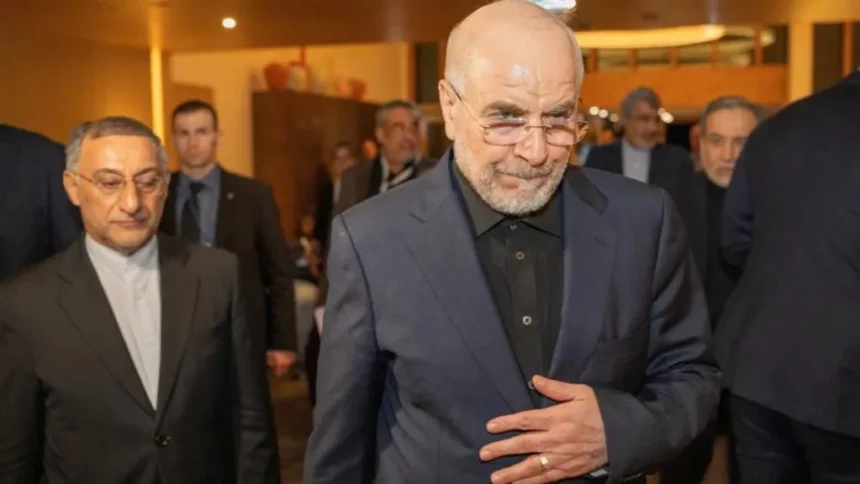
The successful conclusion of the first session came after a highly volatile opening day. High-level delegations—led on the U.S. side by Vice President JD Vance and on the Iranian side by Parliament Speaker Mohammad Bagher Ghalibaf and Foreign Minister Abbas Araghchi—stumbled early Sunday. Iranian negotiators briefly staged a walkout following a barrage of hardline threats posted on social media by U.S. President Donald Trump, who threatened severe military strikes if the Strait of Hormuz was not immediately reopened.
Tireless background diplomacy by Pakistani Prime Minister Shehbaz Sharif and Qatari Prime Minister Sheikh Mohammed bin Abdulrahman Al Thani eventually brought the parties back to the table, culminating in a breakthrough session that stretched until 3:00 AM local time.
“Tireless Pakistani and Qatari mediation has delivered major progress to end the Lebanon War,” Iranian Foreign Minister Araghchi stated publicly on Monday morning. However, he maintained a realistic outlook on the fragile deal, adding that “the first real test remains the functioning of the Lebanon de-confliction cell.”
While U.S. Vice President JD Vance acknowledged that international peace processes are “always a little bit messy,” the establishment of structured working groups focusing on sanctions lifting, maritime safety, and future nuclear verification protocols has provided a vital diplomatic window to prevent total regional escalation.