
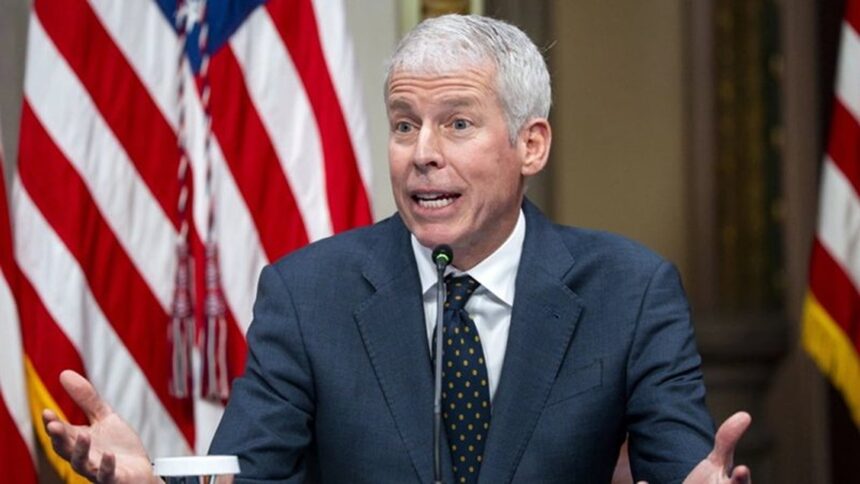
Maritime traffic through the Strait of Hormuz remains largely unaffected despite recent tensions in the region, U.S. Energy Secretary Chris Wright said, noting that 67 vessels have passed through the strategic waterway over the past 24 hours.
In an interview with Fox News, Wright stated that the number of ships transporting oil and petroleum products remains at levels similar to those recorded before the recent escalation of the regional crisis.
His remarks came a day after Iranian authorities announced the closure of the Strait of Hormuz due to military tensions in the Middle East. However, Washington immediately challenged that claim, emphasizing that maritime traffic continues to move through the area.
Wright revealed that the main shipping corridor has not yet been fully reopened, but the United States has established an alternative route further south to ensure the safe passage of commercial vessels.
“We have created a dedicated corridor in the south and are escorting ships passing through it,” he said.
According to the U.S. Energy Secretary, the measure is intended to ensure the continued operation of one of the world’s most important maritime routes for global energy transportation.
However, Wright acknowledged that security concerns remain high within the shipping industry, as many companies and vessel operators continue to closely monitor developments in the region.
The Strait of Hormuz is considered one of the most critical energy chokepoints in the world, as a significant portion of global oil exports and liquefied natural gas shipments pass through it.
Any disruption to traffic in this strategic maritime corridor has the potential to directly impact international energy markets and the supply chains of major importing economies.