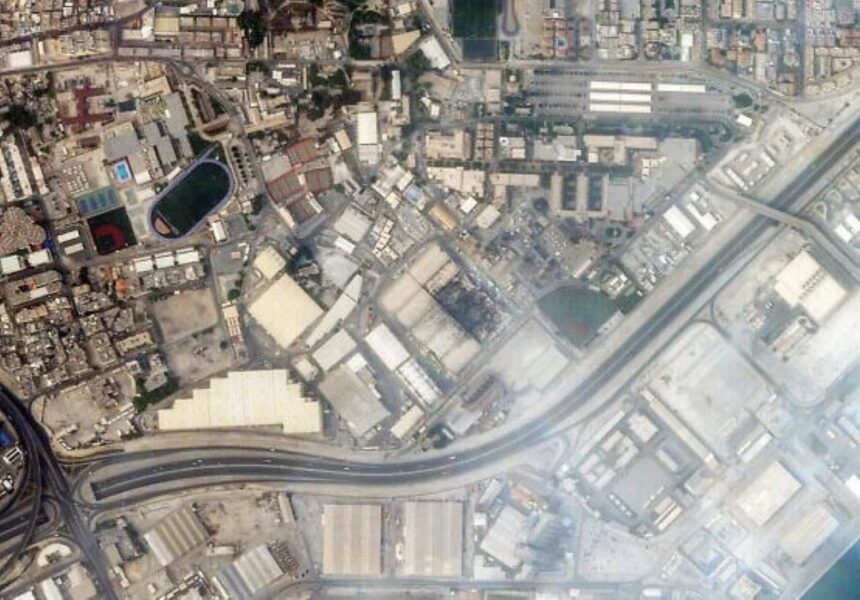
The U.S. Department of Defense is actively reviewing plans to relocate several major military installations away from Saudi Arabia and Kuwait, aiming to reduce strategic vulnerability to Iranian missile strikes should Middle East hostilities reignite, The Wall Street Journal reported.
The shifting posture comes in the wake of the major U.S. military confrontation against Iran on February 28, which left approximately 20 American bases across the region damaged by Iranian retaliatory strikes. The vulnerability of these fixed installations to Tehran’s precise, short- and medium-range ballistic missile arsenals has prompted Washington to aggressively re-evaluate its long-standing footprint in the Persian Gulf.
Strategic Dispersal: Israel Emerge as a Potential Host
To safeguard its regional capabilities, the U.S. military command is focusing on two parallel strategies:
- The Israel Option: Israel is currently being evaluated as a primary potential host country for some of the critical assets and logistics hubs slated to be moved out of Saudi Arabia and Kuwait.
- Horizontal Dispersal: Rather than relying on massive, consolidated legacy hubs, the Pentagon is designing options for a highly distributed, decentralized web of smaller military facilities across the wider Middle East to lower their target profile in any future kinetic conflict.
                  [Pentagon Strategic Realignment]
                                 │
         ┌───────────────────────┴───────────────────────┐
         ▼                                               ▼
[Relocate Core Assets]                         [De-Consolidate Footprint]
Moving vulnerable hubs from Gulf               Dispersing legacy mega-bases
states toward hardened sites in Israel.        into flexible, decentralized webs.
The Fragile Diplomatic Backdrop: The Bürgenstock Talks
The military reshuffling is taking place alongside intensive, back-channel diplomatic maneuvers to solidify a fragile cessation of hostilities:
| Key Date | Diplomatic Milestone | Current Operational Status |
| June 17, 2026 | Ceasefire Memorandum | The U.S. and Iran remotely signed a memorandum of understanding establishing an immediate, comprehensive ceasefire across all regional fronts, including Lebanon. |
| June 21, 2026 | Bürgenstock Ratification | High-level U.S.-Iran ratification talks commenced in Bürgenstock, Switzerland, mediated jointly by Qatar and Pakistan. |
Joint Diplomatic Assessment: Following the conclusion of the first round of the Bürgenstock talks, both Washington and Tehran issued rare parallel statements describing the atmosphere as “positive and constructive,” noting significant progress in establishing the framework for upcoming technical and security negotiations.
Despite the optimistic diplomatic trajectory in Switzerland, defense planners in Washington emphasize that the structural threat posed by Iran’s missile proliferation remains unchanged, necessitating a permanent shift toward a more resilient, agile, and bulletproof American defense posture in the region.