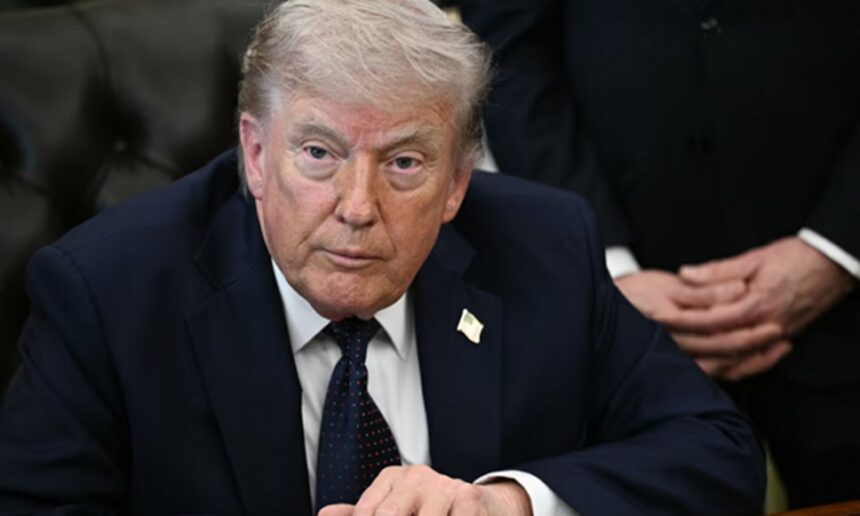
U.S. President Donald Trump announced early Monday that the United States and Iran are poised to resume high-stakes diplomatic talks in Qatar. The announcement comes on the heels of a volatile weekend of military hostilities in the Middle East that severely strained a newly minted, fragile interim peace agreement.
Writing on his Truth Social platform, President Trump claimed the diplomatic push was initiated by Tehran: “IRAN HAS REQUESTED A MEETING. IT WILL TAKE PLACE TOMORROW IN DOHA!”
High-Level Envoys Deployed to Qatar
Confirming the administration’s immediate engagement, White House Press Secretary Karoline Leavitt announced that top U.S. officials are en route to the Qatari capital.
The U.S. delegation will feature heavy political weight, reflecting the urgency of salvaging the bilateral maritime pact:
- Key Diplomats: Steve Witkoff, Special Envoy for Peace Missions, and Trump’s son-in-law Jared Kushner will lead the high-level political meetings.
- Dual-Track Approach: Parallel to senior-level diplomatic engagement, lower-level technical teams are slated to meet on the sidelines to hammer out specific operational details of the existing Memorandum of Understanding (MoU).
The Catalyst: Weekend Clashes and the Strait of Hormuz Chokepoint
The sudden shift back to the negotiating table follows intense tit-for-tat military strikes over the weekend. The U.S. military launched targeted strikes against Iranian military installations in response to fresh attacks on international commercial shipping in the Strait of Hormuz—a critical chokepoint handling roughly 20% of the world’s global oil supply.
   [Weekend Escalation: Attacks on Shipping & Retaliatory U.S. Strikes]
                                  │
                                  ▼
      [Strategic Stand-Down: Both Sides Cease Kinetic Hostilities]
                                  │
       ┌──────────────────────────┴──────────────────────────┐
       ▼                                                     ▼
[High-Level Political Track]               [Technical Sideline Working Groups]
Led by Kushner & Witkoff to secure         Focusing on local maritime navigation,
the overarching 60-day interim deal.       transit rules, and regional de-escalation.
The localized conflict prompted an aggressive warning from President Trump on Sunday, who threatened Iran with absolute military annihilation if hostilities continued. However, by Monday morning, U.S. and regional officials confirmed that both sides agreed to an immediate “stand-down” from kinetic actions, allowing commercial vessels to resume free transit through the waterway while diplomats meet.
Mixed Signals and Domestic Pressures
Despite the momentum from Washington, the impending talks are clouded by conflicting public statements from Tehran, exposing deep political sensitivities inside Iran:
| Stakeholder / Actor | Public Stance | Underlying Strategic Driver |
| President Donald Trump | Trumpeting the meeting as an Iranian request. | Driven to protect the domestic economy; preventing a surge in oil prices that could fuel inflation ahead of elections. |
| President Masoud Pezeshkian | Highlighted the expected release of $6 billion in frozen Iranian assets via Qatari banks. | Attempting to sell the controversial interim pact to a skeptical domestic public in Tehran. |
| Deputy FM Kazem Gharibabadi | Denied that any formal “technical working group” talks were officially scheduled. | Reflects internal regime friction and tactical posturing to avoid appearing weak under American military threats. |
Under the broader interim framework signed earlier this month, the two countries bought a 60-day window to resolve their complex maritime and nuclear standoffs. Tehran agreed to dilute its highly enriched uranium stockpile in exchange for partial sanctions waivers and the unfreezing of state assets.
With the stand-down holding, the upcoming Doha summit represents a critical, zero-hour attempt to institutionalize the maritime corridor rules before rogue maritime attacks trigger an outright regional war.