Commercial maritime traffic through the Strait of Hormuz registered a modest but highly symbolic increase over the last 36 hours. The shift, captured by real-time satellite tracking data, comes immediately after a senior U.S. official confirmed that Washington and Tehran have agreed to a temporary freeze on kinetic hostilities in the Persian Gulf.
The breakthrough follows several days of localized military skirmishes that effectively brought global energy transits to a standstill. According to vessel tracking intelligence providers Kpler and Windward, the sudden lull in physical clashes has encouraged a wave of major commercial operators to greenlight transits out of the strategic choke point.
Convoys Navigate the Southern Corridor
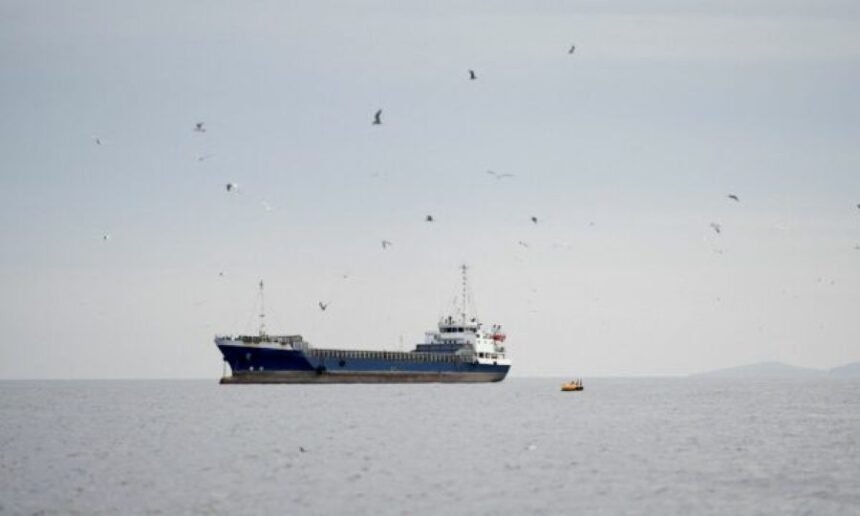
Automated Identification System (AIS) signals captured on Monday morning show a cluster of large crude and product tankers systematically navigating out of the Gulf.
Rather than utilizing the traditional, pre-war traffic separation schemes, the vessels are heavily favoring a southern route designed by the International Maritime Organization (IMO)—hugging the territorial waters of Oman to minimize proximity to Iranian patrol boats:
- The Vaughan: A partially loaded oil and chemical tanker tracked steering toward the major bunkering hub of Fujairah, UAE.
- The Das: A fully laden crude oil carrier executing a matching outward maneuver via the Omani coast.
- The Nissos Heraclea: A Greek-operated Aframax tanker carrying Iraqi crude, successfully clearing the channel after departing the port of Basra three days prior.
                  [Strait of Hormuz Corridor Routing]
                                   │
       ┌───────────────────────────┴───────────────────────────┐
       ▼                                                       ▼
[The Southern Route]                                   [The Northern Route]
(Omani Coastal Waters)                                 (Iranian Territorial Waters)
• Utilized by the *Vaughan* and *Das*.                • Maintained via Iranian state demands.
• Favored by Western/Greek operators.                  • Accommodated the dry-bulk *Star Kamila*.
• Designed to reduce interception risks.               • Regulated south of Larak Island.
Container Fleets Re-enter the Persian Gulf
The stabilization has also trickled down to consumer supply chains. Maritime intelligence firm Kpler confirmed that three major container ships entered the Persian Gulf over the weekend. These transits mark the first time commercial container liners tied to top-tier global shipping alliances have risked entering the waterway since the outbreak of active hostilities earlier this year.
However, analysts caution that calculating the precise volume of trade remains difficult. Due to extreme war-risk insurance conditions, an estimated one-third of active vessels continue to transit the strait “dark,” disabling their AIS transponders to prevent automated targeting by regional paramilitaries.
Geopolitical Posturing and Jurisdiction Clashes
Despite the temporary ceasefire brokered via Qatari nd Omani backchannels, Tehran continues to flex its institutional muscles over the shipping lane. Iranian state television broadcast a fresh directive from the Iranian Navy, re-asserting that all inbound and outbound merchant hulls must secure explicit passage permits and transit strictly south of Larak Island.
| Monitoring Firm / Metric | Documented Movement Data | Fleet Composition Notes |
| Windward Transits (Sunday) | 42 Total Transits | Comprised 28 inbound vessels and 14 outbound hulls. |
| Outward Flow Balance | Product-Dominated | Majority of clearing hulls consisted of clean product tankers and dry-bulk carriers. |
| Inbound Convoy Dynamics | 5-Ship Group | Included a Very Large Crude Carrier (VLCC) returning to service after being anchored since February. |
The gradual uptick toward a normal baseline of transit volume provides much-needed breathing room to global energy Desks. Nevertheless, maritime underwriters at Lloyd’s maintain that true normalization turns entirely on whether the impending technical talks in Doha can translate this fragile military stand-down into a binding maritime navigation treaty before insurance liabilities snap back in August.