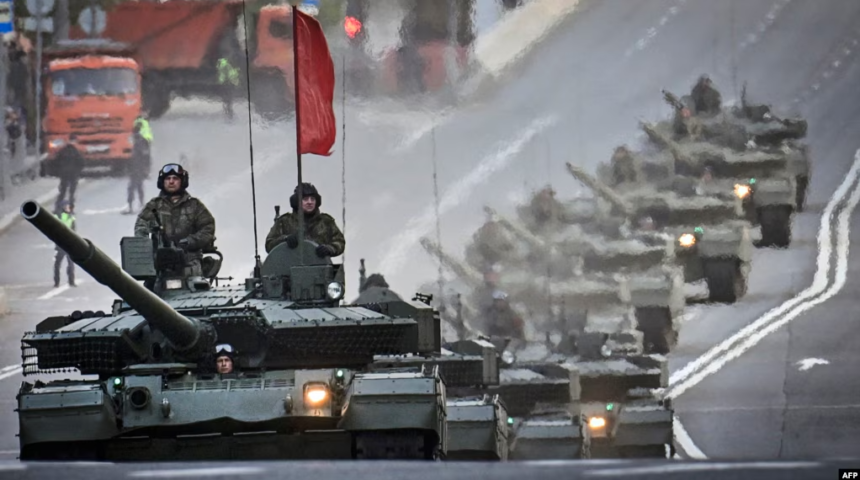
In a sobering security assessment published on Monday, June 29, 2026, the Netherlands Ministry of Defence warned that Russia could launch a “limited” conventional military campaign against a NATO member state within a single year of hostilities concluding in Ukraine.
The alert was issued within the cabinet’s latest annual defense policy strategy paper, titled “Samen Voorwaarts” (Forward Together). The report notes that Europe has officially slipped into a highly volatile “gray area” separating active peace from continent-wide war, forcing the Dutch government to implement radical structural overhauls to its national defense architecture.
MIVD Intelligence: Preparing for Long-Term Confrontation
The core of the warning stems from joint assessments compiled by the Dutch Military Intelligence and Security Service (MIVD). Intelligence directors emphasize that the Kremlin is systematically restructuring its economy and military-industrial complex to sustain a multi-decade confrontation with the West.
According to the MIVD, the strategic threat scenario does not involve an immediate, full-scale invasion aimed at militarily defeating the Western alliance. Instead, the Kremlin’s operational goal is hybrid fragmentation:
Netherlands Ministry of Defence: “In the worst-case scenario, a limited war against NATO members could be possible within one year of the Russian war in Ukraine ending. The Dutch intelligence services estimate that Russia is preparing for a long-term confrontation with Europe.”
Military analysts note that Russia’s armed forces have demonstrated significant adaptive capacity in Ukraine—particularly in integrating unmanned platforms and tactical electronic warfare. The MIVD warns that once the intensive attrition of the Ukrainian front lines pauses, Moscow will move quickly to exploit perceived political divisions within NATO, testing collective defense parameters under the protection of its nuclear umbrella.
The Paradigm Shift: Going Half Unmanned Within Five Years
To counter the rapidly advancing threat from Moscow, Dutch Defense Minister Dilan Yeşilgöz and Junior Minister Derk Boswijk announced a major operational shift. The Netherlands has committed to a target where over 50% of its total military operational capabilities will be entirely unmanned within five years.
                   [Dutch Defense Restructuring Goals]
                                    │
       ┌────────────────────────────┴────────────────────────────┐
       ▼                                                         ▼
[Unmanned Specialization]                              [Conventional Reinforcement]
• Establishment of an autonomous Drone Lab.            • Procurement of additional F-35 jets.
• Transitioning 50% of operations to robotics.         • Fleet expansion of NH-90 helicopters.
• Developing specialized "drone-on-drone" tech.       • Rebuilding a heavy mechanized tank brigade.
The pivot toward drone-dominated warfare is heavily informed by combat lessons emerging from Eastern Europe, where low-cost loitering munitions have frequently neutralized multimillion-dollar conventional assets. To bypass the extreme financial friction of firing expensive traditional air-defense systems (like Patriot missiles) at cheap saturation drones, the Dutch government will establish a specialized state development laboratory dedicated exclusively to engineering autonomous, cost-efficient “drone-on-drone” interception networks.
Funding the Shift: Eyes on the Ankara Summit
The release of the white paper is intentionally timed ahead of the high-stakes NATO Summit in Ankara, Turkey, on July 7–8, 2026, where collective European military readiness and Eastern Flank deterrence will dominate the alliance’s agenda.
| Strategic Metric | New Policy Target | Existing Structural Baseline |
| Total Defense Payroll Target | 122,000 personnel | Currently sits at 80,000 volunteers; gap may trigger selective conscription. |
| Operational Automation | Over 50% unmanned | Shifting current manual logistics and scout operations to fully automated platforms. |
| Border Enforcement | 1,000 extra police | Adding 10 new squadrons to the Royal Marechaussee for critical infrastructure guarding. |
The aggressive spending push is designed to firmly cement the Netherlands’ alignment with NATO’s revised collective defense demands. However, meeting the expansive equipment and personnel targets will require a massive societal shift.
To bridge the gap between the country’s current active volunteer force of 80,000 and the required 122,000 personnel, the defense ministry confirmed it is actively reviewing options for “selective conscription” for citizens aged 17 to 45—a framework dormant since active national service was suspended in 1997.
Defense Minister Dilan Yeşilgöz: “The question is whether Europe and the Netherlands will be strong enough in time to protect our freedom, security, and way of life. This is a responsibility for every generation, but rarely has it been so staggeringly urgent.”