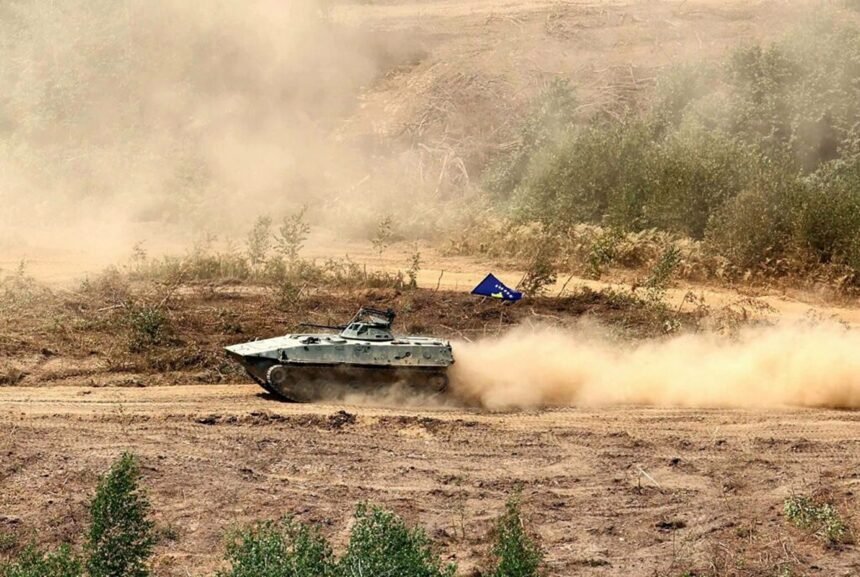
The international military exercise “Combat Power 26,” in which members of the Kosovo Security Force (KSF) participated in Croatia, has become another tool in Serbia’s narrative portraying Kosovo as a threat to regional security. Through an article published by Novosti.rs, Belgrade presents the exercise as “evidence” of a danger to Serbia, using it to reinforce its longstanding narrative that justifies the country’s militarization and military buildup.
At the invitation of Croatia’s Deputy Prime Minister and Minister of Defence, Ivan Anušić, Kosovo’s Acting Minister of Defence, Ejup Maqedonci, attended the Distinguished Visitors Day (DV Day) on July 1 as part of the international “Combat Power 26” exercise, held at the Slunj military training ground in Croatia.
The exercise also prompted a reaction from the Serbian state.
An article published by Novosti.rs clearly reflects Serbia’s narrative toward Kosovo, aiming to portray the strengthening of Kosovo’s security capabilities and its cooperation with regional partners as a direct threat to Serbia.
The narrative begins with the alarmist headline, “What is being prepared?”, suggesting that the KSF’s participation in “Combat Power 26” is not a routine military exercise but part of preparations directed against Serbia. In the same vein, the repeated use of terms such as “the fake state” and “the so-called KSF” seeks to delegitimize Kosovo’s statehood and its security institutions.
As the article illustrates, this represents a continuation of the narrative Serbia has promoted since the signing of the defense cooperation agreement between Kosovo, Albania, and Croatia. Rather than treating it as a standard defense cooperation agreement among partners, Serbia’s official and pro-government media discourse portrays it as the formation of a military alliance aimed against Serbia. Every joint exercise, military activity, or development of the KSF’s capabilities is framed as further evidence that Serbia is facing a new regional threat.
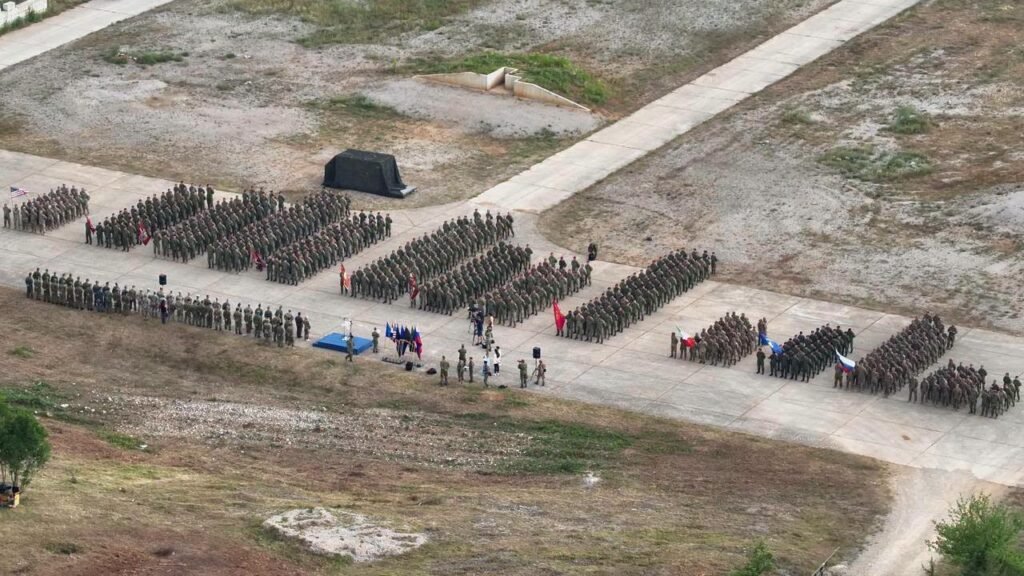
The structure of the article also serves to reinforce the perception of a “besieged Serbia,” which, according to this narrative, must continue strengthening and modernizing its armed forces. By constructing the image of an external threat, the narrative provides political justification for increased military spending, the acquisition of new weapons systems, and the militarization of public discourse, presenting these measures as necessary acts of national defense.
Through this framing, Novosti.rs does more than report on a military exercise. It uses the event to reinforce the broader strategic narrative that Kosovo, in coordination with Croatia and Albania, is building military capabilities that pose a danger to Serbia.
This narrative appears intended to simultaneously delegitimize Kosovo’s institutions, foster a sense of insecurity among the Serbian public, and justify the continued military policies of Serbian President Aleksandar Vučić by portraying Serbia’s rearmament as a response to an alleged external threat.