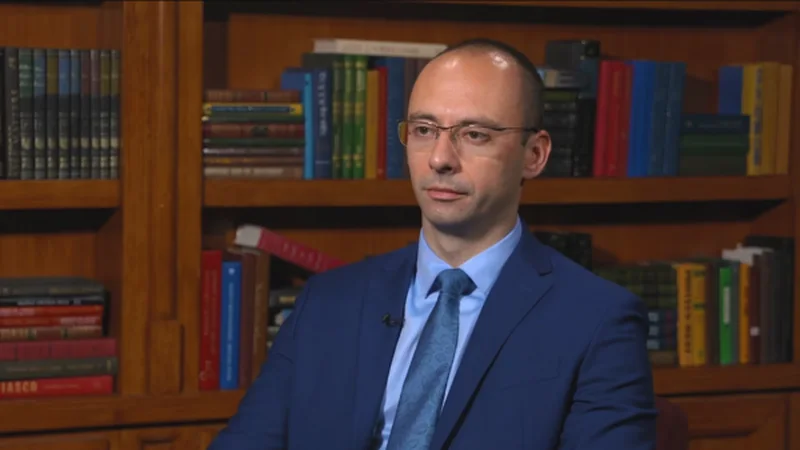
The Vice President of Srpska Lista, Igor Simic, has launched a series of unproven accusations against the Minister for Communities and Return, Nenad Rasic, and Kosovo’s institutions, closely following the hardline political line of official Belgrade.
In an interview broadcast on July 15, 2026, on Radio Beograd, Simic sought to delegitimize Rasic, claiming that the latter does not enjoy the support of local Serbs and that his political representation is built on Albanian votes.
Key Points of Simic’s Statements
During the interview on the show “U sredu sa Bojanom Bilbijom”, the Srpska Lista official repeated arguments aimed at maintaining his party’s monopoly over Serb representation in Kosovo:
- Accusations of a “Multi-ethnicity Card”: Simic claimed that Rasic is being used by the government in Pristina to project a false image of integration and has acquired political mandates against the will of the Serb community.
- Attacks on Albin Kurti: The Vice President of Srpska Lista asserted that the Kosovo government is exercising “systemic pressure” on Serbs. He referenced a high number of alleged attacks since Kurti took office, yet failed to provide any official reports, verifiable statistics, or reliable sources to support these claims.
- Message of Dependence on Belgrade: Simic emphasized that “without Belgrade and Serbia, there would be no Serbs in Kosovo,” rejecting the term “Kosovo Serbs” and insisting on total unity with the leadership in Serbia.
The Legal Framework and the Reality of Kosovo’s Elections
Simic’s claims that Rasic is “illegitimate” because of potential crossover voting from other communities run contrary to the very principles of Kosovo’s democratic and constitutional system:
Free and Equal Vote: Kosovo’s electoral system guarantees that any citizen with the right to vote can support any candidate or political entity, free of ethnic restrictions. The fact that a Serb politician receives votes from Albanians or other communities is entirely legal and legitimate.
The Backstory: The Battle for the Serb Voice
This recent clash occurs during a highly tense political period, following disputes over parliamentary mandates and ongoing complaints by Srpska Lista against the Central Election Commission (CEC) regarding electoral processes.
While Srpska Lista continues to employ confrontational language and rely on Belgrade’s directives to boycott or challenge Pristina’s authority, politicians like Nenad Rasic represent a faction that supports institutional integration and resolving issues through cooperation with the institutions of the Republic of Kosovo.
For the authorities in Pristina, actions taken across the country remain part of efforts to extend the constitutional order and the rule of law to all territories, viewing Simic’s statements as political propaganda designed to keep the local Serb public under pressure.