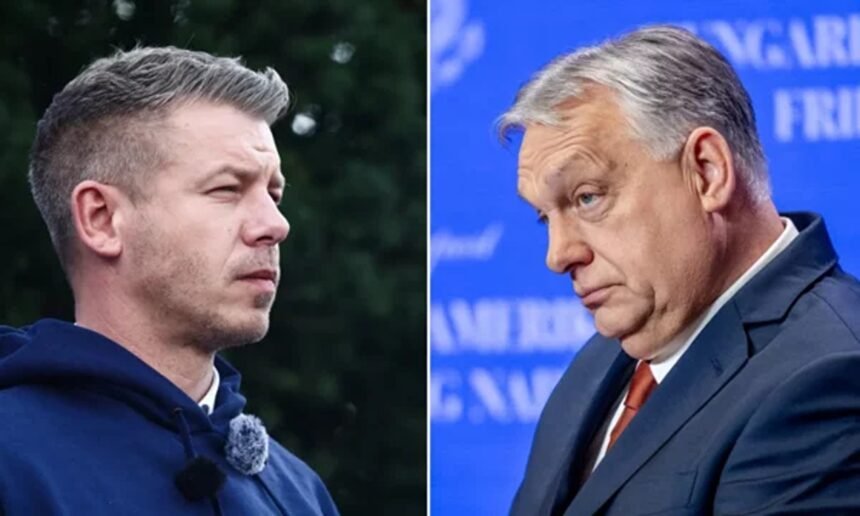
Backed by a two-thirds parliamentary majority, Prime Minister Peter Magyar’s government is rapidly and fundamentally reshaping Hungary’s Constitution. While the reforms aim to dismantle the institutional legacy of Viktor Orbán’s 16-year rule, they have also sparked debate over the limits of constitutional change and the preservation of the rule of law.
Anticipating the possibility of losing power, Orbán had spent years placing loyalists in key positions across Hungary’s state institutions and public administration. Their dismissal was tied to a two-thirds parliamentary majority, ensuring that many institutions would remain under his influence even after leaving office. The strategy was designed to obstruct any future government and allow Orbán to continue exercising influence from behind the scenes.
What the ousted prime minister failed to foresee was the crushing defeat of his Fidesz party on 12 April, followed by the opposition Tisza Party’s historic two-thirds majority. Since taking office, Peter Magyar has used that mandate to systematically dismantle Orbán’s political system in what he has called “Operation Purgatory.”
The most significant phase of the operation took place on 13 July 2026, just two months after Magyar assumed office, when Hungary’s parliament approved sweeping constitutional amendments proposed by his government.
The reforms require several senior officials closely associated with the Orbán era to leave office, including President Tamás Sulyok and four Constitutional Court judges. Throughout his election campaign, Magyar repeatedly referred to them as “Orbán’s puppets” and pledged to remove them from office.
At the same time, the constitutional amendments reverse several of the most controversial changes introduced under Orbán. The Constitutional Court regains many of its original powers, judicial independence is strengthened, the number of laws requiring a two-thirds majority is reduced, a new agency will be established to recover illegally acquired assets, and members of parliament will now be limited to a maximum of three consecutive terms.
How Far Can Democratic Restoration Go?
The question of whether populist or authoritarian systems can be dismantled without undermining democratic principles has become a major topic across the European Union since Orbán first came to power in 2010.
Unlike Poland’s Donald Tusk, whose government lacks a constitutional majority, Peter Magyar possesses the parliamentary numbers needed to implement far-reaching reforms. Within both the Tisza Party and much of Hungarian society, there is strong political support for fundamentally breaking with the Orbán era.
Many observers compare today’s atmosphere in Hungary to the democratic transitions of 1989, describing it as another “systemic transformation.” After sixteen years of increasingly centralized power, many Hungarians believe profound institutional reform has become necessary.
Responding to criticism, Magyar defended the constitutional overhaul, arguing that failing to amend the current Constitution would amount to “betraying the Hungarian nation,” describing the existing constitutional framework as “the founding document of a Cosa Nostra-style system” created by Fidesz and its coalition partner, the Christian Democratic People’s Party (KDNP).
Legal experts have long argued that Orbán repeatedly amended Hungary’s Constitution to serve political interests, inserting provisions that many believe never belonged in a country’s fundamental law.
Orbán Claims Democracy Has Ended
Fidesz and KDNP lawmakers boycotted the parliamentary vote, refusing to participate in the constitutional amendments. Orbán and senior Fidesz officials claimed the reforms marked “the end of democracy and the rule of law in Hungary.”
However, a protest organized by Fidesz in Budapest attracted only a few thousand participants—a stark contrast to the massive demonstrations the party once mobilized while in power.
Signs of internal fragmentation within Orbán’s political camp have also intensified. Shortly before the constitutional vote, Gergely Gulyás, the former third most powerful figure in Orbán’s government and parliamentary leader of Fidesz, resigned, saying he could no longer lead the parliamentary group.
Meanwhile, Viktor Orbán himself, who stepped down as a member of parliament after the election defeat but was recently re-elected as Fidesz chairman, was traveling to the FIFA World Cup in the United States.
Former Prime Minister Increasingly Isolated
Several political commentators argued that Orbán had abandoned both his party and supporters at a critical moment.
Hungarian news outlet Telex wrote that “Viktor Orbán is pushing himself out of political relevance.” Political scientist Gábor Török commented that if Orbán truly believed democracy in Hungary had ended, he would not have traveled abroad to attend the World Cup. According to Török, what has truly ended is the political myth surrounding Viktor Orbán.
Most independent observers do not believe Hungary is entering another authoritarian era under Peter Magyar. Nevertheless, legal scholars and civil society organizations have expressed concerns about certain constitutional changes and the extraordinary speed with which they are being implemented.
The Hungarian Helsinki Committee and the Hungarian Civil Liberties Union (TASZ) have criticized the introduction of parliamentary term limits and noted that constitutional provisions affecting sexual and ethnic minorities remain unchanged.
Debate Over Removing the President
Public opinion remains divided over Magyar’s campaign to remove President Tamás Sulyok.
Critics argue that Sulyok remained silent during many of the Orbán government’s most serious violations of democratic standards, making calls for his resignation morally justified. However, organizations including Amnesty International Hungary warn that Magyar should avoid adopting the same personalized constitutional tactics previously used by Orbán.
President Sulyok now faces two options. He can sign the constitutional amendments within five days, effectively confirming his own removal from office, or delay his signature, potentially triggering impeachment proceedings initiated by the new government. In that scenario, Parliament Speaker Ágnes Forsthoffer would temporarily assume presidential duties and sign the amendments into law.
Magyar has stressed that these constitutional changes represent only an interim step. Honoring a key campaign promise, he announced that beginning this autumn, Hungary will launch a comprehensive public debate aimed at drafting an entirely new constitution.