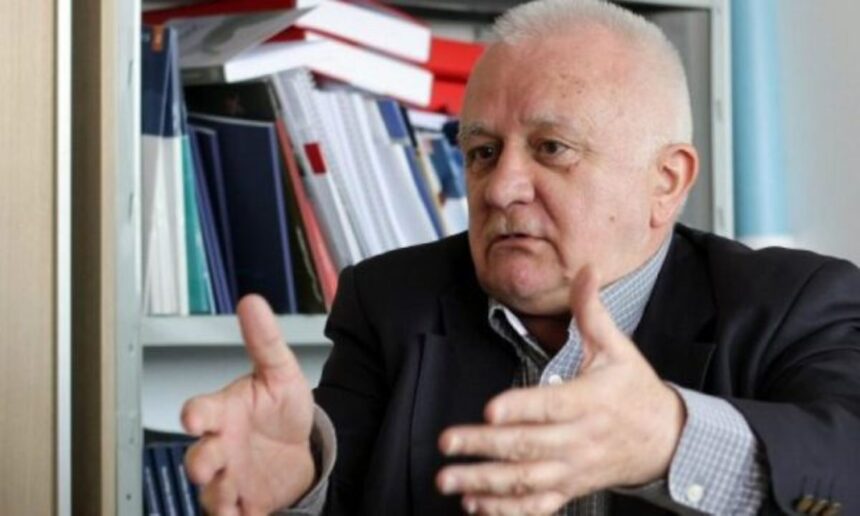
Statements by Serbia’s Minister of Public Administration Snežana Paunović suggesting that, if she had been in the position of Slobodan Milošević, she would have carried out the ethnic cleansing of Kosovo’s Albanians, are even more serious than Milošević’s own policies, according to political analyst Dušan Janjić.
Janjić, founder and executive board chairman of the Forum for Ethnic Relations and a long-time expert on Balkan affairs, said Paunović’s remarks were not an isolated position but part of a wider political narrative involving senior Serbian officials, including President Aleksandar Vučić and Interior Minister Ivica Dačić.
“In the end, I can say that this statement is even more drastic than Milošević’s policy itself. It implies that Milošević did not finish what he started and calls for that process to be completed,” Janjić said.
He argued that Paunović should bear personal responsibility for her statements and questioned whether someone expressing such views should hold public office. However, he added that she represents a broader campaign in which, according to him, other influential figures in Serbia are also involved.
Janjić said that Serbia’s political approach toward Kosovo has not significantly changed since the era of Milošević, although the methods have evolved.
“Unfortunately, no. Only one thing has changed. When Milošević was building and imposing his policy, he faced strong resistance, not only from Albanians and within the League of Communists, but also in Serbia itself,” Janjić said.
He argued that after 2000, narratives developed during the Milošević era about the wars in Kosovo and Bosnia and Herzegovina gradually became embedded in public discourse and education in Serbia.
According to Janjić, many young people today view Kosovo more as a historical myth than as a place where people live, warning that such narratives continue to influence political thinking.
He also criticized the European Union’s approach to the Kosovo-Serbia dialogue, arguing that the process failed to address the need for social normalization within both societies.
“The dialogue for normalization never started from the basic premise that normalization of relations between Serbia and Kosovo also requires normalization of societies in both Kosovo and Serbia,” Janjić said.
He accused Vučić of maintaining a dual political strategy — presenting figures such as Paunović and Dačić to appeal to nationalist voters while portraying himself internationally as a moderate figure capable of resolving tensions.
Janjić added that there are currently no truly moderate political forces dominating Serbia’s political scene, although he stressed that many citizens, including student movements and protesters dissatisfied with the government, hold different views.