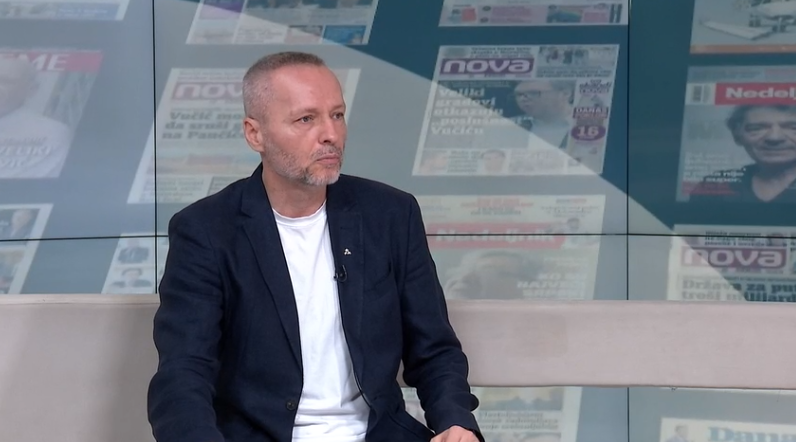
Lawyer and vice president of the League of Social Democrats of Vojvodina (LSV), Aleksandar Olenik, has accused Serbian President Aleksandar Vučić’s government of using state institutions to pressure political opponents and critics, following the detention order and arrest warrant issued for military analyst Aleksandar Radić.
Olenik said prosecutors were attempting to build a case against Radić over alleged disclosure of classified information, but argued that the accusations were unfounded and politically motivated.
“Vučić is carrying out state terror and is abusing part of the prosecution and a large part of the police for that purpose,” Olenik said.
Speaking about the allegations against Radić in the “sound cannon” case, Olenik said the charges involved serious criminal offenses, including preparing acts against Serbia’s constitutional order and security, as well as disclosing classified information, but claimed that there was no evidence supporting them.
He argued that the case against Radić represented an example of political persecution, claiming that the military security structures had become one of the main instruments of pressure against government critics.
Olenik also pointed to what he described as contradictions in the accusations against Radić, saying authorities could not simultaneously claim that he collected classified information and that the information he provided was false.
“Either one or the other. Either you collected the information, or the information is false. If it is false, then there is no criminal offense,” he said.
According to Olenik, the case was being used as a media campaign designed to intimidate citizens and put pressure on Radić and his family.
He said that leaving Serbia was the right decision for Radić, arguing that he could have faced further pressure from military security services had he remained in the country.
“As elections approach, political and legal persecution becomes stronger,” Olenik said, accusing authorities of using prosecutors and police to create fear among citizens and influence voters.
He also criticized the public statements of prosecutors, saying that judicial institutions should respect the presumption of innocence and should not publicly accuse individuals before court proceedings.
Regarding Interpol’s refusal to issue international arrest notices for members of the STAV movement and students from Novi Sad accused by Serbian authorities of attempting to overthrow the constitutional order, Olenik said the decision showed that international institutions viewed the cases as politically motivated.
“Interpol sent a message to Vučić’s regime that it is conducting political persecution and that it will not participate in it,” Olenik said.
He accused parts of the Serbian police and judiciary of carrying out politically motivated actions and called for vetting of prosecutors, judges, and police officials.
Olenik said Serbia was entering a period of increased political tensions ahead of elections, predicting further pressure from state institutions and calling for institutional reforms after the electoral process.