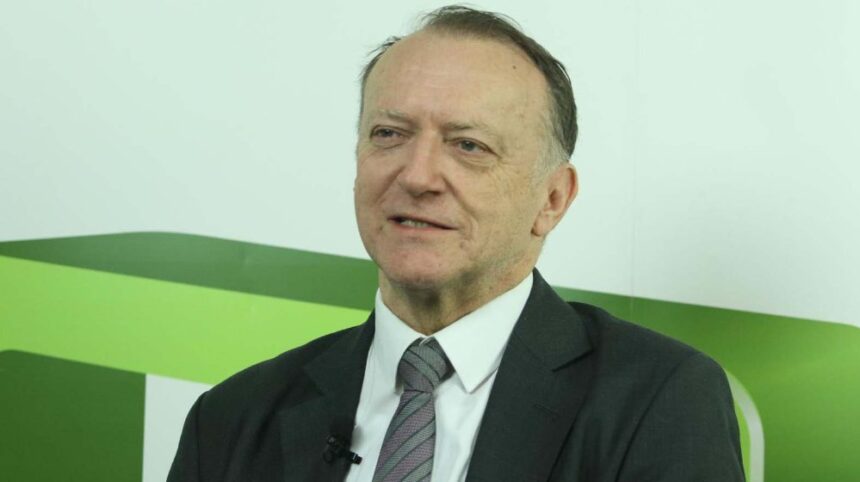
Duško Lopandić, vice president of the Serbia Centre (SRCE) party and a former diplomat, has criticized the Serbian government’s handling of its strategic dialogue with the United States, arguing that the initiative is being used primarily for domestic political propaganda rather than delivering tangible results.
Speaking to Deutsche Welle, Lopandić said that while stronger cooperation with Washington is positive in principle, the authorities have turned it into a campaign tool.
“It is certainly true that the strategic dialogue with the United States is being used far more for propaganda purposes than for its actual impact,” Lopandić said.
He noted that the energy component of the dialogue reflects broader U.S. strategic interests, pointing to the situation surrounding Serbia’s Oil Industry (NIS), but argued that these issues have little to do with the government’s public messaging.
“The government tries to use every one of President Aleksandar Vučić’s foreign trips and every photograph taken abroad as propaganda through its tabloid media machinery,” he said.
Lopandić also recalled the 2020 Washington Agreement, saying it included numerous promises of U.S. investment in Serbia that ultimately failed to materialize.
He further warned that Serbia has undertaken commitments, including the purchase of certain quantities of U.S. natural gas, raising questions about the financial burden of those obligations.
“It is a transactional relationship that the United States insists on, and Serbia should approach it cautiously. On one hand, you take on obligations, while on the other, Serbian exports continue to face high tariffs in the U.S. market,” he said.
Lopandić added that the issue of lithium, which has also emerged within the framework of the strategic dialogue, remains particularly sensitive in Serbia due to widespread public opposition to lithium mining projects.
According to the SRCE official, the Serbian government finds it easier to communicate with international partners that pay less attention to the country’s internal political developments. However, he argued that Serbia’s key foreign policy challenges remain unresolved.
“The country’s main foreign policy problems continue to be the stalled process of European integration and the failure to improve relations with neighboring countries,” Lopandić concluded.