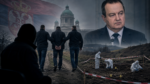
Excavations at suspected mass grave sites in Zubin Potok are continuing, while Kosovo authorities are also investigating a new location in the village of Jabukë, where human remains are believed to be buried.
Potential discoveries at these sites could provide new evidence of crimes committed during the Kosovo war and shed light on the fate of those who remain missing.
At the same time, as efforts continue in Kosovo to uncover the truth about the war, political rhetoric in Belgrade has once again become increasingly hostile toward Kosovo.
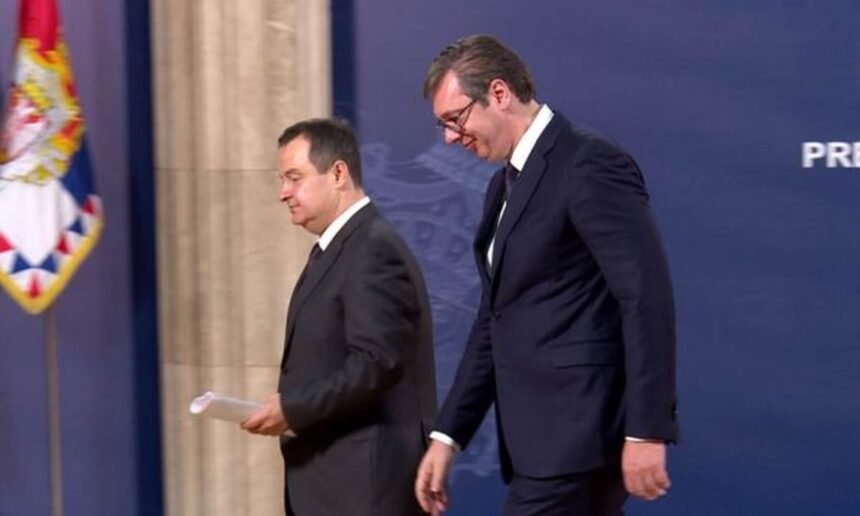
Serbian President Aleksandar Vučić, Speaker of Parliament Ana Brnabić, and other Serbian officials continue to repeat the claim that Kosovo is part of Serbia. Similar statements have also been made by other officials, including Snežana Paunović, who has advanced claims of the alleged “ethnic cleansing” of Serbs, while Petar Petković has accused Kosovo of persecuting the Serbian community.
Adding to this rhetoric, Aleksandar Vulin recently described Kosovo as the “Jerusalem of Serbia.”
According to political and security analysts, these statements are not merely part of ordinary political discourse but represent a deliberate narrative aimed at shaping public opinion and politically justifying Belgrade’s approach toward Kosovo.
Geopolitics professor Dorajet Imeri argues that Serbia’s current rhetoric must be viewed in the context of past events and the crimes committed during the wars in the former Yugoslavia.
“Ethnic cleansing cannot occur without killings—especially mass killings—without persecution and without the destruction of towns and villages. Serbia committed all of these crimes: it killed people, concealed the evidence, and created mass graves in an attempt to cover up the crimes it had committed,” Imeri said.
According to him, the statements made today by Serbian officials are a continuation of a narrative that Serbia has employed in the past.
Meanwhile, Gurakuq Kuçi of the Octopus Institute says Belgrade’s rhetoric is intended to create a new political and psychological climate within Serbia.
“They want to generate as much hatred toward Kosovo as possible while psychologically preparing and mobilizing their population to react against Kosovo at a chosen moment,” Kuçi said.
He also referred to the recent statements by Vučić and Vulin, arguing that they can be interpreted as part of a broader political strategy toward Kosovo.
On the other hand, security experts are calling for a stronger response from the international community to Belgrade’s rhetoric.
Fatmir Çollaku, Director of the Institute for Justice and Security Research, believes such statements should be met with concrete international action.
“There must be a tougher approach—one characterized by stronger criticism and sanctions,” Çollaku said, criticizing what he described as the unequal treatment of Kosovo and Serbia by the international community.
According to him, the absence of a unified international position toward Belgrade has created an environment in which aggressive political rhetoric can continue without meaningful consequences.
In this context, experts warn that silence—or only mild international reactions—to threatening statements and territorial claims risks normalizing a narrative that increases tensions and could undermine the stability of both Kosovo and the wider region.
As the search for suspected mass graves and the remains of missing persons continues on the ground, political rhetoric in Belgrade has once again returned to issues of territory, identity, and claims over Kosovo, raising concerns about the future direction of regional relations.