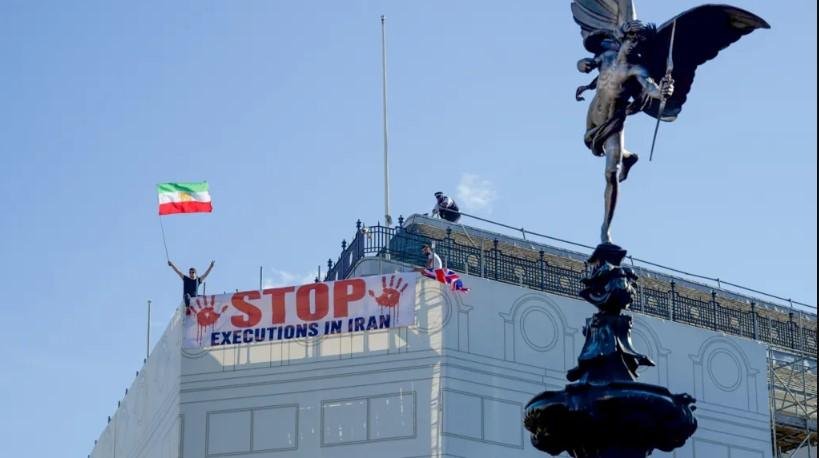
The United Nations has expressed deep concern over a sharp increase in executions in Iran, with UN High Commissioner for Human Rights Volker Türk warning that the death penalty is increasingly being used to “spread fear among the population and suppress dissenting voices.”
According to Türk, at least 56 people have been executed since March 19 on national security-related charges, including 27 people linked to nationwide protests against the Iranian government in January.
More than 100 additional people are reportedly at risk of being sentenced to death on similar charges, while executions for drug-related offenses also continue at an alarming rate.
Amnesty International has described Iran as the world’s second-largest user of the death penalty after China. The organization says Iranian authorities executed at least 2,159 people last year, the highest figure recorded in the country since 1981. At least 45 of those executions involved people accused in cases related to national security.
Human rights activists have warned that Iranian authorities could further expand the use of capital punishment against political opponents following the January protests, during which thousands of demonstrators were reportedly killed and tens of thousands arrested, as well as amid the escalating conflict involving the United States, Israel and Iran that began on February 28.
Türk called on Iranian authorities to immediately halt all executions and take steps toward abolishing the death penalty, stressing that “such a punishment has no place in our world.”
The UN human rights chief also raised concerns over the lack of fair judicial proceedings in many cases. He said confessions had allegedly been obtained through torture or other forms of inhumane treatment, while some executions had been carried out publicly and others only weeks after the defendants were arrested.
Türk further highlighted the case of 12 defendants who were sentenced to death following a closed-door hearing lasting just three hours, saying such proceedings are incompatible with international standards for a fair trial.
Iranian authorities did not immediately respond to the UN statement. Tehran has previously defended the use of capital punishment, arguing that it is reserved for the “most serious crimes.”
On Monday, Iranian judicial authorities announced the executions of two men, Omid Behzad and Pouria Safvat, who had been convicted of spying for Israel. According to the state-run Mizan news agency, they were accused of providing coordinates, photographs and information about military and security facilities to Israel’s Mossad intelligence service.
Last week, 19-year-old Arvin Kheirkhahan was also executed after being convicted of “enmity against God” over his alleged involvement in the January protests. Two other protesters, Abolfazl Sepahi Badjani and Amirhossein Safari Hosseinabadi, were reportedly executed publicly in a square in the city of Isfahan.
UN human rights experts have said that all 12 defendants in the highlighted case were sentenced to death during a single closed-door hearing, without individual responsibility being adequately established, describing the proceedings as a serious violation of international fair-trial standards.