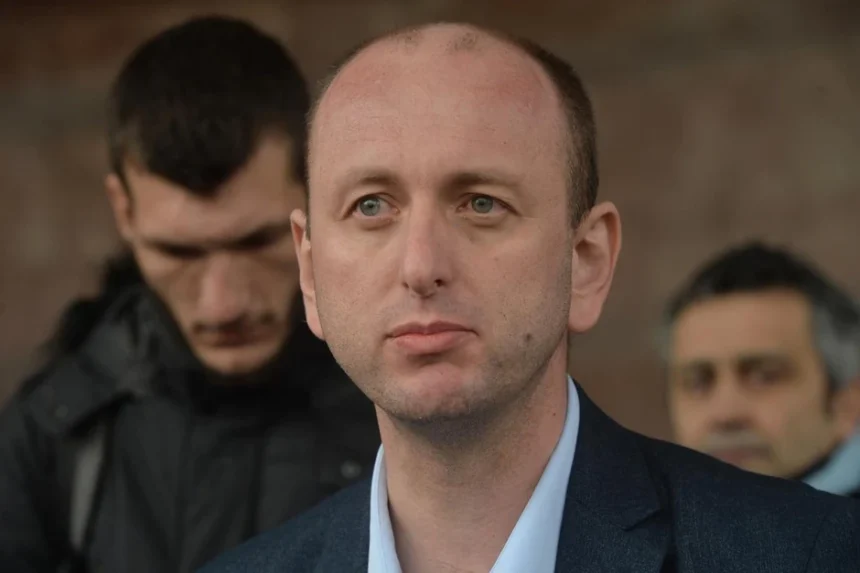
Montenegrin Democratic People’s Party (DNP) leader Milan Knežević has congratulated the Russian people, President Vladimir Putin and the ruling United Russia party on what he described as a decisive victory in Russia’s parliamentary elections.
According to a statement released by the DNP, Knežević also sent congratulations to Russia’s ambassador to Montenegro, Aleksandar Petrović Lukašik, and said the election result demonstrated continued public support for Russia’s domestic and foreign policy.
Knežević said United Russia, which he described as being supported by the Kremlin, won more than half of the vote. He argued that the result demonstrated strong backing among Russian voters for what he called the reaffirmation of Russia’s position internationally.
He also referred to Russia’s claims concerning territories in Ukraine that Moscow has incorporated into the Russian Federation. Those territorial claims are disputed internationally, and Russia’s annexations of Ukrainian territory have not been recognized by Ukraine or the majority of the international community.
Knežević rejected what he described as predictions that United Russia would perform poorly, saying the election had sent a message to the international community that “there is no joking with Russia.”
He argued that Russia should be regarded as an important global partner and as a factor in maintaining what he called global political balance.
The DNP leader also praised the conduct of the elections, describing them as having taken place in a peaceful atmosphere and highlighting the large number of registered voters and the three-day voting period.
According to the DNP statement, more than 110 million Russian citizens were eligible to vote for representatives to the State Duma.
Knežević concluded by saying that the election result represented strong support for Russia’s domestic and foreign policies under Putin and expressed hope for what he described as a forthcoming peaceful resolution to the war in Ukraine.
The remarks reflect Knežević’s political assessment of the Russian election and Moscow’s international position.