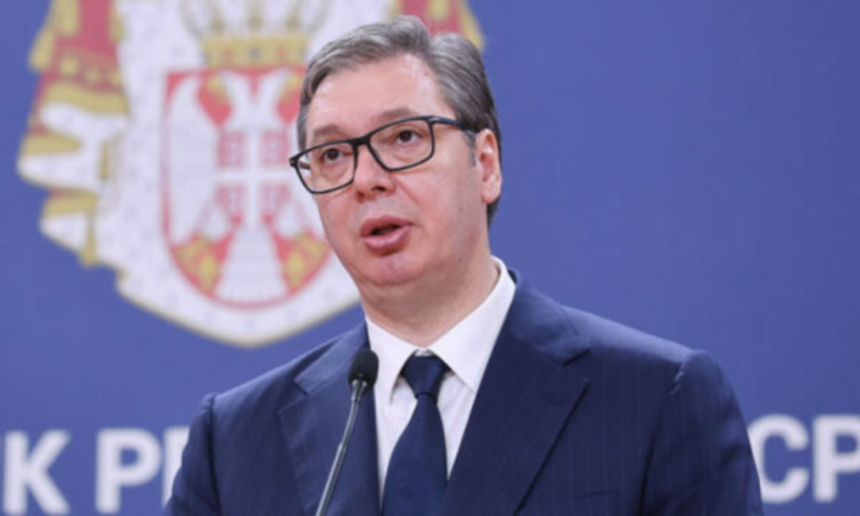
Serbian President Aleksandar Vučić has revived rhetoric associated with the era of former Serbian leader Slobodan Milošević, blaming Western countries for Croatia’s 1995 military operation Storm (Oluja) and portraying Serbs primarily as victims of the wars that accompanied the breakup of Yugoslavia.
Speaking in Mrkonjić Grad at a ceremony commemorating Serbs killed and expelled during Operation Storm, Vučić repeated longstanding claims that Serbia and Serbs were not responsible for the dissolution of Yugoslavia. He argued that Serbs had sought only to preserve the common state and remain in their homes.
Vučić accused Western countries, including the United States and European states, of providing political, military and logistical support to Croatia during the operation. He described the self-proclaimed Republic of Serbian Krajina as having been attacked by “the entire world” and expressed regret over what he described as Serbia’s inability at the time to protect displaced Serbs.
He also vowed that Serbia would never again allow a situation similar to Operation Storm to occur, claiming that the country is now strong enough to protect the Serbian population.
The Serbian president’s speech echoed narratives long promoted by the Milošević-era leadership, which sought to portray Serbia and Serbs primarily as victims while shifting responsibility for the Yugoslav wars toward Croatia and Western powers.
The event was also attended by Republika Srpska leader Milorad Dodik, who described Operation Storm as “genocide and ethnic cleansing” and accused the European Union of pursuing policies hostile toward Serbs.
Montenegrin lawmaker Milan Knežević also criticized Montenegro’s authorities for taking part in commemorations of Operation Storm held in Zagreb.
Operation Storm, launched by Croatian forces in August 1995, brought an end to the existence of the self-proclaimed Republic of Serbian Krajina and restored Croatian government control over large parts of the country. Croatia commemorates the operation as a decisive liberation victory, while Serbia marks it primarily as a mass expulsion and tragedy for the Serb population.
The competing interpretations of the operation remain deeply embedded in the political narratives of Serbia and Croatia, more than three decades after the wars that accompanied the breakup of Yugoslavia.