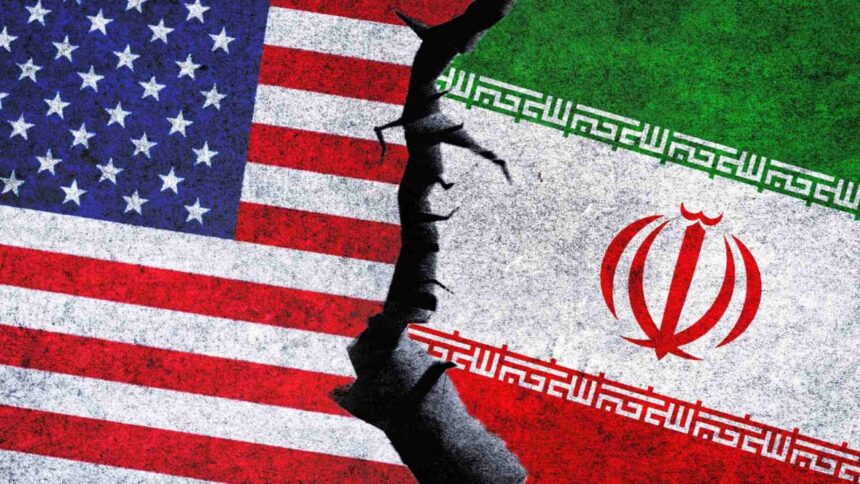
President Donald Trump has repeatedly said that preventing Iran from obtaining a nuclear weapon remains his administration’s top priority, as the conflict with Tehran enters its sixth month.
“The number one goal is and always will be that Iran cannot have, under any form, shape or circumstance, a nuclear weapon,” Trump said.
Trump is the latest U.S. president to confront Iran’s hard-line leadership. CNN looks back at how several of his predecessors handled relations with Tehran.
Jimmy Carter
Nearly two years into his presidency, Jimmy Carter faced the Iran hostage crisis after the U.S. Embassy in Tehran was seized following the 1979 Iranian Revolution. Ninety people, including 66 Americans, were taken hostage.
Carter initially sent U.S. officials to Iran to negotiate their release, although Iran’s Supreme Leader Ayatollah Ruhollah Khomeini refused to meet with them.
According to the U.S. State Department’s Office of the Historian, Carter’s foreign policy team often appeared “weak and indecisive” during the crisis.
A week after the embassy seizure, Carter ordered Iranian assets in U.S. banks to be frozen. In April 1980, after only some of the hostages had been released, he severed diplomatic relations with Iran, imposed additional sanctions and ordered Iranian diplomats to leave the United States.
The crisis was ultimately resolved through negotiations conducted by U.S. officials with Algerian mediation.
On January 19, 1981, the United States and Iran reached an agreement providing for the hostages’ release and the unfreezing of Iranian assets. After more than a year in captivity, the hostages were freed only minutes after Carter left office.
Ronald Reagan
Carter’s successor, Ronald Reagan, designated Iran a “state sponsor of terrorism” in 1984. Yet two years later, his administration secretly explored ways to improve relations with Tehran, even as Washington was supporting Iraq during the Iran-Iraq War.
Reagan approved the covert sale of weapons to Iran despite an arms embargo, hoping the arrangement would help secure the release of Americans held hostage in Lebanon by Hezbollah, a militant group closely linked to Iran.
Some of the proceeds from the arms sales were secretly diverted to the Contra rebels fighting Nicaragua’s left-wing Sandinista government.
The operation became known as the Iran-Contra affair and erupted into a major political scandal in 1986, posing a serious challenge to Reagan and his administration.
According to PBS, Reagan initially denied that such an operation had taken place. He later withdrew that denial and said the policy had not amounted to an “arms-for-hostages” deal.
The scandal damaged public confidence in the president, with polling at the time showing that only a small minority of Americans believed Reagan’s initial denials.
Barack Obama
Barack Obama pursued a cautious rapprochement with Tehran during his presidency after campaigning in 2008 on a pledge to seek a new approach to U.S.-Iran relations.
In 2013, Obama held a telephone conversation with Iranian President Hassan Rouhani, marking the first direct communication between the leaders of the United States and Iran since the 1979 revolution.
That same year, after years of negotiations, the two sides reached an interim agreement aimed at limiting Iran’s nuclear activities in exchange for sanctions relief.
The negotiations ultimately produced the Joint Comprehensive Plan of Action (JCPOA) in 2015.
Under the agreement, Iran accepted restrictions on uranium enrichment and its nuclear program, while international inspectors were granted expanded access to verify compliance. In return, major sanctions on Iran were eased and restrictions on Iranian assets were reduced.
Trump withdrew the United States from the nuclear agreement during his first term, restoring extensive sanctions against Tehran and ending Washington’s participation in the deal.
The contrasting approaches of Carter, Reagan, Obama and Trump illustrate the changing U.S. strategy toward Iran over the past several decades — from diplomatic confrontation and sanctions to covert engagement, negotiated limits on Tehran’s nuclear program and, under Trump, renewed economic and military pressure.