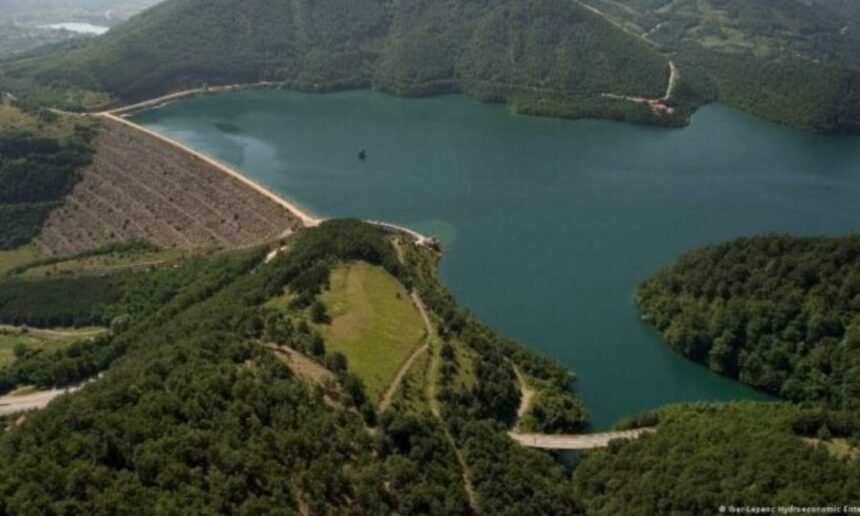
Serbian President Aleksandar Vučić’s suggestion that Serbia could alter the course of the Iber River has sparked concern in Kosovo and internationally. The Iber-Lepenac water system is strategically important for Kosovo’s drinking-water supply and energy production, making any threat to manipulate the river a serious security and environmental concern.
Experts in Serbia have warned that diverting the Ibar would be an enormous and potentially decades-long undertaking, requiring vast financial resources, extensive construction, tunnels and dams. Hydraulic engineering and hydrology professor Jovan Despotović described Vučić’s statements as unrealistic, arguing that such a project could not be implemented quickly without extensive destruction of hills and mountains and would also conflict with European regulations.
A return to old nationalist fantasies
Dušan Janjić, chairman of the Board of the Forum for Ethnic Relations, told DW that Vučić’s proposal represents a disturbing return to ideas from the 1980s.
“From Vučić, anything can be expected, but I did not expect him to return to 1983–1985, when the fantasies of Serbian nationalists began.”
According to Janjić, the idea of diverting the Iber was historically linked to nationalist ambitions concerning Kosovo. He argues that today’s proposal is not a rational solution to a practical problem, but rather an ideological and propagandistic project designed to create further tension and political noise in the region.
Vučić has announced the formation of a working group of engineers and construction experts to examine the possibility of changing the river’s course, presenting it as Serbia’s sovereign right to act on its territory.
The threat would affect everyone in Kosovo
Janjić also points out the obvious contradiction in presenting the project as a way to harm Kosovo Albanians: Serbs also live in Kosovo and depend on the same water resources.
He argues that such a project would not simply harm one ethnic community but potentially affect the entire population of Kosovo.
“The threat to harm Albanians is empty rhetoric,” Janjić said, warning that the damage would ultimately affect all residents of Kosovo while simultaneously damaging Serbia’s own international reputation.
He also questioned whether Serbia could be considered a reliable partner if its leadership publicly threatened to manipulate a shared water resource for political purposes.
A propaganda project rather than a solution
Janjić ultimately compares Vučić’s latest rhetoric to the myth of Sisyphus, arguing that the Serbian president is using increasingly grandiose projects and foreign-policy rhetoric to divert attention from domestic political problems and preserve his political power.
The controversy over the Iber therefore goes far beyond an engineering proposal. It raises questions about regional stability, water security, environmental protection and the continued use of Kosovo-related rhetoric for political mobilization in Serbia.