Albania has recorded one of Europe’s highest shares of renewable electricity generation, with renewable sources accounting for 105.2 percent of the country’s gross electricity consumption in 2025, according to Eurostat data.
The figure places Albania behind only Norway and Iceland in Europe and ahead of every European Union member state. The share exceeding 100 percent reflects the fact that Albania generated more electricity from renewable sources than it consumed domestically during the year.
Across the European Union, renewables accounted for 49.9 percent of gross electricity consumption in 2025, an increase of 2.4 percentage points from the previous year. Austria led EU member states at 90.8 percent, followed by Sweden at 89.2 percent and Denmark at 77.7 percent.
Albania has maintained a strong renewable profile for years. In 2016, renewable sources accounted for around 85 percent of electricity consumption. However, much of the increase over the past decade has been driven by higher hydropower generation, leaving the country heavily dependent on water availability.
Hydropower Dominance Creates Vulnerability
Hydropower remains the backbone of Albania’s electricity system. The country’s major hydropower facilities, particularly those along the Drin River, provide the overwhelming majority of domestic electricity production.
This dependence also creates a structural vulnerability: electricity generation is directly linked to rainfall and water levels. During periods of prolonged drought, hydropower output can fall sharply, forcing Albania to purchase electricity from regional markets.
The impact was particularly evident in previous years of severe water shortages. In 2017, electricity production fell by 36.6 percent following an extended period of drought. Output subsequently recovered as rainfall increased, before fluctuating again in the following years.
Such volatility also affects public finances because dry years can require significantly higher electricity imports. Climate projections for the Mediterranean region point to hotter and potentially drier summers and increasingly irregular rainfall patterns, potentially increasing the pressure on Albania’s hydropower-dependent system.
Low Gas Dependence Offers an Advantage
Despite these risks, Albania has one important advantage compared with several other countries in the Western Balkans: its limited exposure to imported natural gas.
During recent energy crises, Albania was partially shielded from the sharp gas-price shocks experienced elsewhere because its electricity generation relies overwhelmingly on hydropower rather than gas-fired plants.
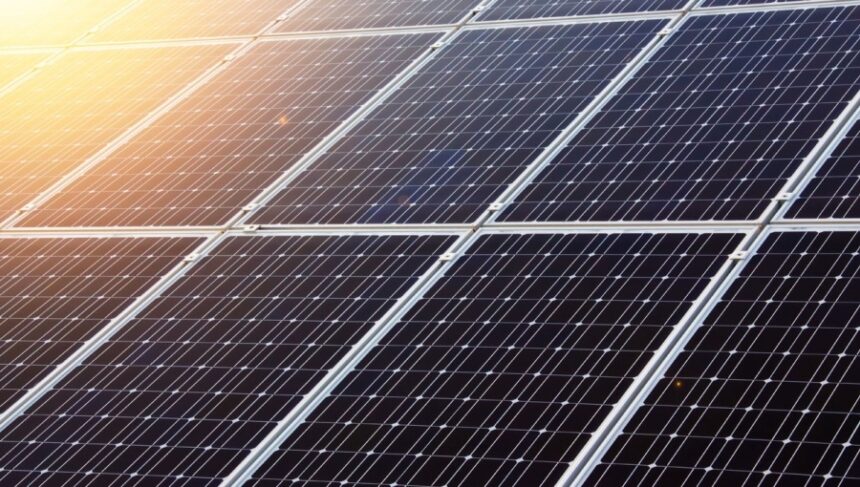
The government is nevertheless seeking to reduce its dependence on hydrological conditions by accelerating investment in solar and wind power.
The 140 MW Karavasta photovoltaic park is among the largest solar projects in the Western Balkans. It has been followed by the 100 MW Spitalla project, while recent solar auctions have awarded licenses for around 980 MW of additional capacity.
Wind power is also expected to become a more significant component of Albania’s energy mix. The country held its first wind-energy auction in 2023, with winning bidders including TotalEnergies through Total Eren and Austrian energy company Verbund.
Albania and Kosovo Have Opposite Energy Profiles
Albania remains an outlier in the Western Balkans. While most countries in the region continue to rely heavily on coal, Albania generates the vast majority of its electricity from hydropower.
In 2025, coal accounted for approximately 48.2 percent of electricity generation across the Western Balkans.
Kosovo, by contrast, continues to rely overwhelmingly on coal-fired power plants. The two neighboring countries, which are connected through the regional electricity grid, therefore have fundamentally different energy-generation profiles.
However, this interconnection also means that Albania’s dependence on hydropower does not completely eliminate exposure to fossil fuels. During dry years, the country can become more dependent on imports from the regional market, where coal remains a major source of electricity.
For Albania, therefore, the challenge is no longer simply increasing renewable generation. It is diversifying the renewable mix.
Expanding solar and wind capacity could reduce the country’s exposure to fluctuations in rainfall, strengthen energy security and create a more resilient electricity system capable of coping with increasingly unpredictable climate conditions.