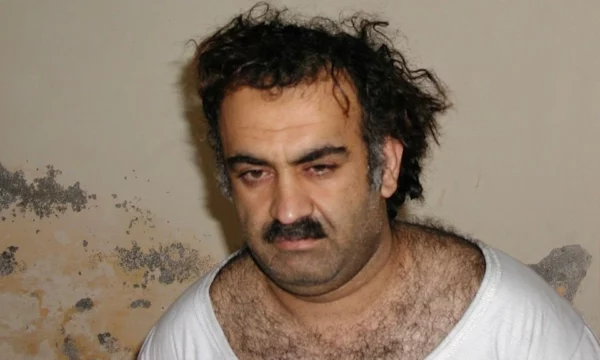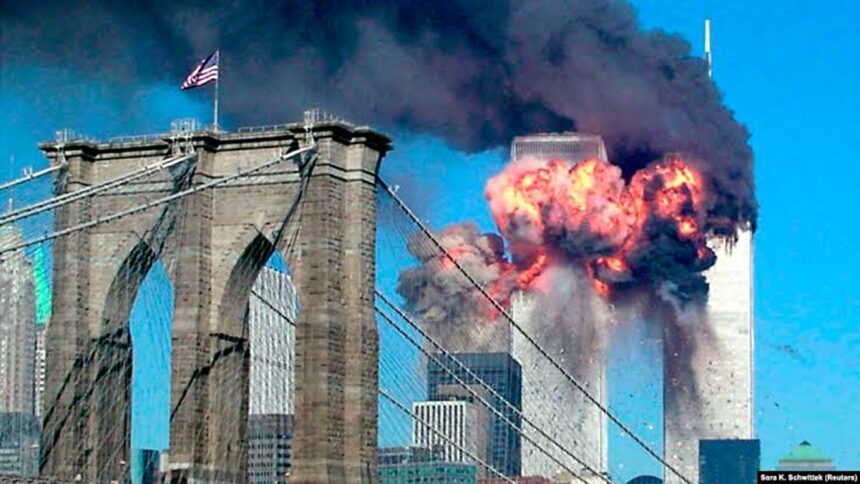
More than two decades after the 11 September 2001 attacks in the United States, Khalid Sheikh Mohammed, one of the men accused of masterminding the attacks, is set to face trial before a US military commission.
The case has become one of the longest-running legal proceedings arising from the attacks, which killed nearly 3,000 people in New York, Washington and Pennsylvania.
Mohammed was captured in Pakistan in 2003 and subsequently held at secret CIA detention sites, including a facility in Poland. During his detention, he was subjected to harsh interrogation methods that US authorities later acknowledged included torture.
In September 2006, he was transferred to the US detention facility at Guantanamo Bay, Cuba, where he remains held.
The proceedings have been repeatedly delayed by disputes over evidence, interrogation practices and the admissibility of statements obtained while detainees were in CIA custody.
In 2025, a US appeals court rejected an agreement under which Mohammed and two other defendants had been prepared to plead guilty in exchange for avoiding the death penalty. The ruling added another major obstacle to resolving a case that has been moving through the military commission system for years.
The prosecution accuses Mohammed of helping plan the 9/11 attacks, in which hijacked commercial aircraft were used to strike the World Trade Center in New York and the Pentagon near Washington. A fourth aircraft crashed in Pennsylvania after passengers attempted to regain control of the plane.
Guantanamo at the centre of the controversy
Mohammed’s case is also closely linked to the wider controversy surrounding the Guantanamo Bay detention facility.
The US detention centre was established under President George W. Bush after the 9/11 attacks to hold terrorism suspects captured during the subsequent US-led military campaign.
At its peak, approximately 800 detainees were held at the facility. Human rights organisations have repeatedly criticised the detention system, particularly the treatment of prisoners, the use of indefinite detention and allegations of torture.
The number of detainees has since fallen sharply, but Guantanamo remains open and continues to generate debate over national security, due process and the treatment of terrorism suspects.
For the families of those killed on 11 September, the proceedings represent another chapter in a legal saga that has lasted for more than two decades. For the US justice system, however, the case remains a difficult test of how terrorism suspects can be prosecuted when some of the most important evidence was obtained through a controversial system of secret detention and interrogation.