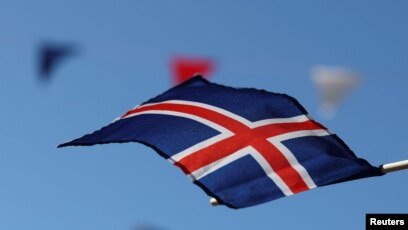
A referendum in Iceland on whether to resume European Union accession talks could reshape the current ranking of candidate countries and introduce a new dynamic into the EU enlargement process, particularly for Albania and Montenegro.
Icelanders are set to vote on August 29 on whether their country should restart negotiations to join the 27-member European Union. The referendum is advisory and concerns only the reopening of negotiations, not the final decision on EU membership.
The outcome remains uncertain, with recent polls showing voters almost evenly divided and support for restarting the talks appearing narrow and declining.
Why Iceland’s Return Matters
Iceland is an unusual EU candidate because it is already deeply integrated with the bloc. It is part of the European Economic Area and the Schengen Area and is therefore already aligned with many EU rules and policies.
Unlike traditional candidate countries, Iceland would not need to undertake the same scale of legal, judicial and political reforms required by countries still building closer institutional alignment with the EU.
That could allow Iceland to move through the accession process considerably faster than most other candidates.
A positive referendum would therefore put Iceland alongside Montenegro among the countries currently considered to be at the forefront of the enlargement process, potentially pushing Albania down the ranking.
Montenegro currently has 18 of 33 negotiating chapters provisionally closed, while Iceland had previously opened 27 chapters and provisionally closed 11 before suspending its accession negotiations in 2013.
However, Montenegro’s European Affairs Minister Maida Gorčević stressed that Podgorica does not view enlargement as a competition in which one country’s progress comes at another’s expense.
“Montenegro is today the most advanced candidate country and is determined to complete its part of the work and become the 28th member of the European Union. But we have never viewed the European path as a race in which one country’s progress comes at the expense of another,” Gorčević said.
Albanian authorities have similarly welcomed the referendum, arguing that renewed interest in EU membership by a highly developed European country demonstrates that the European project remains attractive and strategically important.
Albania and Montenegro Welcome the Vote
Albania’s Foreign Ministry described the referendum as a sovereign and democratic expression of the Icelandic people’s will regarding their country’s relationship with the EU.
Tirana argued that Iceland’s renewed consideration of EU membership, despite its high level of development and deep economic integration with Europe, demonstrates the continued attractiveness and credibility of the European project.
Montenegro has also welcomed any development that could contribute to a stronger and more united Europe.
Gorčević said Podgorica was following the Icelandic referendum closely while respecting the decision of Icelandic voters.
For Albania, a positive result could also create a broader political momentum for EU enlargement.
The Albanian Foreign Ministry argued that the stronger the political consensus across Europe in favor of enlargement, the more favorable the environment becomes for all candidate countries that have invested seriously in the accession process.
Iceland Would Be a Very Different Kind of EU Member
Iceland’s potential accession would also differ significantly from the enlargement process involving Albania and Montenegro because of its economic position.
If it joins the EU, Iceland would be among the bloc’s wealthiest members in terms of income per capita and would likely become a net contributor to the EU budget.
Montenegro and Albania, by contrast, would be net beneficiaries, receiving more EU funding than they contribute to the common budget.
Iceland’s relatively small population would also make its accession financially manageable for the Union. It has substantially fewer inhabitants than Montenegro and is a much smaller country demographically than Albania.
This makes Iceland an unusual potential addition to the EU: its membership would not primarily involve integrating another large recipient of European funds, but could instead add a relatively wealthy country capable of contributing financially to the Union.
For the Western Balkans, this difference is significant. Albania and Montenegro’s accession would bring major financial and development benefits, while Iceland’s return to the process would demonstrate that EU enlargement can also involve economically advanced countries.
Iceland Could Move Quickly
Iceland applied for EU membership in 2009 following the severe financial crisis that hit its banking sector.
Accession negotiations began in July 2010. Twenty-seven negotiating chapters were opened and 11 were provisionally closed before a new eurosceptic coalition government suspended the talks in December 2013.
Iceland never formally withdrew its membership application, although in 2015 it asked not to be considered a candidate country.
If voters approve the resumption of negotiations, the process could restart from where it was left off. The chapters already provisionally closed would not have to be reopened, while negotiations would continue on the remaining areas.
European Commissioner for Enlargement Marta Kos has suggested that Iceland could complete the accession negotiations within a relatively short period because of its existing integration with the European single market.
“If it chooses to do so, Iceland could complete the accession negotiations within one to two years,” Kos said on August 25 during a conference of European diplomats in Zagreb.
Even a rapid conclusion of negotiations, however, would not mean immediate EU membership.
Iceland would still need to make constitutional changes allowing for the transfer of certain sovereign powers to the European Union. Under Icelandic constitutional procedures, such an amendment must first be approved by parliament, followed by general elections, and then approved again by the newly elected parliament.
A New Test for EU Enlargement
A “yes” vote on August 29 would therefore have consequences extending beyond Iceland itself.
For Montenegro, it could mean facing a new candidate with the potential to move rapidly through the accession process. For Albania, it could alter the current ranking of the leading candidates.
But officials in both Tirana and Podgorica argue that Iceland’s return should not be viewed as a threat.
Instead, they see it as evidence that the EU remains a politically, economically and strategically attractive project.
A positive Icelandic vote could also strengthen the argument that enlargement remains viable and that the European Union is still capable of attracting countries with very different economic and political profiles.
The referendum could thus change the competitive dynamics among candidate countries while simultaneously giving fresh political momentum to the broader EU enlargement agenda.
For Albania and Montenegro, the message is clear: Iceland’s possible return may change the race, but it could also strengthen the case for keeping enlargement firmly on Europe’s political agenda.