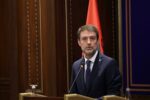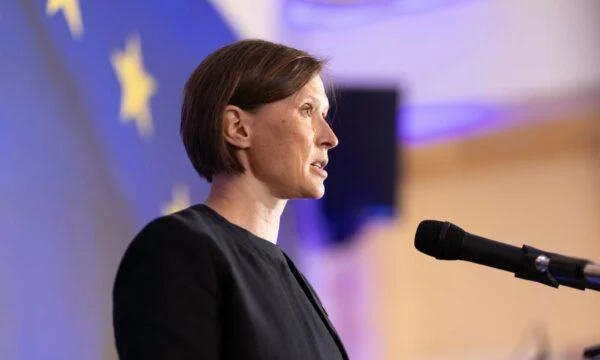
Eva Palatova, Acting Head of the European Union Office in Kosovo, is leaving the country after more than three years of service, with her departure coming amid continued political uncertainty and stalled institutional processes.
In her final message, Palatova called on Kosovo’s authorities and political leaders to engage with the European Union in a constructive, cooperative and solution-oriented manner.
“The EU is here to support Kosovo,” the EU Office in Kosovo said in a message marking Palatova’s departure.
During her tenure, relations between Kosovo and the EU entered what the EU described as a new chapter, with continued emphasis on reforms, institutional stability and Kosovo’s European integration path.
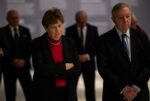
On Thursday, the EU Office in Kosovo also hosted a farewell meeting between Palatova and Kosovo’s caretaker Prime Minister Albin Kurti. The EU reiterated its call for Kosovo to overcome its political deadlock and establish functioning institutions as soon as possible.
Palatova also stressed the need to advance reforms and make full use of the opportunities offered through the EU Growth Plan, aimed at supporting Kosovo’s economic development and its progress as a multi-ethnic state with aspirations for EU membership.
Her departure comes as Kosovo faces the possibility of another parliamentary election if political parties fail to resolve the process of electing a new president.
The country has already held multiple parliamentary elections in recent years, and another electoral cycle could further delay institutional decision-making and reforms.
Meanwhile, Vetëvendosje leader Albin Kurti and Democratic League of Kosovo (LDK) leader Lumir Abdixhiku have held talks over potential candidates for Kosovo’s next president. Both leaders confirmed that names had been discussed but declined to disclose them, citing the sensitivity of the negotiations.
Palatova’s departure therefore comes at a politically sensitive moment, with the EU continuing to press Kosovo’s political leadership to overcome divisions, form stable institutions and maintain momentum on reforms and European integration.