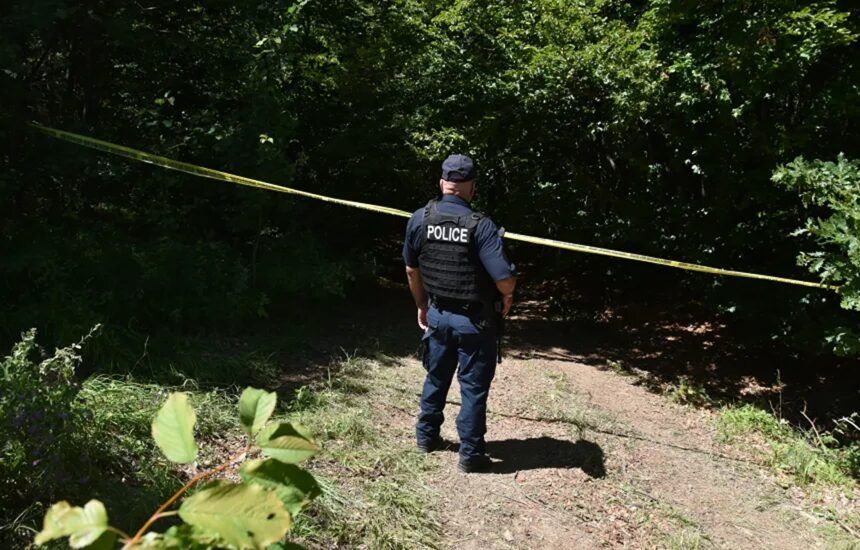
Human remains uncovered during recent excavations at three locations in Zubin Potok have been sent to The Hague for DNA analysis, as authorities work to determine whether they belong to members of a group of 23 people who disappeared during the Kosovo war.
At least 10 bone remains have so far been transferred to the DNA laboratory in The Hague. Their identities will only be confirmed after forensic examinations and DNA testing are completed.
The sites in Kalludër and Jabukë were visited on Friday by Kosovo institutions together with relatives of the missing people, who have waited 27 years for answers about the fate of their loved ones.
For the families, the discovery has brought a painful sense of relief.
“It is a relief that we have at least found their grave, that we can go there and place flowers,” said Sadete Ujkani Gërxhaliu, whose brothers are among the missing.
Flaka Fazliu, the daughter of doctor Fahri Fazliu, said the families were still waiting for the remaining procedures, but described the discovery as an important step in giving their relatives a final resting place.
The case concerns the so-called “group of intellectuals”, 23 people who went missing during the war. Fourteen of them were from Skenderaj and nine from Mitrovica, according to the Association “Voice of Parents”.
Authorities await DNA confirmation
Kosovo officials stressed that the discovery of human remains does not by itself establish their identities.
Valon Hyseni of the Institute of Forensic Medicine said the remains are now undergoing forensic examination and that samples have already been sent to The Hague.
“At least 10 bone remains have been sent to the DNA laboratory in The Hague,” Hyseni said, adding that the first results are expected after the examinations are completed.
Officials said remains belonging to at least 13 individuals have been exhumed from the three locations so far. The final number will be determined by forensic experts.
The excavations began on 28 July 2026 following a years-long investigation that intensified in 2024.
Three people — identified by their initials J.R., M.J. and M.B. — are currently being investigated on suspicion of war crimes against the civilian population and remain in detention.
Kosovo still searching for more than 1,500 missing people
Acting Minister for Communities and Return Andin Hoti said the families were now closer to the truth and justice, but urged patience until the identification process is completed.
He also accused Serbia of continuing to withhold information that could help establish the fate of missing people.
Hoti argued that the lack of cooperation from Serbia remains one of the biggest obstacles in resolving the cases of those still missing from the Kosovo war.
Meanwhile, Kushtrim Gara of the Government Commission on Missing Persons described the discovery of the three locations as the result of years of institutional work.
For the families, however, the search is about more than forensic evidence or official investigations. After nearly three decades of uncertainty, they are finally facing the possibility of having a place to mourn.
More than 1,500 people from the Kosovo war are still officially considered missing.
For those families, the DNA results could finally provide the answer they have been waiting for since 1999.