On the 31st anniversary of the Markale massacre in Sarajevo, renewed attention has been drawn to the connection between crimes committed against civilians during the wars in Bosnia and Herzegovina and Kosovo, as well as the continued glorification in Serbia of individuals convicted of war crimes.
Kushtrim Gara has commemorated the victims of Markale, as well as civilians killed at markets in Mitrovica and Podujeva on March 13, 1999.
On August 28, 1995, a shell fired from positions held by the Army of Republika Srpska struck the Markale market in Sarajevo, killing 43 civilians and injuring at least 70 others. This was the second attack on Markale, following the February 5, 1994 massacre, when 68 people were killed.
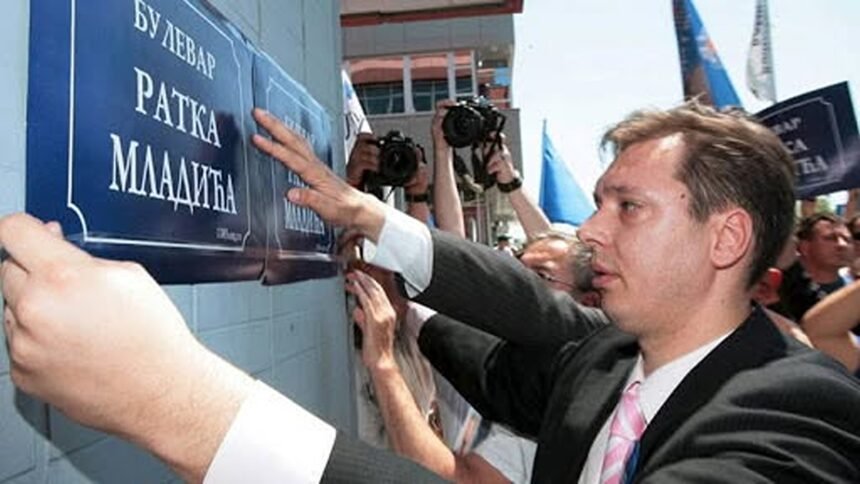
At the time, the Army of Republika Srpska was commanded by Ratko Mladić, who was later sentenced to life imprisonment for genocide, crimes against humanity and war crimes, including a campaign of terror against the civilian population of Sarajevo.
The article also draws a parallel with crimes committed against civilians in Kosovo less than four years later.
On March 13, 1999, on a market day, civilians were attacked at almost the same time in Mitrovica and Podujeva.
At the Mitrovica market, shelling by Serbian forces killed seven civilians and seriously wounded more than 100 people, including children, women and elderly people.
The victims were Abaz Mecinaj, Ahmet Strana, Elizabeta Hasani, Ragip Bajrami, Rrahim Peci, Sevdije Selani and Valdete Strana.
One of the stories highlighted is that of Ahmet Strana, who was seriously wounded during the attack and died from his injuries one month and ten days later. His family, however, waited 23 years before his remains were found.
Strana’s remains, along with those of his friend Vehbi Zasella, were discovered in a cemetery in northern Mitrovica. On September 2, 2022, Strana was reburied in Mitrovica, returning to his family after more than two decades.
Also on March 13, 1999, two explosions struck Podujeva, one near the fruit and vegetable market and the other in the city center, close to the post office.
Sadik Zhegrova, Nexhat Miftari, Besnik Shabani, Sahit Azemi and Arif Gashi were killed, while many others were injured.
According to the article, Besnik Shabani was killed by Serbian snipers while attempting to help the wounded, while Sahit Azemi and Arif Gashi later died at Pristina Hospital as a result of their injuries.
The author argues that from Markale in Sarajevo to the markets of Mitrovica and Podujeva, the same tragic reality emerges—the targeting of civilians in places that were part of everyday life.
The article also criticizes the glorification of Ratko Mladić in Serbia despite his life sentence imposed by international justice.
“Victims deserve to be remembered and honored. Crimes must never be denied or glorified,” the article concludes, honoring the victims of Markale, Mitrovica and Podujeva.