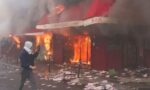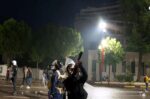
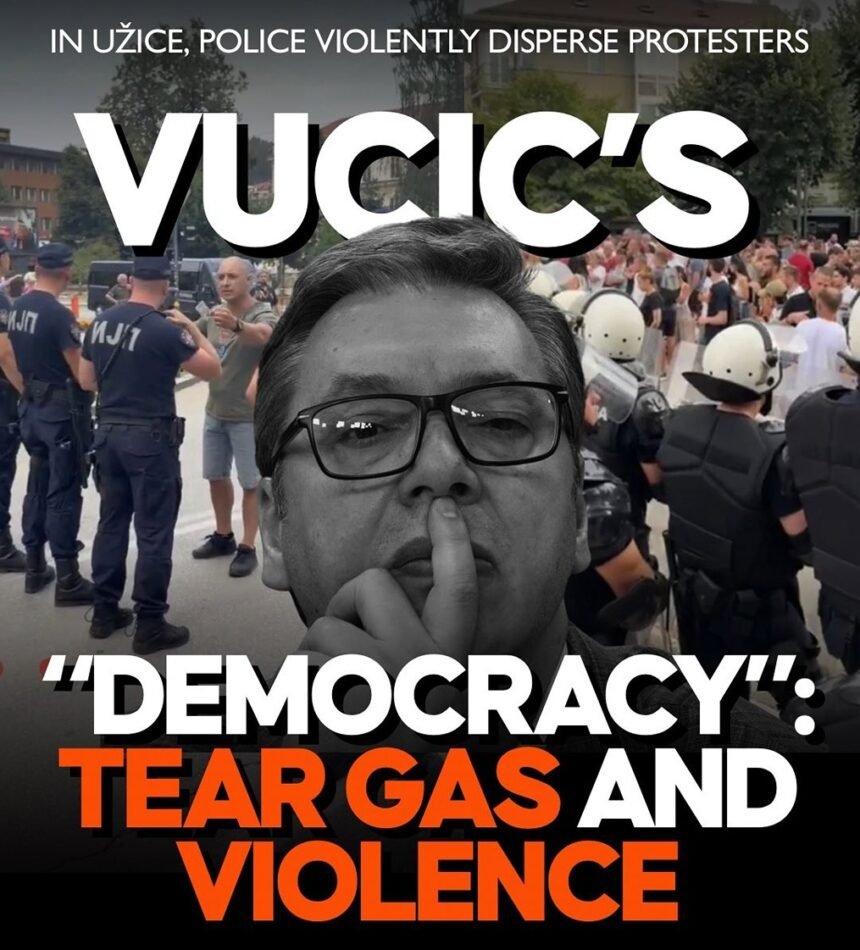
UŽICE, Serbia — Police in Užice cleared protesters from Partizan Square ahead of a rally organized by the ruling Serbian Progressive Party (SNS), attended by President Aleksandar Vučić. Officers used tear gas against protesters, while allegations of serious violence surrounding the rally have raised fresh concerns about the conduct of Serbia’s authorities ahead of the country’s expected snap parliamentary elections in October.
The events in Užice marked a deeply troubling start to an already tense election period. Rather than ensuring that citizens could peacefully protest and that political gatherings could take place without intimidation, the authorities have faced accusations of using disproportionate force against protesters while failing to adequately intervene as violence unfolded.
The police operation cleared Partizan Square shortly before the SNS rally, allowing the ruling party’s event to proceed. The use of tear gas against demonstrators has further fueled accusations that state institutions are being used to protect the ruling party while opposition supporters and protesters are left exposed to violence.
President Aleksandar Vučić attended the SNS gathering as tensions remained high in the city. The presence of large numbers of security personnel, police and supporters brought in for the rally contributed to an atmosphere of confrontation, according to accounts from the scene.
The violence comes at a particularly sensitive time for Serbia. With snap parliamentary elections expected in October, the events in Užice raise serious questions about whether the authorities are prepared to guarantee a genuinely free, fair and democratic campaign.
Instead of providing equal protection to all citizens regardless of their political affiliation, critics accuse the authorities of allowing political intimidation and violence to become part of the political process.
The situation also raises questions about the role of President Vučić, who has dominated Serbia’s political landscape for years. As the country moves toward another election, his government faces growing scrutiny over its treatment of protesters, opposition groups and political opponents.
Violence and clashes are the worst possible beginning to an election campaign. A democratic government should be working to reduce tensions, protect peaceful demonstrators and ensure that political opponents can campaign without fear.
The developments in Užice suggest the opposite: an increasingly polarized political environment in which state power, police action and ruling-party events are becoming increasingly difficult to separate.
Serbia is now approaching a critical political moment. Its citizens deserve an election campaign in which political competition is decided at the ballot box — not through intimidation, violence or the suppression of peaceful protest.
A free and democratic Serbia requires institutions that protect citizens, not a political system in which the ruling party appears to receive preferential protection.