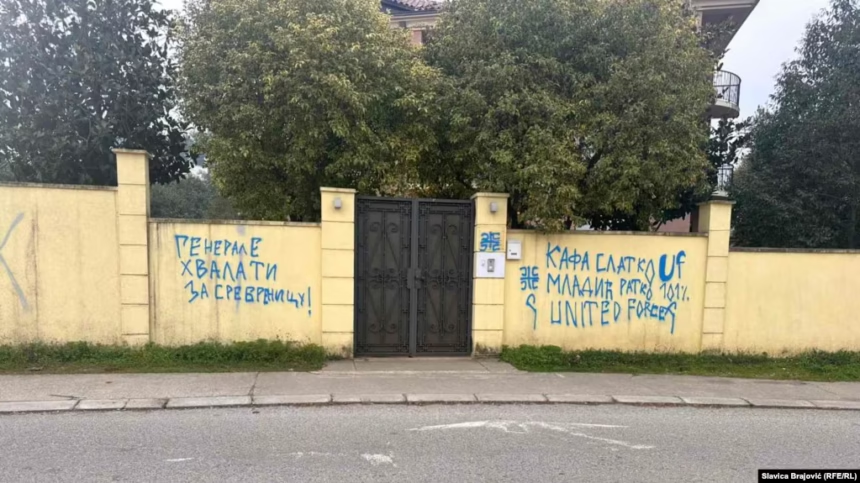
Montenegro’s Higher State Prosecutor’s Office in Podgorica is reviewing a social media post by Pljevlja Mayor Dario Vraneš in which he praised convicted war criminal Ratko Mladić, amid questions over whether the statement could constitute a criminal offense.
Montenegrin media reported that Vraneš published an obituary-style message dedicated to Mladić, who died on August 27 after serving a life sentence at the UN detention facility in The Hague for genocide, crimes against humanity and war crimes committed during the Bosnian war.
The post included the message: “Thank you for everything you did for the Serbian people. Greetings. Christ is Risen, General.”
In a response to Radio Free Europe, the Higher State Prosecutor’s Office said it was monitoring statements and actions by individuals to determine whether they contained elements of criminal offenses falling within its jurisdiction.
“If the Prosecutor’s Office determines that it is necessary to open a case concerning any particular incident, the public will be informed in a timely manner,” the office said.
Montenegro’s legal framework on genocide denial
The review comes against the backdrop of Montenegro’s legal and political measures concerning the denial and glorification of the Srebrenica genocide.
Montenegro’s Parliament adopted a resolution in June 2021 condemning the denial or minimization of the Srebrenica genocide and affirming the state’s commitment to preventing genocide and other serious crimes.
Under Montenegro’s Criminal Code, publicly approving, denying or minimizing the severity of genocide can be punishable by imprisonment.
Mladić, the former commander of the Army of Republika Srpska, was convicted by the International Criminal Tribunal for the former Yugoslavia and later had his life sentence upheld on appeal. He was found guilty of genocide in Srebrenica as well as crimes against humanity and war crimes committed during the 1992–1995 war in Bosnia and Herzegovina.
His death has already triggered political controversy in Montenegro.
Parliament Speaker Andrija Mandić was the first senior government official to publicly react, saying he had expressed condolences to Mladić’s family.
President Jakov Milatović subsequently criticized any attempt to use condolences to the family of a deceased person as a justification for relativizing war crimes.
The prosecutor’s review of Vraneš’s post could therefore become another test of how Montenegro’s institutions respond to the public glorification of individuals convicted of some of the most serious international crimes.