The return and planned burial of Ratko Mladić have once again exposed a deeply uncomfortable reality: Serbia still struggles to confront the political legacy of the 1990s.
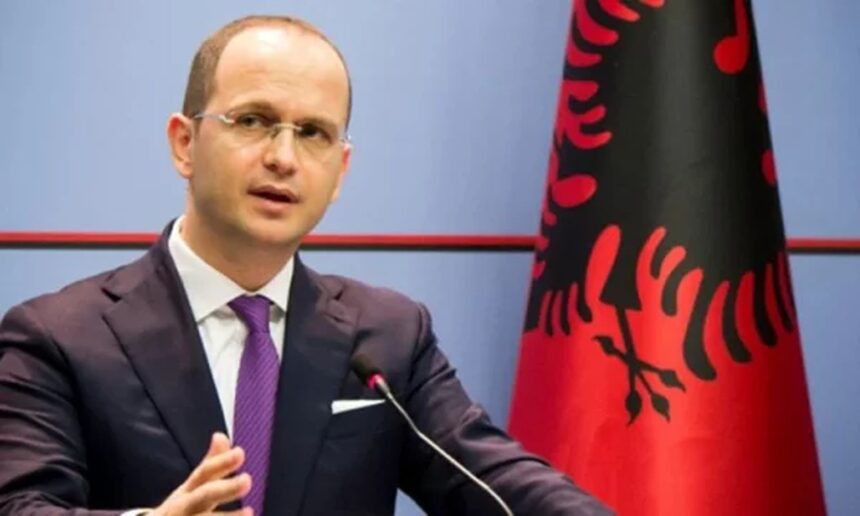
Former Albanian Foreign Minister Ditmir Bushati has sharply criticised the Serbian state’s treatment of Mladić, arguing that the official handling of the convicted war criminal cannot be separated from the broader question of Serbia’s responsibility for the wars of the former Yugoslavia.
Mladić’s body was brought back to Belgrade on a Serbian government aircraft, accompanied by Justice Minister Nenad Vujić. A commemoration has been announced at the House of the Army, while his burial is scheduled for Monday at Topčider Cemetery.
For Bushati, the symbolism is impossible to ignore.
A man convicted by international justice of genocide, crimes against humanity and war crimes is not being remembered merely as a former military commander. Instead, the attention surrounding his return risks turning his death into another opportunity for nationalist glorification.
And that, Bushati argues, is precisely the problem.
Serbia cannot claim to be building a democratic and European future while continuing to struggle with the ideology and political narratives that accompanied the wars of the 1990s.
The argument that Serbia itself is somehow the victim of “historical injustice” does not answer the fundamental questions raised by the wars, nor does it provide justice to those who were killed, expelled and persecuted.
Mladić died. The ideology that turned him into a hero did not.
That is why the issue is larger than one funeral.
It is about whether Serbia is prepared to acknowledge the crimes committed during the wars, respect the verdicts of international courts and recognise the suffering of the victims — or whether it will continue to replace accountability with mythology.
Bushati also directs his criticism beyond Belgrade, asking how long the international community will continue treating the glorification of convicted war criminals and the denial or relativisation of genocide as merely another political dispute in the Balkans.
That question deserves an answer.
Because European integration is not simply about institutions, borders and economic reforms.
It is also about confronting the past.
And Serbia cannot build a credible democratic identity while glorifying the very figures whose crimes remain among the darkest chapters of Europe’s recent history.
Mladić’s death should have been an occasion to close a chapter. Instead, Serbia’s treatment of his legacy risks reopening it.