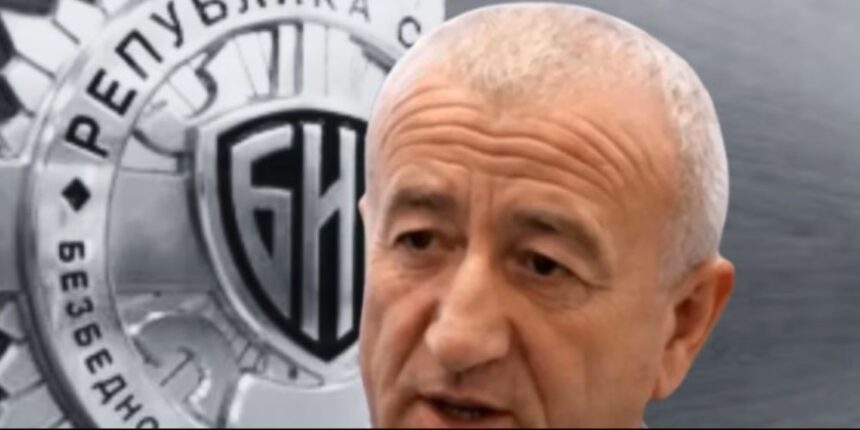
A leaked audio recording allegedly shows Fehim Sali, a Kosovo resident suspected of espionage, coordinating with a senior Serbian intelligence official over efforts to register members of Kosovo’s Gorani community as voters and secure their support for Serbian President Aleksandar Vučić and his Serbian Progressive Party (SNS).
According to an investigation by KOHA, the recording captures Sali speaking with Želimir Matović, described as a senior official of Serbia’s Security Intelligence Agency (BIA), about voter lists and efforts to secure signatures and votes ahead of Serbia’s 2024 elections.
In the recording, Sali appears to provide Matović with details about the people he had approached, including individuals who had refused to sign documents.
He also appears to advocate applying pressure to secure compliance, saying that “pressure” and even physical force could be used because the objective was to help SNS and Vučić win the election.
“I entered this work to win; I don’t want second place,” Sali is heard saying in the recording.
Sali is the founder of the NGO “Moja Gora,” through which he is suspected of having organized efforts to mobilize Gorani voters in Kosovo in support of Vučić’s political movement during the 2024 Serbian elections.
KOHA also obtained photographs allegedly showing Sali with voter lists that he had printed in order to collect signatures for SNS, as well as a photograph showing his own ballot marked in support of Vučić.
The investigation further alleges that Sali was still working to mobilize Gorani voters in Kosovo for SNS shortly before his arrest, this time in connection with Serbia’s parliamentary elections scheduled for October 25, 2026.
In another part of the recording, Sali appears concerned about transporting documents across the Kosovo-Serbia border and discusses sending material electronically or delivering it personally in Belgrade.
Sali accused of working for BIA
Sali has been in pretrial detention since August 14 after being arrested on August 13 at the Merdare border crossing while attempting to enter Serbia.
Kosovo prosecutors allege that he had been recruited by BIA and had provided Serbian intelligence officials with information about Kosovo’s political situation.
According to the prosecution, Sali also photographed Kosovo Intelligence Agency (KIA) officials, collected information about individuals associated with the Wahhabi movement and other people who were subsequently proposed as potential targets for contact or recruitment.
Prosecutors further allege that he maintained contacts with politically and socially influential figures in Serbia and Kosovo from non-majority communities, providing them with guidance on political activities.
Sali has reportedly acknowledged before Kosovo judicial authorities that he was recruited by Serbia’s intelligence service.
His lawyer, Ahmer Alia, who took over his defense recently, declined to comment on the allegations concerning Sali’s alleged involvement in election-related activities in Kosovo and Serbia or the other accusations raised by prosecutors.
Several lawyers previously involved in his defense have withdrawn from the case.
Background and arrest
Following Sali’s arrest, Kosovo Police and the Special Prosecution conducted a search of his home in Dragash, where investigators seized material that they said could be relevant to the case.
Sali worked as a teacher at the Serbian-language “9 Maji” school in Rapçë village in the Dragash area. He had also served two terms on Kosovo’s Consultative Council for Communities within the Office of the President before being removed from the body in 2024.
Sali had previously claimed publicly that he had faced threats and pressure from another Gorani political group, JGP, which he alleged had backing from parallel structures in Dragash and the Serb List. He also named former Serb List MP Jasmina Dedić in connection with those allegations.
The latest revelations add an electoral dimension to the espionage case, with the alleged recording suggesting that Sali’s activities may have extended beyond the collection of political and security information to attempts to influence voting behavior among Kosovo’s Gorani community.
The allegations have not been tested in court, and the recording and other materials cited by KOHA will ultimately have to be assessed as part of the ongoing judicial proceedings.