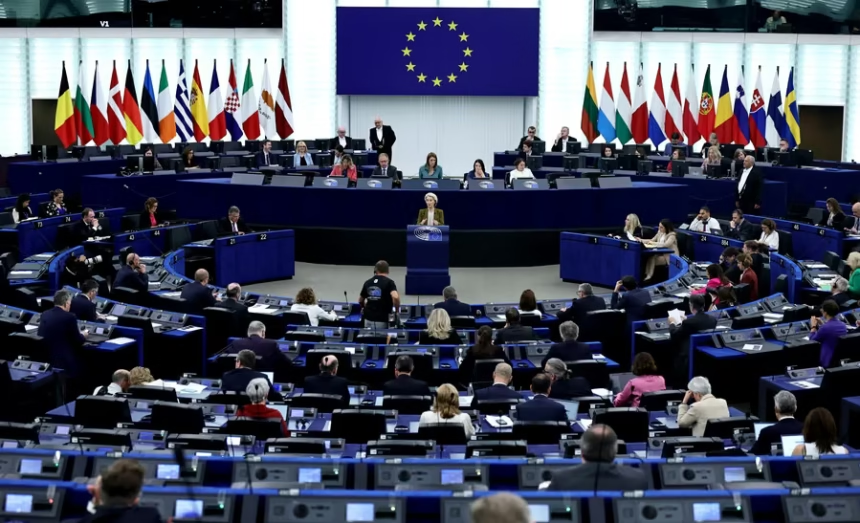
A group of European Parliament members has called on the European Commission to freeze EU financial assistance to Serbia following allegations that Serbian authorities used Pegasus and other spyware to target student leaders, activists, opposition politicians and local officials.
The call comes after forensic evidence published by the SHARE Foundation and independently verified by Amnesty International and Citizen Lab reportedly identified the use of sophisticated surveillance tools against individuals in Serbia.
In a joint statement, the MEPs described the alleged surveillance as a direct attack on democracy and rejected the possibility that the findings could be explained as a technical malfunction.
They alleged that Pegasus spyware had been deployed remotely, while Android spyware known as NoviSpy was allegedly installed on phones confiscated during police questioning.
The MEPs argued that the alleged surveillance was particularly concerning ahead of Serbia’s next elections, accusing President Aleksandar Vučić’s government of using digital surveillance to undermine political opposition.
“The EU cannot continue with business as usual while a candidate country arms its security apparatus against peaceful students and elected representatives,” the lawmakers said.
Calls for EU funding freeze
The European Parliament members called on the European Commission to immediately suspend payments to Serbia under the EU Growth Plan, as well as pre-accession assistance through IPA III and disbursements from the Reform and Growth Facility.
They argued that EU taxpayers’ money should not support a government accused of using spyware against its own citizens and said funding should remain frozen until an independent international investigation is completed.
The MEPs also called for European Commission President Ursula von der Leyen to cancel a planned visit to Belgrade, arguing that a high-profile meeting with Vučić amid the surveillance allegations could undermine the credibility of the EU’s response.
They further urged Brussels to make Serbia’s progress toward EU membership conditional on concrete improvements in the rule of law, including an immediate end to abuses of surveillance powers and an independent review of Serbia’s Security Intelligence Agency (BIA) and Ministry of Internal Affairs.
Calls for stronger spyware regulations
The lawmakers also demanded implementation of recommendations from the European Parliament’s PEGA Committee, which investigated the abuse of spyware in Europe.
They called for a binding EU-wide legal framework regulating the use of spyware, greater transparency and accountability, independent investigations for victims, and the creation of an EU technology laboratory to assist people targeted by surveillance software.
The statement was signed by 30 MEPs from several political groups, including Greens/EFA, Socialists and Democrats, Renew Europe, the European People’s Party and The Left.
The allegations add to growing international scrutiny of Serbia’s use of surveillance technology. Serbian authorities have faced increasing criticism from civil society organizations and European politicians over the alleged monitoring of students and activists involved in the country’s protest movement.
The Serbian government has not, in the statement cited by Nova.rs, been shown to have accepted the allegations described by the MEPs. The claims concerning individual surveillance operations remain subject to further investigation and political and legal scrutiny.