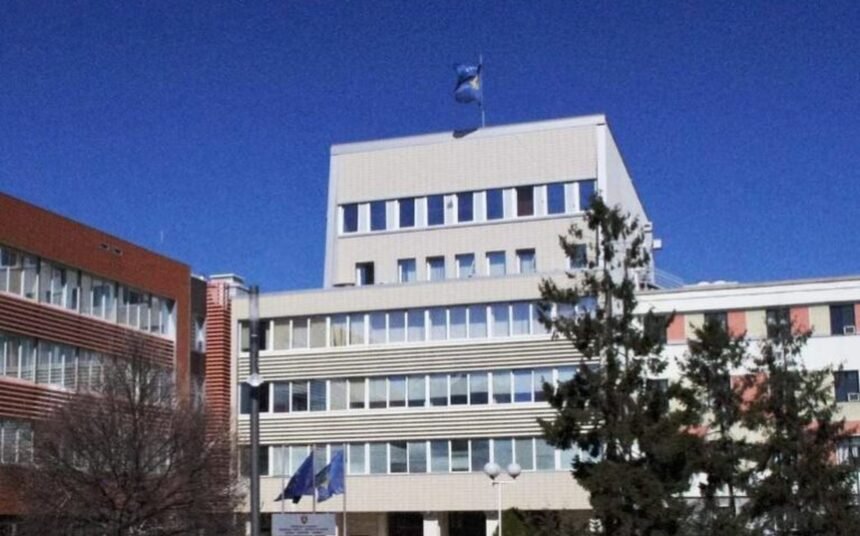
The Kosovo Assembly is expected to resume its constitutive process on Wednesday after more than a month of institutional deadlock, with the continuation of the session scheduled for 11:00 a.m.
The participation of the Vetëvendosje Movement (LVV), Democratic Party of Kosovo (PDK) and Democratic League of Kosovo (LDK) has been confirmed, while the Alliance for the Future of Kosovo (AAK) has decided to boycott the session.
The main focus remains securing the votes needed to elect the Assembly president and deputy speakers, a step required before the formation of a new government can proceed.
LVV’s participation is considered crucial to the continuation of the process. As the party that won the most seats in the June 7 parliamentary elections, LVV remains the key political actor in determining the composition of the Assembly leadership.
LVV leader and caretaker Prime Minister Albin Kurti previously said his party had failed to reach an agreement with other political groups over the Assembly leadership.
PDK leader Bedri Hamza confirmed after a party meeting that the party’s lawmakers would attend Wednesday’s session.
Hamza stressed that constituting the Assembly is essential and that Kosovo needs fully functioning institutions as soon as possible.
“All the actions we are taking these days are also connected to September 16. We are convinced that Kosovo needs to have a constituted Assembly at this time,” Hamza said.
The PDK has also announced that it will nominate Vlora Çitaku for the position of deputy Assembly speaker, insisting that her candidacy was submitted within the required deadline.
The LDK has likewise confirmed its participation. Following a meeting of its parliamentary group, lawmaker Jehona Lushtaku said LDK MPs would attend and contribute to completing the constitutive process.
“As a group, we decided to participate in the constitutive session of the Kosovo Assembly and contribute to its constitution,” Lushtaku said.
AAK, however, has decided not to attend.
Party leader Ardian Gjini said after a meeting of the party leadership that an overwhelming majority of MPs and leadership members supported the boycott.
According to Gjini, attending the session would amount to legitimizing what he described as “continued and brutal violations of the Constitution of Kosovo” by the party that won the election.
The early parliamentary elections were held on June 7, while the Central Election Commission certified the results on July 8.
Under the interpretation of the Constitutional Court, the Assembly was required to be constituted within 30 days of the certification of the election results, with the deadline falling on August 7.
Acting President Albulena Haxhiu convened the first session of the new legislature on August 6. However, the failure to elect the Assembly president and deputy speakers left the process incomplete.
The session continued on August 8 under the chairmanship of Avni Dehari, but no progress was made. Kurti requested additional time for negotiations with other political parties, and the session was suspended without a new date initially being set.
After several weeks of political pressure and repeated calls from opposition parties to resume the proceedings, Avni Dehari announced on September 4 that the session would continue on September 9.
The institutional crisis has also been linked to the unresolved presidential election.
On August 31, Kurti and LDK leader Lumir Abdixhiku announced an agreement on a joint presidential candidate, former diplomat and former Constitutional Court member Bekim Sejdiu.
However, the agreement has not received the support of six LDK lawmakers, leaving the presidential election uncertain even if the Assembly leadership is successfully elected.
The latest session is therefore expected to be a crucial test of whether Kosovo’s political parties can finally break the institutional deadlock and restore the functioning of the country’s constitutional institutions.