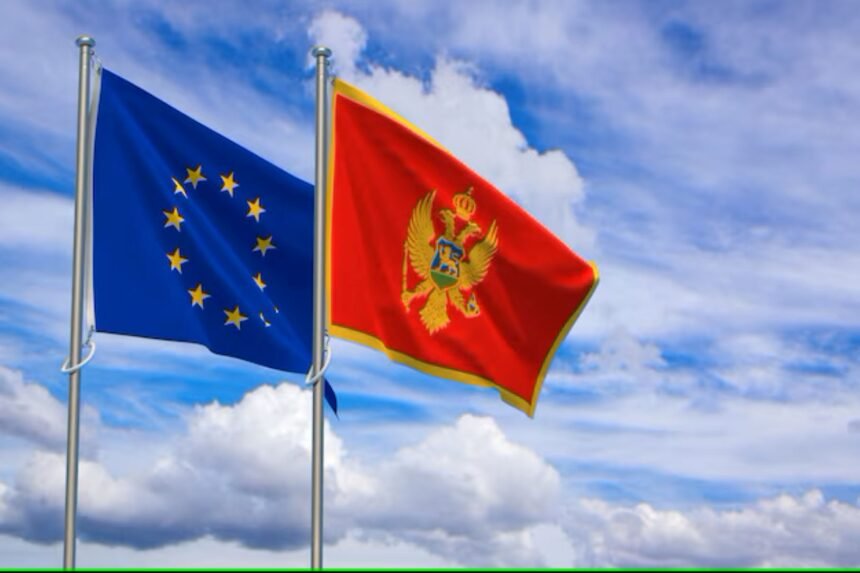
Montenegro’s plans to advance its European Union accession negotiations have faced a delay, with the next intergovernmental conference not expected to take place as initially anticipated.
Reports had suggested that the Netherlands had requested a pause in the process and that Croatia, Estonia, Lithuania and Latvia had joined the position. However, the EU Delegation in Montenegro has rejected claims that five member states had sought to halt or block the country’s European integration process.
The Delegation said that the scheduling of intergovernmental conferences and the provisional closure of negotiating chapters requires the completion of relevant procedures, compliance with EU standards and the agreement of all 27 member states. It also said Montenegro had made significant progress but needed to continue implementing reforms, particularly in the area of the rule of law.
Montenegro’s Minister of European Affairs, Maida Gorčević, also rejected reports of a political or technical blockade. She said Chapters 18, covering statistics, and 19, covering social policy and employment, were ready for closure, but that procedures in the Dutch parliament still needed to be completed.
The reports emerged amid broader regional scrutiny following the death and funeral of former Bosnian Serb military commander Ratko Mladić, who was convicted by the International Criminal Tribunal for the former Yugoslavia of genocide, war crimes and crimes against humanity. Some EU officials and politicians have stressed that glorification of convicted war criminals and denial of genocide are incompatible with European values.
Montenegro also continues to face unresolved bilateral issues with Croatia, including maritime borders, ownership of the training ship Jadran, wartime-related claims and the position of the Croatian community in Montenegro.
According to the latest reporting, Montenegro has opened all 33 negotiating chapters and has provisionally closed 18 of them. The government in Podgorica aims to close the remaining chapters by the end of 2026 and move toward the final stages of the accession process.
The European Commission and EU member states have not confirmed a political suspension of Montenegro’s accession negotiations. Instead, the immediate delay appears to be linked to the completion of national procedures and the need for consensus among member states. The next intergovernmental conference could take place in October, although no definitive date has been confirmed.