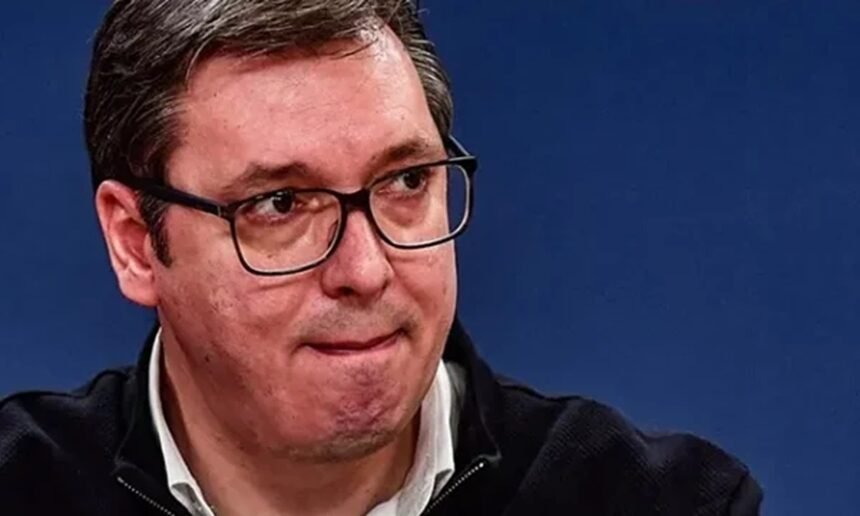
Serbian President Aleksandar Vučić said the potential sale of Russia’s controlling stake in Naftna Industrija Srbije (NIS) to Hungary’s MOL is no longer in Serbia’s hands, arguing that the government has completed everything required on its side.
“Everything we needed to do, we have done. I think there are now calculations from different sides, including regarding who is in power in Hungary and who is not. There are clearly talks with the American side among all the parties,” Vučić told Radio Belgrade.
He said he was uncertain how the situation surrounding NIS would ultimately be resolved because Russia, the United States and Hungary each have their own strategic and geopolitical interests.
“That is why it is important for Serbia to talk to everyone — with the Russians, the Americans and the Hungarians,” Vučić said.
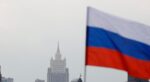
According to the Serbian president, Moscow wants to retain control of NIS, while Washington wants to prevent Russia from maintaining that control. He added that the United States was also considering whether the company would be better acquired by a European country or by an American entity.
“There is no doubt that the Russians, on the one hand, would like to keep it under their control. There is no doubt that the Americans would like the Russians not to keep it, but at the same time they are considering whether it would be better for a European country or for them to acquire it,” Vučić said.
He added that Hungary had a clear economic interest in the transaction but questioned whether Budapest would be willing to oppose U.S. interests over the issue.
Serbia’s Fuel Supply and Prices
Addressing Serbia’s energy situation, Vučić said the government was intervening in the fuel market by providing an additional 20,000 tonnes of diesel in an effort to maintain sufficient supplies.
He said the government would seek to keep fuel prices as low as possible, arguing that Serbia currently had stronger financial capacity than many other countries to absorb part of the pressure.
Serbia, he said, has little influence over global oil prices because it relies on imports. He also pointed to difficulties in obtaining supplies from Arab producers amid developments in the Persian Gulf and Red Sea.
Vučić said the government still had financial and strategic reserves available and hoped it would not need to increase its reduction of excise duties beyond the current 25 percent. He said the measure could potentially be increased to 35 percent if necessary.
Asked whether Serbia had sufficient energy supplies for the coming winter, Vučić answered in the affirmative. He also said he did not expect a dramatic increase in domestic fuel prices, although he could not rule out smaller increases.
“Whether oil prices will rise by one, two or five dinars, I cannot tell you, but there will be no dramatic increase — neither in oil, petroleum products, fuel oil nor anything else,” he said.
Russian Gas and Belgrade-Budapest Railway
Vučić also said Serbia’s agreement on Russian gas supplies would expire soon and that talks were expected with Russian Foreign Minister Sergey Lavrov and potentially Russian President Vladimir Putin.
He did not provide further details on the timing or terms of the upcoming gas negotiations.
Regarding the Belgrade-Budapest railway, Vučić said he expected the line to be opened in October after Hungary completes testing.
According to his timetable, testing could be completed on October 3 or 4, with the railway potentially opening two or three weeks later.