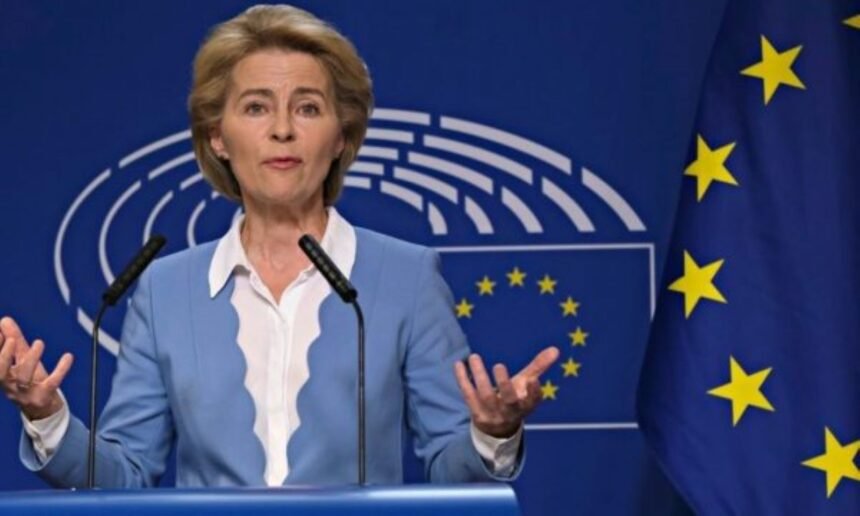
The European Union is considering a new approach to enlargement that would offer candidate countries earlier access to parts of the bloc’s single market and research programmes while their membership applications are being processed, according to a draft European Commission proposal cited by Politico.
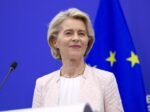
The proposed strategy, outlined in a review overseen by European Commission President Ursula von der Leyen’s chief adviser, Aleksander Adam, would introduce a form of “gradual integration” designed to bring candidate countries closer to the EU before full membership.
Under the proposal, candidate countries could gain access to trade opportunities, research programmes and selected areas of economic cooperation, provided they demonstrate regulatory alignment and support key EU foreign-policy objectives.
The plan identifies Ukraine, Moldova, Albania and Montenegro as countries that could receive specific “road maps” aimed at accelerating their accession processes. At the same time, Serbia, Türkiye, North Macedonia, Bosnia and Herzegovina and Kosovo are described as countries whose accession processes have progressed more slowly, amid concerns about their growing proximity to Russia or China.
The Commission is also considering deeper cooperation in strategically important sectors, including semiconductors, quantum technologies, biotechnology, artificial intelligence and space.
A central element of the proposed approach would link some economic benefits to a candidate country’s alignment with EU foreign-policy priorities. Access to parts of the single market could also depend on whether countries share sensitive technologies with states regarded by the EU as geopolitical or trade rivals.
The proposal also addresses possible institutional changes within the EU itself. As the bloc expands, the Commission argues that greater use of qualified-majority voting could reduce the risk of individual member states blocking decisions in areas where unanimity is currently required.
So-called passerelle clauses could potentially be used to facilitate decisions concerning sanctions, responses to human-rights crises and the deployment of civilian missions, although activating these mechanisms initially requires unanimous approval from EU member states.
The report is expected to be presented to senior EU officials on October 6, while EU leaders are due to discuss enlargement and the bloc’s future approach toward candidate countries at a summit in Brussels on October 15–16.
EU Enlargement Commissioner Marta Kos has described the current period as an opportunity for an “autumn of enlargement,” suggesting that changes to the accession process could be considered alongside broader political support from EU capitals.
The proposed framework would ultimately maintain full EU membership as the objective for candidate countries, while seeking to provide tangible economic and political benefits during the often lengthy accession process.