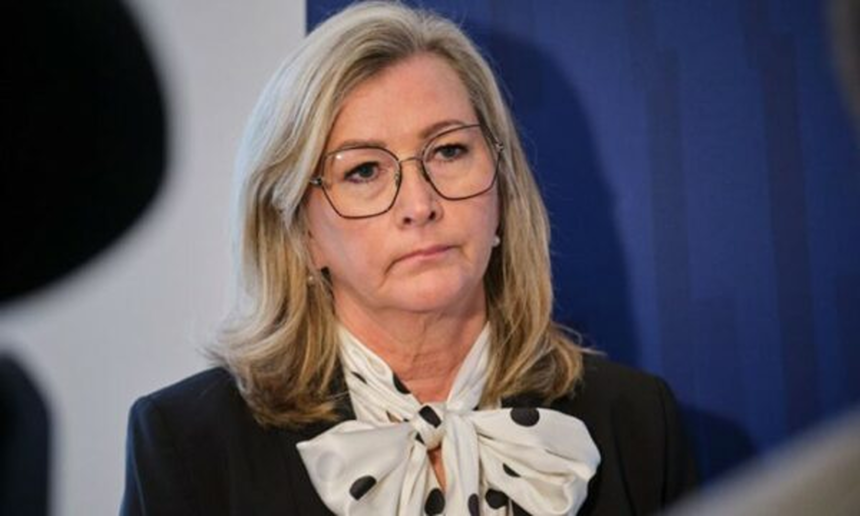
A proposed amendment to the law governing the Kosovo Specialist Chambers in The Hague risks undermining the rule of law, damaging the trust of international partners, and complicating Kosovo’s European integration, Austrian analyst Johanna Deimel has warned in an interview with Radio Kosova.
Deimel described the initiative as a politically bold but risky move, arguing that it raises fundamental questions about judicial independence and the limits of parliamentary power. She said the central issue is whether legal disputes will be resolved through independent courts and appeals procedures or influenced by political pressure.
She acknowledged the deep emotional impact of the convictions of former KLA leaders on Kosovo society, noting that many citizens view the proceedings as an attack on the country’s struggle for independence. However, she argued that Kosovo must be able to honour its liberation war while accepting that individuals can be held accountable for alleged crimes. She called for a measured, cross-party strategy to support the appeal process and greater transparency in informing the public.
EU relations and international credibility
Deimel said the European Union had clearly warned that the proposed legal changes could conflict with Kosovo’s international obligations. In her assessment, challenging the court’s independence could damage trust among European partners, complicate Kosovo’s EU integration, and make it harder to secure recognition from the five EU member states that still do not recognise Kosovo.
She also warned that the initiative could weaken political support for Kosovo’s European ambitions and lead to additional conditions or delays. She stressed that judicial independence, the fight against corruption, and the protection of fundamental rights remain central to the EU accession process.
Regarding the United States, Deimel drew a distinction between Washington’s current approach to international institutions under President Donald Trump and the EU’s position. She said Kosovo should not assume that disagreements over the Specialist Chambers will strengthen its relationship with the US.
Her recommendation was clear: Kosovo should develop a coordinated strategy involving both government and opposition, consult international experts, and engage with the EU through diplomatic channels to rebuild confidence in the country as a reliable partner.
Serbia, Vučić and the stalled dialogue
Deimel said the Kosovo-Serbia dialogue had been frozen for a considerable period and warned that tensions over the Specialist Chambers could overshadow unresolved issues between the two countries.
She argued that the EU had shown too much tolerance toward Serbia, pointing to the continued freedom of movement of Milan Radoičić, whom Kosovo holds responsible for the 2023 Banjska attack, while Kosovo has faced EU measures. She also cited concerns over democratic backsliding, the handling of protests, and potential electoral manipulation in Serbia.
In her view, European patience with Serbian President Aleksandar Vučić may be running out, although she said Serbia’s political future remains uncertain and any change of government could bring a different approach to Kosovo.
On relations with Washington, Deimel noted that the US has linked the resumption of strategic dialogue with Kosovo to commitments concerning the Serb community, including the Association of Serb-Majority Municipalities. She said implementation of the Association is also important to the EU.
However, she identified security as a more serious concern, warning that a possible US withdrawal of personnel from NATO or KFOR would pose a risk to Kosovo.
Her overall message was that Kosovo must defend its legal position and the legacy of its liberation war while avoiding a prolonged confrontation with international partners. Diplomacy, cross-party cooperation and renewed trust with the EU, she argued, are essential to protecting Kosovo’s European future.