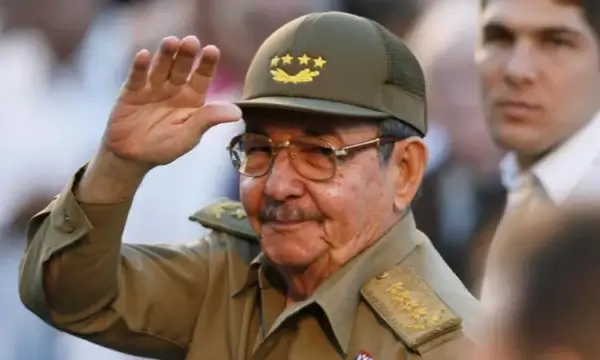
PRISHTINA, October 14, 2026 — Authorities in Florida have issued an arrest warrant for former Cuban President Raúl Castro, 95, over his alleged role in the 1996 shooting down of aircraft that killed four people, escalating tensions between Washington and Havana.
Florida Attorney General James Uthmeier announced the warrant following federal charges reportedly brought against Castro on May 20. Prosecutors allege that Castro authorized the operation that led to the destruction of two small aircraft belonging to Brothers to the Rescue, an organization founded by Cuban exiles in Miami.
The incident occurred on February 24, 1996, when three small aircraft departed Florida. Two were shot down by Cuban fighter jets while flying in international airspace, killing four people.
According to US investigations and findings by the International Civil Aviation Organization, the aircraft were outside Cuban airspace when they were brought down. Cuba, however, had repeatedly accused the organization of violating its airspace and conducting propaganda activities against the government of then-President Fidel Castro.
At the time, Raúl Castro served as minister of the Revolutionary Armed Forces and first vice-president of Cuba. US prosecutors allege that Cuban intelligence agents infiltrated the organization and passed information about its flight plans to Havana.
Uthmeier said the arrest warrant could restrict Castro’s international travel and expose him to arrest in countries that have extradition agreements with the United States. However, he acknowledged that bringing the former Cuban leader before a US court could prove difficult, given his age and the likelihood that he would not voluntarily travel to Miami.
The attorney general’s remarks were interpreted as suggesting that Castro might die before facing trial, although they were also seen as potentially alluding to the possibility of his capture in an operation similar to the US action against Venezuelan leader Nicolás Maduro.
Havana rejects charges as politically motivated
Cuban President Miguel Díaz-Canel responded on social media platform X, describing the warrant as a “maneuver disguised as a judicial initiative” and criticizing the press conference in Miami as a “pathetic circus” driven by electoral considerations.
Díaz-Canel said the allegations had no legal or practical basis and accused Washington of using them to justify the economic embargo and what he called collective punishment of the Cuban people.
Cuban authorities, in turn, accuse the United States of allowing armed groups to organize operations against the island from US territory.
According to Reuters, Havana has also released findings from an investigation into a separate incident on February 25, when ten Cuban exiles allegedly attempted to reach the island aboard a speedboat carrying weapons. Cuban investigators said the group planned to attack security forces and provoke an uprising.
Dispute over US embargo continues at the United Nations
The latest legal action comes amid a broader deterioration in relations between Washington and Havana, including US restrictions on energy supplies to Cuba that have intensified the island’s economic and humanitarian difficulties.
The dispute is expected to continue at the United Nations next week, when Cuba is due to present its annual resolution calling for an end to the US economic embargo, an initiative it has pursued since 1992.
The UN General Assembly has repeatedly voted by overwhelming majorities against the embargo, although those votes have not led to its removal.
Washington has launched diplomatic efforts to persuade other countries to oppose the resolution. According to the Associated Press, US Ambassador to the UN Mike Waltz has organized a meeting with Cuban dissidents and former political prisoners to highlight alleged repression on the island.
Havana accuses the United States of invoking human rights concerns to justify maintaining the embargo.
Fuel shortages disrupt international travel
Cuba is also facing a severe energy crisis. Fuel shortages, compounded by US restrictions on supplies, have forced some airlines to suspend or cancel flights to the island.
China has organized a special flight from Havana to bring home its citizens stranded in Cuba following repeated cancellations. The operation was reported by Reuters and confirmed by the Chinese Embassy, which attributed the flight disruptions to “technical reasons.”