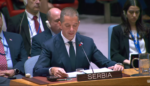
Albanian political parties in Serbia’s Preševo Valley have joined forces under the Albanian Coalition, campaigning for stronger representation in the Serbian Parliament ahead of the October 25, 2026, parliamentary elections.
The coalition brings together eight political entities competing on a joint electoral list led by Shaip Kamberi. In recent days, its representatives have held meetings with residents and organized joint rallies in Preševo, Bujanoc and Medvegjë, urging voters to participate and support stronger Albanian representation in Serbia’s institutions.
Rally in Samolicë Calls for Stronger Representation
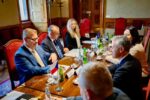
The coalition’s latest reported event took place on Monday, October 19, at the “Bici” restaurant in Samolicë, in the municipality of Bujanoc. Representatives of the participating parties attended, including Shaip Kamberi, Visar Memeti, Nagip Arifi, Shqiprim Musliu, Ardita Sinani, Naser Aziri and Ilir Sadriu.
Kamberi, the coalition’s lead candidate, stressed the need to strengthen Albanian representation in the Serbian Parliament, saying the list aims to secure three or more seats.
He raised concerns over discrimination, insufficient investment, employment barriers and what he described as the failure to implement institutional commitments toward Albanians in the Preševo Valley. He also emphasized the implementation of the Seven-Point Plan as one of the coalition’s main demands.
Preševo Mayor Ardita Sinani said political unity could strengthen Albanian representation and help protect the community’s rights.
Meetings With Voters Across the Region
A day earlier, on October 18, Kamberi met with older residents from several settlements in the municipality of Bujanoc. According to local media reports, hundreds of citizens attended the meeting.
Kamberi linked the political alliance to the historical experiences of Albanians in the Preševo Valley and stressed the importance of continued efforts to defend their rights.
The coalition had announced the Samolicë gathering on October 17, calling on Albanians from Preševo, Bujanoc and Medvegjë to take part in its election campaign.
Eight Political Entities Form Joint List
The political agreement was reached on September 29 in Prishtina, at the Office of Kosovo Prime Minister Albin Kurti. The joint electoral arrangement, named the Albanian Coalition, was made public the following day after discussions aimed at bringing Albanian parties together.
The eight participating political entities are:
- Party for Democratic Action (PVD), represented by Shaip Kamberi
- Alternative for Change (APN), represented by Visar Memeti
- Democratic Party (PD), represented by Nagip Arifi
- Albanian Democratic Party (PDSH), represented by Agim Sabedini
- Movement for Democratic Progress (LPD), represented by Shqiprim Musliu
- Movement for Reforms (LR), represented by Sami Salihu
- Alternative for the Valley (AL), represented by Armend Aliu
- Albanian Democratic Union (UDSH), represented by Naser Aziri
The agreement seeks to overcome divisions between parties and consolidate electoral support behind a single list. Kamberi is leading the list, which is running under number 17.
Reports indicate that the list includes 10 candidates — five women and five men — from Preševo, Bujanoc, Medvegjë and Novi Pazar. The list reportedly collected 6,319 supporting signatures, of which 5,988 were deemed valid.
Representation and the Seven-Point Plan
The coalition’s formation comes amid longstanding concerns among Albanians in the Preševo Valley over political representation, employment opportunities, economic development and the implementation of commitments made by Serbian institutions.
Kamberi is currently the only Albanian member of Serbia’s 250-seat Parliament. According to an analysis by PreshevaPRESS cited in the source report, Albanian parties also competed on a joint list in the 2020 elections and secured three parliamentary seats.
During the announcement of the political agreement, Kosovo Prime Minister Albin Kurti argued that Albanians from Preševo, Bujanoc and Medvegjë should have at least five guaranteed seats in Serbia’s Parliament. He drew a comparison with the 10 seats reserved for the Serb community in Kosovo’s Assembly. However, this remains Kurti’s political position; Albanians in Serbia do not currently have a corresponding guaranteed parliamentary quota.
The coalition has also highlighted the implementation of the Seven-Point Plan, adopted in 2013. The plan addresses issues including fair representation in public institutions, recognition of diplomas, education in Albanian, official use of the Albanian language, economic development and concerns over the administrative removal of Albanians from residential registers.
The coalition’s challenge will be to translate its electoral cooperation into stronger parliamentary representation and concrete results for residents of Preševo, Bujanoc and Medvegjë. Whether the alliance will remain united after the elections will also be an important test of its longer-term political impact.