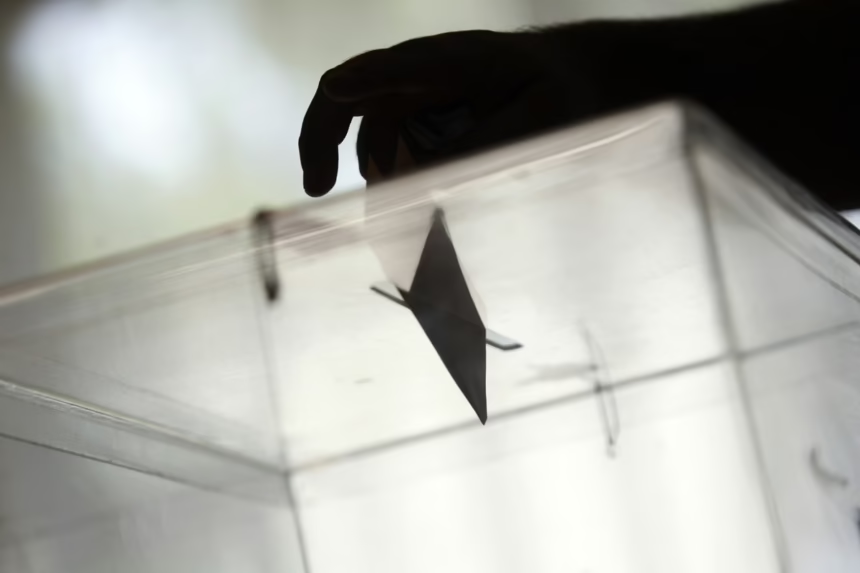
Serbia’s student movement has published a detailed guide outlining seven methods allegedly used to manipulate elections, from ballot-swapping schemes and phantom voters to vote-buying, voter intimidation and potential tampering with ballot counts and election materials.
The guide also provides recommendations for voters, election monitors and observers on how to identify and report irregularities ahead of election day.
Published amid growing concerns about electoral integrity in Serbia, the document explains how each alleged scheme works and what measures can help prevent it.
1. The “Bulgarian Train” Ballot Scheme
Under this method, an organizer gives a voter a ballot that has already been marked. The voter places it in the ballot box, then takes an unmarked ballot out of the polling station and hands it to the organizer, who fills it in for the next voter. The process is repeated throughout the day.
How to prevent it: Election monitors should ensure that voters place only one ballot in the box and do not remove ballots from the polling station. Mobile monitoring teams and observers outside polling stations should watch for ballot exchanges and report suspected cases. Voters are advised not to accept another person’s ballot or remove their own.
2. Illegal “Collection Centres”
The guide describes alleged collection centres operating in apartments, cafés, commercial premises, courtyards or vehicles near polling stations. Party activists reportedly use these locations to maintain parallel records of voters who have cast ballots, contact voters and organize transportation. The guide also alleges that identity cards may be collected, ballots distributed for the “Bulgarian train” scheme and money paid to voters.
How to prevent it: Observers and mobile teams should monitor areas around polling stations, document suspicious activity and report it to the police and election commissions. The guide says campaigning and maintaining parallel voter lists on election day are prohibited by law.
3. Phantom Voters
This alleged method involves voting on behalf of absent or deceased people, or individuals who do not intend to vote. The guide says this can occur when an election board member signs the voter register on someone else’s behalf and inserts ballots, or when someone attempts to vote using another person’s identity card.
How to prevent it: Election monitors should verify identification documents and voter registers, ensure that required procedures are followed and prevent anyone from signing on behalf of another voter. Observers should document suspected attempts at impersonation or multiple voting.
4. Voter Intimidation and Vote-Buying
The guide identifies threats involving employment or social assistance, pressure to turn out and vote for a particular party, organized transportation, parallel voter lists and demands that voters photograph their ballots as potential forms of electoral abuse.
It warns that vulnerable citizens may be particularly exposed to such pressure.
How to prevent it: The student movement emphasizes that voting is secret and that no one should be able to determine how a person voted. If voters are instructed to photograph their ballots or write a code on them, the guide advises crossing out such markings before placing the ballot in the box, provided the ballot remains valid under applicable rules.
5. Abuse of Home Voting
Voting at home is intended to accommodate elderly, ill or mobility-impaired voters who cannot reach polling stations. However, the guide alleges that the procedure can be abused if party activists register people who do not need assistance, have no intention of voting or do not live at the registered address.
It also warns that a commission dominated by representatives of a single political coalition could vote on behalf of citizens or pressure them.
How to prevent it: The student movement calls for opposition representatives and election observers to be included in home-voting teams to help protect ballot secrecy and document irregularities.
6. Manipulation During Vote Counting
The guide warns that after polling stations close, election records could allegedly be falsified, pre-marked ballots inserted into ballot boxes or valid ballots cast for opposing candidates incorrectly declared invalid.
It also identifies the signing of blank election records before counting and deliberately creating confusion around the counting table as potential warning signs.
How to prevent it: Monitors should follow the counting of every ballot, record objections in the official minutes and refuse to sign disputed records without having their concerns properly documented. Observers should document the process and any suspected violations.
7. Tampering with Ballot Bags and Election Materials
The final method concerns the transportation of ballots and official records from polling stations to election commissions.
The guide warns that election materials could allegedly be exchanged or altered during transport, including through purported damage to ballot bags or the substitution of records containing forged signatures.
How to prevent it: The movement says election monitors have the legal right to accompany ballot bags to the relevant election commission and be present during their handover. Observers should monitor and document the entire process.
What Does Serbian Law Say?
The guide cites several provisions of Serbia’s Criminal Code that establish penalties for electoral offences:
- Article 157: Voting on behalf of another person or voting more than once is punishable by up to one year in prison. An election board member who enables such conduct may face up to two years.
- Article 158: Preparing an inaccurate voter register with the intention of influencing an election result is punishable by up to three years in prison.
- Articles 161 and 162: The guide cites penalties of up to three years for adding or removing ballots during counting or announcing false results. Election board members who destroy, conceal or remove election materials may face between three months and three years in prison.
The guide also refers to Serbia’s Law on Personal Data Protection, arguing that voter lists and records of who has voted must not be maintained without the required legal basis and consent.
What Can Voters Do?
The student movement urges citizens to take several practical steps to help protect the integrity of the vote:
- Turn out to vote early. The movement argues that higher turnout leaves less room for electoral manipulation.
- Protect ballot secrecy. Do not send anyone photographs of your ballot.
- Report irregularities. Inform election board members, accredited observers or mobile monitoring teams about suspected pressure or violations.
- Stay alert around polling stations. The presence of citizens and observers can provide support to election monitors and discourage potential wrongdoing.
- Encourage others to participate. The movement calls on voters to bring a friend or family member to vote.
The guide concludes with a call for collective participation and vigilance, urging citizens to vote at 7 a.m. and help ensure that the election process is transparent and properly monitored.
The methods described in the guide are presented as potential forms of electoral fraud; their inclusion does not establish that each practice has occurred in a particular election.