The unification of Albanian political forces in Serbia under the so-called “Albanian Coalition” ahead of the October 25 elections is being viewed as a significant development for political representation and the protection of Albanian rights, according to Gurakuq Kuçi, a researcher at the Octopus Institute.
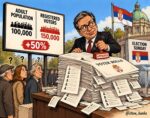
Kuçi expressed concern over what he described as the administrative ethnic erasure of Albanians, citing the deactivation of residential addresses, barriers to employment, and difficulties accessing education.
According to him, these problems affect the social and political position of Albanians in Serbia. He argued that political unity could help reorganize the Albanian political landscape and prevent votes from being fragmented among competing lists. He added that the joint Albanian list had already surpassed the 3% electoral threshold.
“The unification of Albanian forces in Serbia to compete on a joint list is exceptionally good news for Albanians. Serbia has engaged in what I would describe as the administrative ethnic erasure of Albanians, alongside other forms of exclusion, including barriers to proper employment and education. There are also other measures that seek to eliminate the ethnic presence of Albanians in the region,” Kuçi said.
He added that efforts had been made to ensure that Serbs in areas inhabited by Albanians obtained public positions and roles within state institutions, which he argued further marginalized the Albanian community.
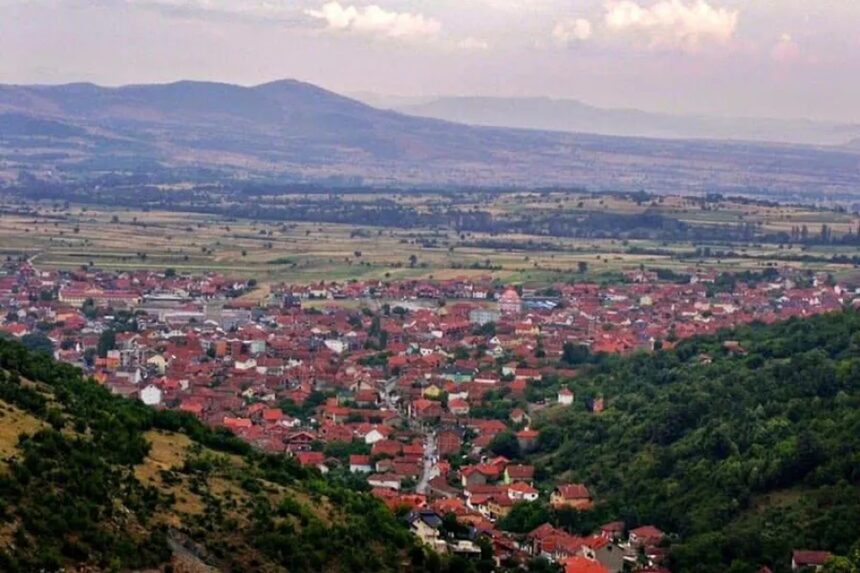
Kuçi said there was currently a noticeable increase in political engagement among Albanians in the Preševo Valley, adding that this was also evident on the ground as voters prepared for Sunday’s elections.
“There is meaningful political engagement among Albanians at the moment, and it is clear from developments on the ground that they are much more involved in these elections. The unification of Albanian forces has also created a new spirit, allowing political opposition to be viewed not as hostility between Albanians, but as political cooperation aimed at improving well-being, stability, and the advancement of Albanian rights,” he said.
According to Kuçi, the unity initiative has also encouraged mobilization among Albanians living in Kosovo, the diaspora, and Serbia itself. He expressed hope that this momentum would continue through election day.
Regarding the deactivation of Albanian residential addresses in the Preševo Valley, Kuçi said that newly elected Albanian representatives in the Serbian Parliament should work closely with the United States, the European Union, and the governments of Kosovo and Albania.
“As members of the Serbian Parliament, their efforts should focus on international institutions, the European Union, and the United States. In this way, they can establish a lobbying network to advance the rights of Albanians in the Preševo Valley and throughout Serbia, where Albanian communities also live outside the valley,” Kuçi stated.
He argued that such cooperation could help build diplomatic momentum around the challenges facing Albanians in Serbia.
Kurti’s Role in Political Reconciliation
Addressing the formation of the joint Albanian electoral list, Kuçi said that members of the political group had acknowledged the role of Kosovo Prime Minister Albin Kurti in facilitating reconciliation among Albanian political forces. He also highlighted the contribution of the Islamic Community of Kosovo, non-governmental organizations, and influential intellectuals in the region.
“It has been acknowledged by the group itself that Prime Minister Kurti played a significant role in bringing Albanians together. He acted as a mediator, and this is important because efforts should be made to prevent hostile conflicts and instead promote political reconciliation for the advancement of Albanian rights,” Kuçi said.
He criticized what he described as insufficient media attention given to the elections in Serbia and the participation of Albanians through a joint list.
Kuçi added that the involvement of religious institutions, civil society organizations, and influential intellectuals had helped create renewed motivation among Albanians to resist the effects of address deactivation and other challenges facing their community.
Imeri: Greater Participation Could Strengthen Albanian Representation
University professor Dorajet Imeri also stressed the importance of Albanian participation in Serbia’s elections, arguing that stronger voter turnout could amplify their voice within the country’s legislative institutions.
He said years of pressure on Albanians in the Preševo Valley, particularly the recent intensification of residential address deactivation, had been among the main reasons political groups decided to compete on a joint electoral list.
“I consider this one of the few political choices that could influence the final election results. Any political engagement by Kosovo in this regard is welcome, although it has come late and is happening for the first time in this form,” Imeri said.
He emphasized that the joint list should also serve as a call for Albanian citizens in the region to participate in large numbers.
“Greater participation could influence the final results and allow Albanians to have a stronger voice in the Serbian Parliament,” he added.
According to Imeri, the immediate priority for Albanians in Serbia is to preserve their presence and ensure their continued existence in the areas where they live.
He described the pressure facing the Albanian community as systematic and political, arguing that Kosovo and Albania should do everything possible to support Albanians in Serbia and help bring their concerns to the attention of the international community.
“Beyond securing a voice for Albanians in the Serbian Parliament, Kosovo and Albania must also provide international support and work to internationalize this issue,” Imeri stated.
Kosovo President Calls for Mass Participation
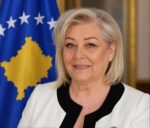
Meanwhile, Kosovo President Justina Shiroka-Pula has called on Albanians from Preševo, Medveđa, and Bujanovac who live in Kosovo to participate in large numbers in Serbia’s early parliamentary elections, scheduled for Sunday, October 25.
Her appeal underscores the importance being placed on voter participation as Albanian political forces seek stronger representation through a joint electoral list.
The extent to which this unity will translate into parliamentary representation remains to be seen. However, the analysts argue that coordinated political action, increased voter participation, and international engagement could play important roles in addressing the challenges facing Albanians in the Preševo Valley and beyond.