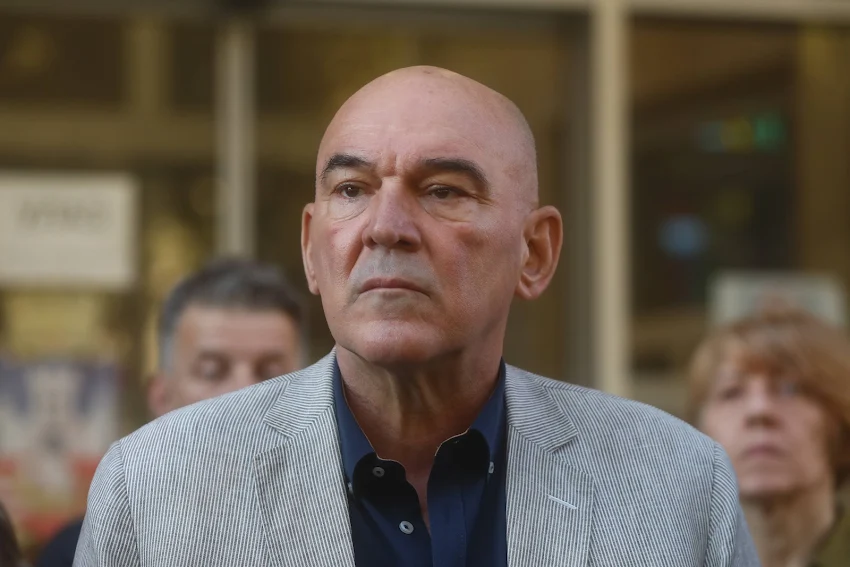
Serbia’s Ministry of Defence has reportedly terminated its cooperation with Radio Television of Serbia (RTS) over the military programme Dozvolite, following plans to broadcast an interview with military analyst Aleksandar Radić, former Head of the Ministry’s Public Relations Directorate Petar Bošković has claimed.
Bošković, a retired Navy captain, told the Beta news agency that he had received information that the interview was scheduled to air next weekend and focused on paramilitary formations and individuals wearing masks who had allegedly been deployed in Serbia.
According to Bošković, the Military Security Agency (VBA) learned about the planned broadcast and subsequently prohibited cooperation with RTS, bringing an end to a partnership that had lasted nearly six decades.
“I was told that Radić gave an interview to RTS about paramilitary formations and all those masked individuals who were deployed here, and that RTS wanted to broadcast it. When the Military Security Agency obtained this information, they prohibited cooperation, after almost six decades of the programme’s existence. This is absolutely unacceptable,” Bošković said.
He also criticised the Ministry’s Public Relations Directorate, arguing that it is institutionally independent and reports directly to the defence minister rather than the head of the Military Security Agency.
Bošković said the directorate had lost much of its professionalism over the years, particularly following the appointment of Aleksandar Vulin as defence minister. He alleged that Vulin had immediately prohibited the purchase and reading of independent newspapers within the ministry, while individuals without professional journalism experience were appointed to key positions.
He added that the directorate had abandoned established professional guidelines for public relations and social media communication, replacing them with statements that he described as politically motivated propaganda.
Commenting on a recent Ministry of Defence statement rejecting allegations made by former head of the Military Trade Union of Serbia, Novica Antić, Bošković said the response resembled a political pamphlet rather than an official institutional statement.
Bošković further alleged that security services were monitoring students, opposition figures and journalists, including himself. He claimed that he had received information from contacts within Serbia’s Security Intelligence Agency (BIA) about such surveillance.
He also alleged that, during a military parade in New Belgrade last year, military police had a list containing photographs taken from identity documents of media professionals who were not allowed to attend the event, even as ordinary citizens. Bošković said his name was among those listed.
According to him, security clearance procedures are also being used within the military to remove or intimidate personnel who have expressed support for student protests.
He cited the case of an officer who had been promoted to colonel and had previously passed security checks but was subsequently transferred to Kragujevac after speaking with him. Bošković said their conversation had concerned a Partizan football match.
He described such practices as workplace harassment and linked them to what he said was the departure of approximately 15,000 people from the Serbian Armed Forces in recent years.
Bošković expressed hope that new Ministry of Defence leadership, following the formation of a new government, would address the problems.
He insisted that cancelling cooperation over the planned Radić interview was unacceptable and called for an end to what he described as pressure against Radić and Antić.
Bošković also called for Radić’s name to be removed from the wanted list so that he could return to Serbia and publicly present the information he possesses.
Although President Aleksandar Vučić’s political camp has lost the elections, Bošković warned that structures associated with the previous authorities continue to exercise significant influence.