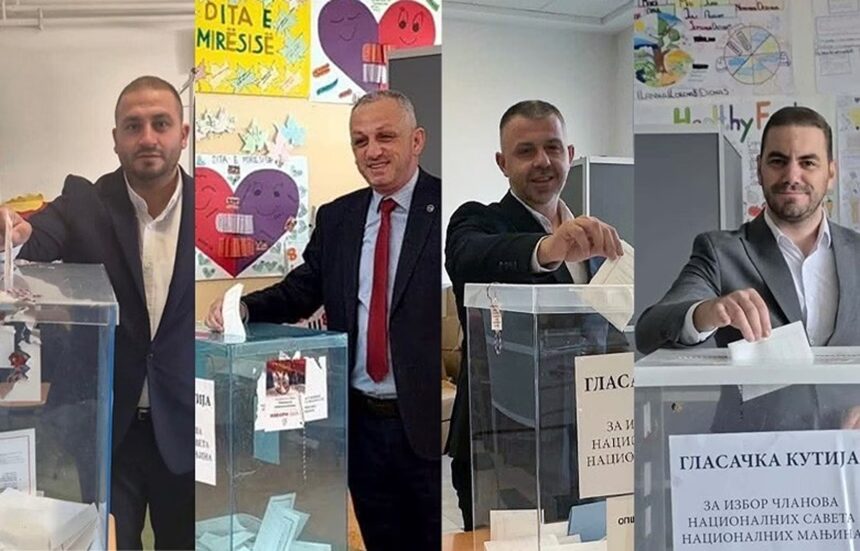
Albanians in Preševo, Bujanovac and Medveđa are voting today to elect the new composition of the Albanian National Council, an institution that represents their interests in the fields of education, culture, information, and the official use of the Albanian language and alphabet.
According to published data, 37,759 Albanian citizens registered on the Special Electoral Roll are eligible to vote in these elections.
Four electoral lists, comprising a total of 107 candidates, are competing for the 29 seats in the Albanian National Council.
According to their order on the ballot, the competing lists are:
- LPD–PDSH, led by Shqiprim Musliu;
- PD–LR, led by Sali Salihi;
- PVD–AL, the Party for Democratic Action;
- APN, led by Levent Qazimi.
One of the main changes in this electoral process is the restoration of the Albanian National Council’s 29-member composition, up from 15 members, a structure it maintained for more than a decade. This change follows the data from the 2022 population census.
The Albanian National Council has public competencies in four main areas: education, culture, information, and the official use of the Albanian language and alphabet.
Through their votes, Albanian citizens in these three municipalities will determine the representatives who will make up the institution for the next four-year mandate.
Voter turnout and the election results will determine the new composition of the representative body of Albanians in Serbia.
Ahead of the elections, Kosovo Prime Minister Albin Kurti called on Albanians in the Preševo Valley to participate in the vote and exercise their democratic right.
In a Facebook post, Kurti highlighted the importance of restoring the Council’s 29-member composition and referred to the Government of Kosovo’s support for Albanians in Preševo, Bujanovac and Medveđa through educational textbooks, scholarships for pupils and students, and support for cultural initiatives and representative institutions.
He also highlighted several challenges facing Albanians in the Preševo Valley, including the administrative removal of residential addresses, discrimination and institutional underrepresentation.