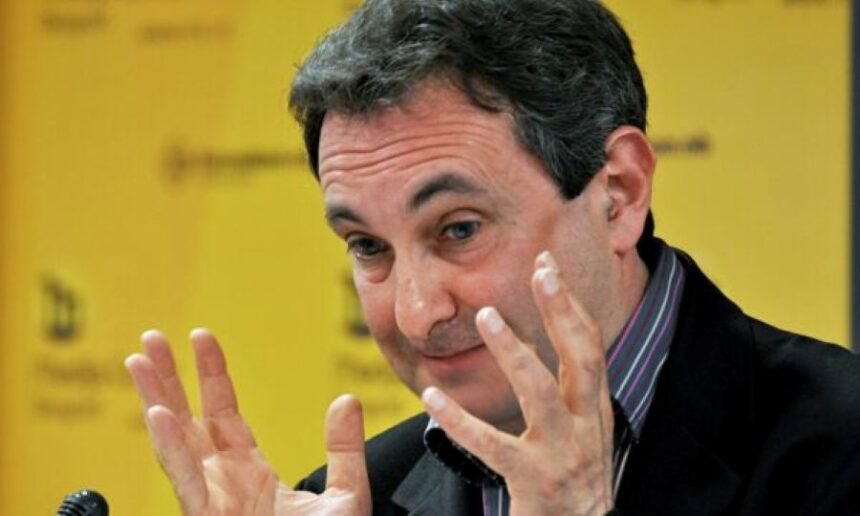
British journalist and author Tim Judah has warned that Kosovo represents one of the fastest demographic transformations in Europe, with a dramatic decline in birth rates occurring within just two generations.
Speaking on the PIKË podcast, Judah said that while declining fertility rates and population ageing are global megatrends, Kosovo stands out due to the speed and intensity of the change.
A Rapid Demographic Shift
Judah explained that after World War II, Kosovo had one of the highest fertility rates in Europe, with around 7.6 children per woman. Today, however, that figure has fallen below the replacement level of 2.1.
“What took about 150 years in Britain has happened in Kosovo in just two generations,” Judah said, describing the shift as extraordinarily rapid.
He added that high emigration levels have further accelerated population decline, compounding the demographic challenge.
Comparisons With Europe
Judah compared Kosovo’s situation with other European countries, noting that while the trends are similar, the outcomes differ significantly.
- The United Kingdom continues to grow despite an ageing population, largely due to immigration.
- Spain, by contrast, is experiencing the phenomenon known as “Empty Spain”, where vast rural areas are being depopulated.
According to Judah, Kosovo’s fertility rates are now comparable to those of Italy and Spain, although he cautioned that accurate data remains difficult to obtain due to births abroad and diaspora registrations.
“Nevertheless, it is clear that the decline has occurred,” he emphasized.
Future Challenges for the Western Balkans
Looking ahead, Judah highlighted a potential paradox for the Western Balkans: the growing need for immigration to sustain economic development in a region where historical conflicts have often been closely tied to identity.
He noted that workers from Asia and other regions have already begun arriving, albeit in small numbers, warning that migration could become a major political issue in the future.