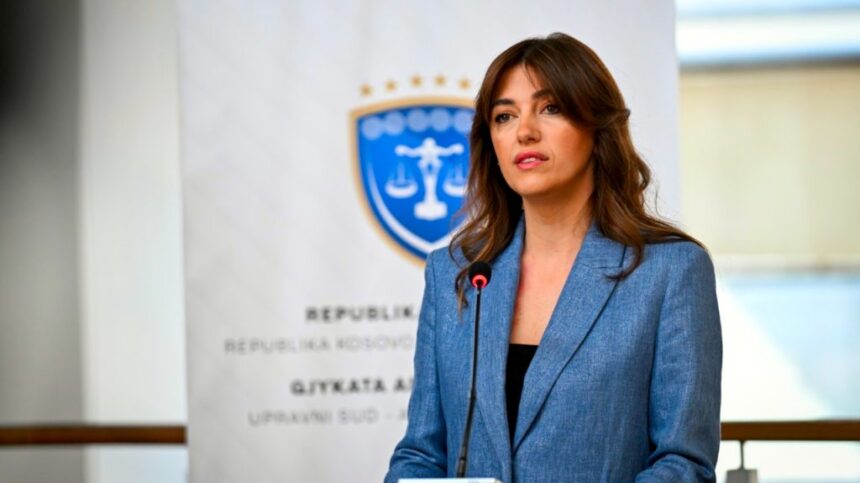
The Acting President of Kosovo, Albulena Haxhiu, has officially requested that the Kosovo Judicial Council (KJC) process the long-standing, unresolved resignations of judges from the Serb community, which were submitted en masse in November 2022.
In a formal letter sent to KJC Chairman Rustem Thaçi, Haxhiu expressed deep concern over institutional inaction, warning that leaving these judicial seats in a state of limbo compromises the baseline integrity of the country’s legal structure.
The Legal Impasse: A System Stalled Since 2022
The controversy dates back to November 2022, when all Kosovo Serb judicial officials resigned simultaneously from their positions in northern Kosovo as part of a widespread institutional boycott. For nearly four years, the Kosovo Judicial Council has delayed formal acceptance of these departures, keeping the positions technically vacant but legally unresolved.
                      SERB JUDGES RESIGNATION PIPELINE

   NOVEMBER 2022 FLASHPOINT                     CURRENT CONSTITUTIONAL POSITION
 ─────────────────────────────                 ───────────────────────────────────
 • Serb judicial officials resign              • Acting President Haxhiu calls for
   en masse over regional disputes.              immediate processing of documents.
 • Structural operations within the            • Judicial Council must review and
   northern courts heavily disrupted.            officially propose formal dismissals.
Haxhiu underscored that under current Kosovo legislation, the Judicial Council holds the clear responsibility to review these resignations and systematically forward formal dismissal proposals to the presidency.
“Keeping these judicial positions in limbo for an extended period of time directly impairs the overall functionality and efficiency of our judicial system. Reviewing and rendering final decisions on these resignations is an explicit statutory responsibility of the Council.”
— Albulena Haxhiu, Acting President of Kosovo
Political Context: A Transitional Presidency
The directive is Haxhiu’s first major institutional move concerning the judiciary since assuming the role of Acting President on April 4, 2026, following the expiration of Vjosa Osmani’s presidential mandate.
Haxhiu, who also serves as the Speaker of the Assembly, is leading the state under strict constitutional parameters while the ruling Vetëvendosje party and opposition factions continue to negotiate a parliamentary consensus for electing a permanent head of state. Legal experts note that moving forward with replacing the judges could permanently alter the ethnic balance of the northern municipal courts, potentially exacerbating integration frictions under current international dialogue frameworks.